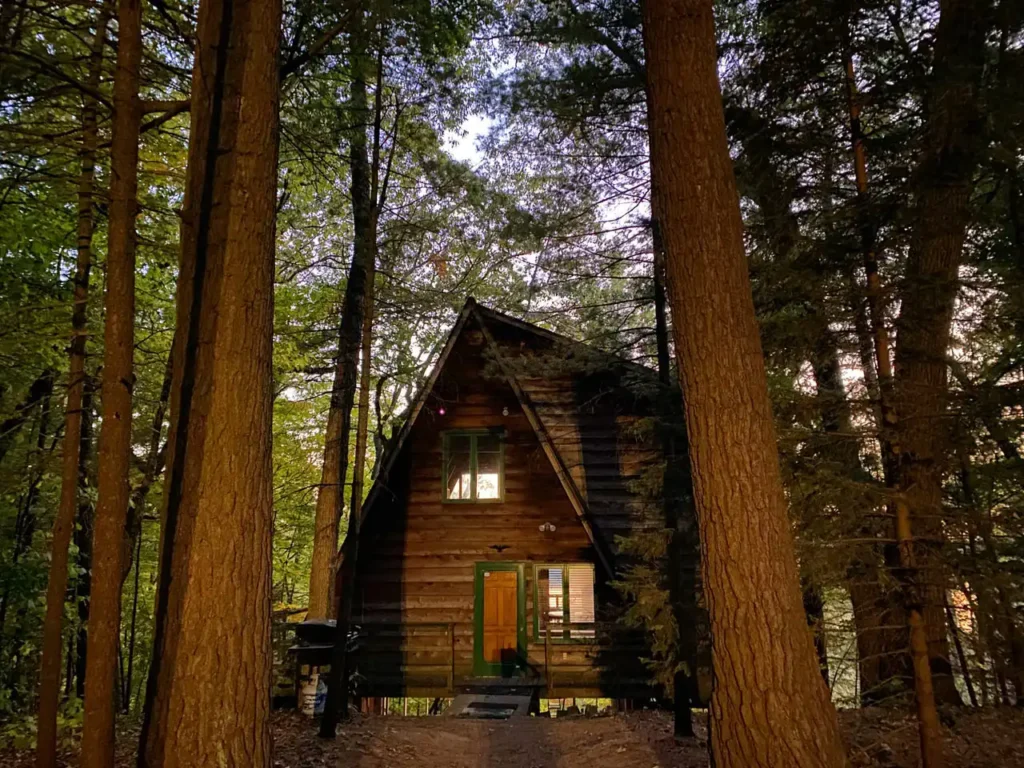

Your phone is not the enemy. But if you have ever sat down “for a minute” and looked up an hour later, or reached for your phone in an elevator, in line, at a red light, during a conversation — you already know the feeling a digital detox trip is for. Not hatred of technology. Just a weekend where your attention belongs to you again.
A digital detox trip is simply a short trip with rules about screens — rules you set before you go, so you don’t have to negotiate with yourself every hour. This guide gives you the complete planning system: how unplugged to go, the rules that actually hold, where to go in the USA, what it really costs, the phone-settings checklist to run the night before, what to do with the strange empty hours, and how to come home without undoing the whole thing on Monday morning.
In this guide: the 3 levels of unplugged · setting rules that hold · where to go (4 trip types) · real cost bands · the night-before phone checklist · the boredom plan · the re-entry plan · FAQs
Step 1: Pick your level of unplugged (be honest)
Most detox trips fail because people pick the wrong level — usually the most extreme one, which lasts about six hours. There are three levels, and the right one is the strictest level you can actually sustain for the whole trip. Beginners almost always do better at Level 1 or 2 than at a heroic Level 3 that collapses by Saturday lunch.
Level 1 — Low-noise weekend. Your phone comes along and stays on. Social media apps, news apps, and anything with an infinite feed get deleted or logged out for the weekend. Calls, texts, maps, camera, and music stay. This is the right level if your main problem is doomscrolling rather than total screen time, or if being fully unreachable would genuinely stress you out (parents of young kids, on-call workers, caregivers — that stress would ruin the trip, so don’t fight it). Kids adapt to detox weekends faster than adults: pick this level, keep one phone free for logistics, plan around activities they’d enjoy anyway (camping, a lake, a small town), and download their shows offline in advance — the adults’ detox is the point.
Level 2 — Phone as a tool. The phone becomes what it was in 2007: a device you use on purpose. It stays in your bag or the cabin, not your pocket. You check it at two set times a day — say, 9 AM and 6 PM — for messages and logistics, and otherwise it might as well not exist. Social apps stay deleted, notifications stay off. This is the sweet spot for most beginners: you get the quiet mind of a real detox with a safety valve for anything truly urgent.
Level 3 — Fully offline. The phone goes off — powered down, in a drawer, in the car glovebox — from Friday evening to Sunday afternoon. You bring a printed backup of key addresses, an alarm clock, and an emergency contact plan (more on that below). The deepest reset and the hardest level. Only pick it if you have done Level 2 before, or if you’re going with someone doing the same.
A note worth taking seriously: the level is a plan, not a moral grade. A completed Level 1 beats an abandoned Level 3 every time. You can always go deeper next trip — most people do, once they feel what even one quiet day does to their head.
Step 2: Set your rules before you go
Rules made on the trip get renegotiated. Rules made before the trip get followed. Write these down — on paper, before Friday — and they will carry you through the weak moments.
Define what counts as a screen. Be specific, because vague rules die first. A workable definition: no social media, no news, no video streaming, no web browsing “just to check something.” Allowed: maps for navigation, camera for photos (leave the gallery app closed — it is a short walk from the feeds you are avoiding), music or podcasts you queued before the trip, calls and texts at your set check-in times (Level 2). If a use isn’t on the allowed list, it’s off the list.
Name your exceptions in advance. Two or three, maximum, each with a trigger: “I will answer calls from my mom because she’s watching the kids” or “I will check email once Saturday morning because a work thing closes Monday.” An exception with a trigger is a rule. One without is the beginning of the end.
Set the emergency protocol. Tell one or two people: “I’m offline this weekend. If it’s truly urgent, call me twice in a row.” Most offline anxiety isn’t about real emergencies — it’s about the possibility of them. A protocol dissolves it.
Tell people you’re going dark. A 30-second text on Friday to the handful of people who’d wonder: “Heads up — I’m off my phone this weekend, back Sunday evening. Call twice if urgent.” It removes the pressure to check and makes the commitment feel real.
Decide what “done” looks like. Write one sentence about what you want from the weekend: “I want to read a whole book,” “I want to stop reaching for my phone without thinking,” “I want one full day where I don’t know what time it is.” Vague goals produce vague results. One concrete sentence gives the weekend a shape.
Step 3: Choose where to go (4 trip types that work)
The place matters less than the rules, but the right setting makes the rules ten times easier to keep. Four formats work especially well for beginners in the USA:
- The off-grid cabin. The classic: a cabin with no Wi-Fi and no cell service removes the decision entirely. When booking, verify “no Wi-Fi” directly with the host before you pay — listings stretch the truth in both directions. Ask specifically: “Is there cell service at the cabin? Which carrier?” Then check recent reviews for connectivity mentions. Genuine off-grid cabins on the big platforms run roughly $120–$450 per night depending on region and season (checked October 2026 — cleaning and service fees can add a lot to the nightly rate, so compare the all-in total).
- State or national park camping. The cheapest real detox in America. A tent site at a state park typically runs $20–$50 a night, and many parks — especially in the West — have gloriously dead zones where your phone becomes a camera and nothing else. Reserve ahead for popular parks; shoulder season (late fall, early spring) means emptier campgrounds and easier reservations.
- The small-town slow weekend. A simple motel or inn in a small town a few hours away — main street, diner, used bookstore, trails nearby. Keep the same screen rules; the change of scenery does half the work. If the journey matters as much as the destination, our slow-travel planning framework shows how to build the drive itself into the reset. Best Level 1 format. Lodging is often $80–$150 a night outside tourist season.
- The structured unplugged retreat. Some centers run phone-free weekends with the rules built in — phones collected at check-in, schedule full of guided activities. It costs more ($300–$1,500 for a weekend is typical), but you outsource all the willpower to the program. If a full retreat appeals but the budget doesn’t, our complete beginner’s guide to wellness retreats in the USA walks through cheaper formats like daylongs and donation-based programs.
One more idea worth knowing: entire regions of the country are natural dead zones. Much of Yellowstone National Park has famously little cell or Wi-Fi coverage across its 2.2 million acres — travelers there have written about rediscovering conversation and starlit mornings simply because the signal never arrived (Go World Travel’s account of a Yellowstone unplugged week, https://www.goworldtravel.com/traveling-unplug/). The principle travels: pick places where the map itself enforces your rules.
Step 4: Budget the weekend honestly
A digital detox trip can cost almost nothing or a few hundred dollars. Here’s the honest shape of each format for two people, one weekend, in 2026 prices:
| Format | Typical weekend cost (2 people) | What drives it |
|---|---|---|
| Backyard / home detox weekend | $0–$60 (groceries, a book) | You stay home, keep the rules, skip the trip entirely |
| State park camping | $80–$250 | Campsite fees ($20–$50/night) + food + gas |
| Small-town motel weekend | $250–$500 | Lodging ($80–$150/night) + meals out + gas |
| Off-grid cabin rental | $400–$1,200 | Nightly rate ($120–$450) + cleaning/service fees + groceries |
| Structured unplugged retreat | $600–$3,000+ | Program fees; usually includes lodging + meals |
Two money notes. First, the $0 home version is underrated: same rules, same phone checklist, your own bed — it keeps most of the benefit and it’s the perfect trial run before you spend money on a cabin. Second, watch the fee stack on cabin rentals: a $150/night cabin with a $120 cleaning fee and service charges is really a $220/night cabin for a two-night stay. Cabin bands across the major platforms currently span roughly $58 a night for rustic stays to $217+ for nicer ones (Travelocity’s 2026 cabin guide, https://www.travelocity.com/United-States-Of-America-Cabins.d201-aaCabins.Travel-Guide-Accommodation) — the range is wide and the fees decide the real number.
Step 5: The night-before phone checklist
Do this Thursday or Friday evening, not Saturday morning. It takes about 30 minutes and it’s the single highest-leverage part of the whole trip.
- Delete (not just hide) the feed apps. Social media, news, short-video apps — remove them. You can reinstall Monday; your logins survive. Deletion beats willpower because reinstalling takes effort, and effort is the point.
- Turn on grayscale. On iPhone: Accessibility → Display → Color Filters → Grayscale. On Android: Developer options or Bedtime mode → Grayscale. A gray phone is a boring phone, and boring is the goal.
- Kill notifications except calls. Everything off except phone calls (and texts from your emergency contacts, if your level allows). No badges, no banners, no lock-screen previews.
- Set emergency bypass. Add your 1–2 emergency contacts to bypass Do Not Disturb so their calls always ring through. Now the phone can sit silent all weekend and you’d still hear the one call that matters.
- Download what you’ll need offline. Maps of the area, any music or podcasts, the cabin’s address and check-in instructions as a screenshot or printout. A dead zone with no offline map is how detox weekends become stressful weekends.
- Charge everything, then decide where the phone sleeps. Pick the spot now — glovebox, drawer, bag in the closet. If you haven’t decided, you’ll default to the nightstand, and the nightstand is where Level 3 goes to die.
- Set the auto-reply. Email and text auto-reply: “Offline this weekend, back Sunday evening. For urgent matters, call [name] at [number].” Future-you will be grateful.
- Bring the analog kit. This is gear, not vibes: a paperback or two, a journal and pen, a deck of cards or a travel game, comfortable walking shoes, a real alarm clock if you’re going Level 3. Boredom is the detox working — but only if you have something to be bored with.
Step 6: Survive the first 24 hours (the weird part)
Nobody warns beginners about this: the first day of a real detox feels strange, and that’s normal. You’ll reach for your phone dozens of times before lunch. You may feel a low-grade restlessness, even anxiety, especially in the evening when you’d normally scroll. Some people notice phantom vibrations — feeling the phone buzz when it isn’t even on them. It’s a documented quirk of heavy phone users, not a sign something’s wrong with you.
The curve is predictable: the itch peaks in the first 12–24 hours, then drops off fast. By the second morning, most people report the same thing — time feels longer. A Saturday without a phone has more hours in it. That’s what happens when your attention isn’t being sliced into 30-second pieces.
Three tactics for the hard hours:
- Name it when it happens. “That’s the itch” is surprisingly powerful. The urge loses half its force once you label it instead of obeying it.
- Have a default activity. When you don’t know what to do, the default is: walk, read, write, or make something (food counts). Decide your defaults before the trip.
- Don’t white-knuckle it. If you picked Level 2 and you genuinely need to check something at your check-in time, check it, then put the phone away. The goal is a quieter mind, not a perfect score.
Step 7: The re-entry plan (don’t skip this)
Monday is where detox trips go to die. You come home clear-headed, open your phone “just to catch up,” and by Tuesday the notifications have rebuilt the exact noise you escaped. Three rules prevent that:
Rule 1: Reinstall slowly. Don’t reinstall everything Monday morning. Wait a day per app, and notice which ones you don’t miss. Most people find one or two apps they reinstalled out of habit and promptly delete again — that’s the detox still working.
Rule 2: Keep one rule permanently. Pick the single rule from the weekend that gave you the most peace and keep it as a standing house rule. Popular keepers: no phone in the bedroom, no social apps on the phone (browser-only), or the two-check-ins-a-day habit. One permanent rule beats a perfect weekend that changes nothing.
Rule 3: Schedule the next one. Detox weekends compound. Put the next one on the calendar before the glow fades — even a home-detox Saturday in a month. People who schedule the second trip keep the benefits; people who don’t slowly slide back.
When a weekend isn’t enough
A digital detox weekend resets your attention. But if what you’re really feeling is deeper exhaustion — the kind where rest doesn’t seem to touch it — the next step isn’t a stricter detox, it’s a longer reset. That’s a different kind of trip with different planning, and it’s worth reading about before you book anything: our complete beginner’s guide to wellness retreats in the USA covers how to choose the right format when a weekend won’t cut it.
Frequently asked questions
How long should a digital detox trip be?
Two to three days is the sweet spot for beginners — long enough to get past the 24-hour itch, short enough to fit a normal weekend. A single day works as a trial run (the $0 home version in Step 4), and anything beyond four days is better planned as a structured retreat than a DIY trip.
Keep reading
Keep reading: ready to pick your spot? our guide to the best off-grid cabins in the USA with no Wi-Fi walks through how to verify a cabin is truly offline before you book — and if this trip is about deeper exhaustion, how to plan a solo trip that actually helps you recover from burnout is the next step.