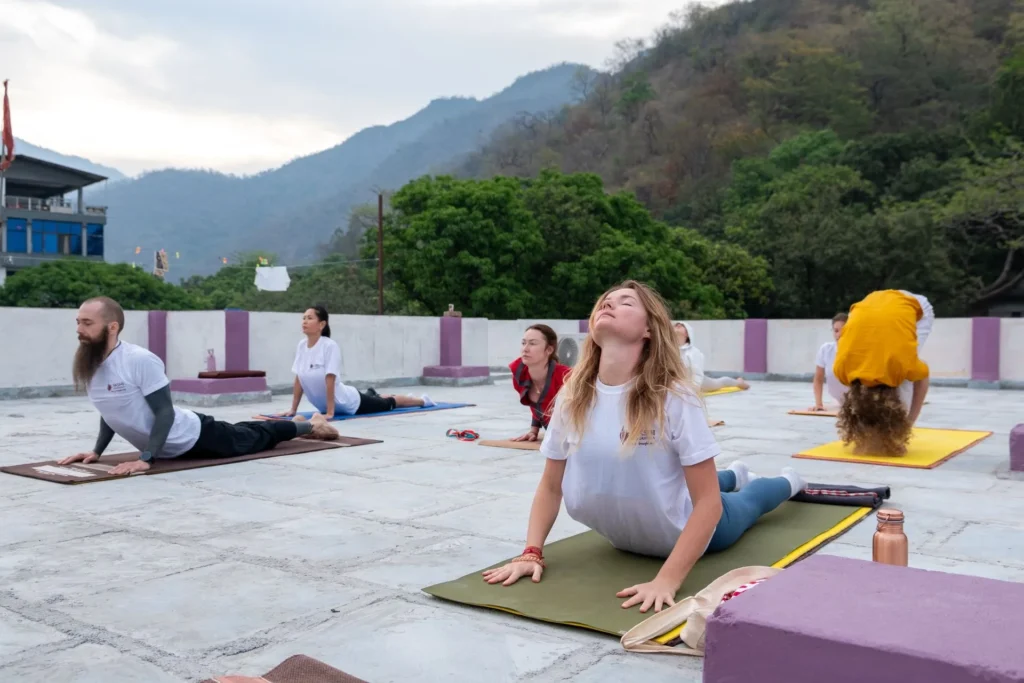
If you have never been on a wellness retreat, the hardest part is rarely the retreat itself — it is the choosing. Hundreds of programs call themselves beginner-friendly, prices range from a few hundred dollars to several thousand, and nobody explains what happens once you arrive. This guide does: the main types of retreats, what a first day looks like, honest US costs in dollars, and the mistakes first-timers make — so you can book one calm, well-matched weekend instead of an expensive experiment.
In this guide: what a wellness retreat is (and is not) · the 5 types · a 3-question picker · choosing in 5 steps · how long to go · an hour-by-hour first day · real costs · 9 US retreats for first-timers · going solo · mistakes and red flags · when to book · FAQs
Quick answer: what a wellness retreat actually is
A wellness retreat is a short, structured stay — usually two to seven nights — built around rest and one or two healthy practices: yoga, meditation, spa treatments, time in nature, simple food. You sleep on site, meals are provided, and the days follow a gentle schedule led by teachers. The Global Wellness Institute defines wellness tourism as travel associated with maintaining or enhancing personal wellbeing, and reports that travelers spent US$894 billion on it in 2024 — so if everyone seems to be going on one, you are not imagining it.
What a retreat is not:
- Not a spa day. A spa day is a few pleasant hours. A retreat is several days, with a program and time for the effects to build.
- Not a yoga holiday. On a yoga holiday you rent a nice house and drop into classes if you feel like it. On a retreat, the schedule, meals, and group are arranged for you — which is exactly why beginners do better on retreats.
- Not medical treatment. Good retreats support rest and healthy habits. They do not diagnose or cure anything, and any program that promises to should be avoided (more on red flags below).
The 5 main types of wellness retreats
Most US retreats fit one of these five shapes. The right type matters more than the right location.
| Type | What fills the day | A good first retreat if you… |
|---|---|---|
| Meditation & mindfulness | Sitting and walking meditation, talks, silence in stretches | Have a busy, looping mind and want quiet structure |
| Yoga retreats | One to three classes a day, breathwork, free time between | Want to move your body gently and sleep better |
| Spa & relaxation | Treatments, soaking, saunas, light classes, lots of unscheduled time | Are mainly tired and want to be looked after |
| Nature & silent retreats | Hiking, outdoor practice, longer silence, simple lodging | Feel overstimulated by screens, noise, and people |
| Women-only retreats | Yoga, circles, workshops, shared meals in a women-only group | Would relax more in a single-gender group |
Many centers blend types — a yoga center will offer meditation; a meditation center may add gentle yoga. Find your main thread, not a perfect match.
The first-retreat picker: answer 3 questions
1. What do you most need right now? Sleep and being looked after → spa or nature. A calmer mind → meditation. To move and stretch again → yoga.
2. How many days can you honestly take? Two or three nights is a complete first retreat. Four to five is a deeper one. Save anything longer for your second trip.
3. Do you recharge alone or around people? Mostly alone → a meditation or nature retreat. Around people → a social campus-style center where meals are shared and conversation is normal.
Three answers: a type, a length, a setting. Every later choice gets easier once those are fixed.
How to choose your first retreat in 5 steps
Step 1: Set one goal. Not five. “Sleep through the night again” or “learn to meditate” is a goal you can choose by. “Fix my whole life” sends you to the most expensive program on the internet.
Step 2: Match the type to the goal. Use the table above. If your goal is rest, a silent meditation retreat is the wrong tool, however beautiful it looks in photos.
Step 3: Pick the length before the place. Decide your dates and nights first, then look only at programs that fit. This one rule cuts the options by about two-thirds and removes most of the overwhelm.
Step 4: Set a real budget — the total, not the sticker. Tuition is only part of it: add lodging (sometimes priced separately), travel, and extras like massage. Realistic totals are in the cost section below.
Step 5: Choose the setting you can actually reach. A retreat within a three-hour drive removes flights and a day of travel fatigue. Save the cross-country trip for when you know what you like.
A word of caution: should your first retreat be silent?
Probably not — at least not a fully silent one. At a silent retreat, guests keep “noble silence” from waking until bedtime, often for five to ten days: no talking, no phones, no reading. It is a powerful format, and experienced meditators value it deeply. But as a first experience it is a lot: no way to ask a neighbor how they are finding it, no shared laughter at dinner, no easy test of whether retreats suit you at all.
The gentler on-ramp: choose a meditation retreat with talking at meals, or an introductory weekend that includes one guided silent day — you learn the shape of the practice before committing to a week of it.
How long should a first retreat be?
Two to three nights is the sweet spot. A Friday-to-Sunday program costs little or no PTO, is long enough for two full days of practice, and is short enough that if the style is not for you, you have lost a weekend, not a vacation.
Four to five nights is the right second retreat, once you know which type suits you. Seven-to-ten-day intensives — especially silent ones — hold deep benefits, but they are a poor first test: cost, time off, and intensity all peak at once. A good first race is a 5K, not a marathon — and nobody sensible judges running by starting with the marathon.
What a first day actually looks like, hour by hour
Schedules vary by center, but a structured beginner day usually looks like this:
- 6:30 a.m. — Wake up. Tea or coffee, quiet voices, no news, no inbox.
- 7:00 a.m. — Morning practice: gentle yoga or guided meditation, 45–60 minutes.
- 8:00 a.m. — Breakfast. Simple, generous, unhurried.
- 9:30 a.m. — Main session: a workshop or class, about two hours with a break.
- 12:00 p.m. — Lunch, usually the biggest meal of the day.
- 1:00–3:30 p.m. — Free time. Nap, walk the grounds, book a massage. This empty space is deliberate — protect it.
- 3:30 p.m. — Afternoon class or guided activity (a hike, a second practice, a talk).
- 5:30–6:00 p.m. — Dinner, on the lighter side.
- 7:15 p.m. — Evening session: a talk, sound bath, yoga nidra, or quiet meditation.
- 9:30 p.m. — Wind-down. Most campuses go quiet; most guests are asleep by ten.
Two reassurances. First, at beginner-friendly centers almost nothing is mandatory — skipping a session to rest is understood, not judged. Second, day one feels slower than you expect. That is the point, and by dinner it usually feels like a relief.
What a first retreat really costs
Retreat prices look confusing because the pieces are packaged differently. Some centers quote one all-inclusive rate; others price tuition, lodging, and meals separately; meditation centers often add a voluntary teacher donation (dana) on top of the fee. These typical all-in totals are a fair planning guide:
| Trip shape | Budget-friendly | Mid-range | Luxury |
|---|---|---|---|
| Weekend (2–3 nights) | $300–$700 | $700–$1,500 | $2,000+ |
| Longer stay (4–5 nights) | $700–$1,400 | $1,500–$3,000 | $4,000+ |
Budget-friendly means a meditation or yoga center with shared rooms and sliding-scale fees. Mid-range means a full-program campus. Luxury means a destination spa resort where everything is arranged for you. On top of any row, budget for travel, plus extras like a private massage ($100–$200 is typical at resorts). our full guide to affordable wellness retreats in the United States breaks down where each dollar goes and the legitimate ways to pay less — weekday dates, off-season weekends, commuter rates, sliding-scale programs.
9 US retreats that work well for a first timer
We compared established US centers on what beginners actually ask: a program designed for someone new, a published and understandable price, and whether it is social or silent. Prices were checked in October 2026 against the centers’ own listings — rates change, so confirm before booking. One example: 1440 Multiversity’s own page lists its all-inclusive Live Well Weekend from $695 per night for single occupancy.
| Retreat | Typical cost (USD) | Length | Silent or social | Meals included | Beginner-friendly entry point |
|---|---|---|---|---|---|
| Kripalu Center — Stockbridge, MA (Northeast) | $688–$1,368 for a 2-night weekend program, all-in | 2–5 days | Social | Yes | R&R stays and beginner yoga weekends |
| Omega Institute — Rhinebeck, NY (Northeast) | ~$1,100–$2,450 for 5 days, all-in (tuition + lodging tier) | 2–5 days | Social | Yes | Hundreds of workshops plus R&R stays (seasonal, May–Oct) |
| Art of Living Retreat Center — Boone, NC (Southeast) | From ~$870 for a 3-day retreat, single occupancy, all-in | 2–4 days | Social | Yes (vegetarian) | Happiness Retreat and wellness escapes |
| 1440 Multiversity — Scotts Valley, CA (West) | From $695 per night, all-inclusive | 2–3 days | Social | Yes | Live Well Weekends built for general guests |
| Esalen Institute — Big Sur, CA (West) | ~$1,500–$2,500+ for a 5-day workshop, standard lodging, all-in | 2–5 days | Mostly social | Yes | Weekend and week-long workshops; famous cliff-side hot springs |
| Spirit Rock Meditation Center — Woodacre, CA (West) | Sliding scale — shorter retreats roughly $500–$1,300 by tier | 2–7 days | Mostly silent | Yes (vegetarian) | Beginner-friendly meditation retreats each season |
| Drala Mountain Center — Red Feather Lakes, CO (Rockies) | Programs from ~$100–$150, plus lodging | 2–5 days | Mixed | Available on site | Introductory meditation and nature programs |
| Canyon Ranch — Tucson, AZ (Southwest) | Typically $1,000+ per night, all-inclusive | 3–5 days | Social | Yes | Fully guided luxury stays; every detail arranged |
| Miraval Arizona — Tucson, AZ (Southwest) | Typically $650–$1,200+ per night | 2–4 days | Social | Yes | Structured daily schedules and device-free common areas |
If meditation is the heart of your trip, California is the easiest state in the country to start in — the concentration of beginner programs there is unmatched. We shortlist the best of them, with price bands and first-day expectations, in our guide to the best meditation retreats in California for beginners.
Going on your first retreat alone
Going solo is not the exception at a retreat — it is close to the norm. At most centers, a large share of guests arrive alone, eat at shared tables, and leave knowing a few people’s names. There is no need to perform socially: talk at lunch, take your afternoon tea in silence — both are normal.
Practical notes: a shared room lowers the cost and often feels friendlier than expected, but if you sleep lightly, price the single room — sleep is the point of the trip. Tell the center it is your first retreat; staff will point you to the gentlest programs. And leave the center’s name and your dates with someone at home.
7 beginner mistakes (and the red flags that predict them)
- Booking a 7–10 day silent retreat first. Intensity is not a shortcut. Start with a talking weekend; go silent on trip two.
- Choosing by photos instead of the program. A beautiful pool tells you nothing about the teaching. Look for a published schedule and named teachers.
- Not checking what is included. “From $500” can mean tuition only. Confirm lodging, meals, and taxes before comparing two retreats.
- Buying luxury when you wanted structure — or the reverse. A resort will pamper you but not teach you to meditate. A meditation center will teach you, on a thin mattress. Know which you are booking.
- Arriving exhausted and flying home the day it ends. Travel the day before if you can, and skip the red-eye home. The first night’s sleep is part of the retreat.
- Expecting a retreat to fix everything. A retreat can restart your sleep and show you a calmer rhythm. It is not treatment for burnout, anxiety, or any medical condition — if things feel serious, talk to a professional as well.
- Packing like it is a regular vacation. You need far less than you think, and the wrong shoes matter more than a missing outfit. (The full checklist is linked below.)
Red flags when comparing programs: no named teachers or sample schedule published · promises to “cure,” “heal,” or medically “detox” you · pressure to book a long, expensive program as a first step · prices with no inclusions list · no clear cancellation policy. Any one of these: choose a different center.
When to book: a simple timeline
- 8–12 weeks out: Choose and book. Popular weekend programs fill up, and sliding-scale and scholarship spots go first. Request your PTO now, too.
- 4–6 weeks out: Book travel. If you are flying, arrive the day before the program starts if you possibly can.
- 1–2 weeks out: Re-read the inclusions and schedule. Arrange the practical things at home — pets, plants, coverage at work.
- The final few days: Pack, set your out-of-office, and tell people you will be offline. Download or print directions: many retreat centers sit in valleys and canyons where phone signal is weak by design.
How to prepare (the short version)
You do not need to train for a retreat. Three small things help: shift your sleep an hour earlier for a few nights beforehand, so the 6:30 a.m. wake-up is not a shock; ease off caffeine slightly if you plan to cut it there (quitting coffee and starting a retreat on the same morning is a classic self-own); and decide your phone rule in advance — phone off, in the room, checked once a day works best for most beginners. For everything you might bring, we keep one complete list: what to pack for a wellness retreat — the complete checklist.
Frequently asked questions
Are wellness retreats suitable for beginners?
Yes — most established centers run many programs designed for people who have never done this before, clearly labeled as such. You need no experience, flexibility, or special equipment. The main thing to check is the format: a beginner yoga or R&R weekend is an easy first step, while a long silent meditation retreat is a demanding one.
What happens on a wellness retreat, hour by hour?
Days follow a gentle, published rhythm: an early practice around 7 a.m., breakfast, a main morning session, lunch, free time in the afternoon, a second class or activity, dinner, and a short evening session, with most campuses quiet by 9:30 p.m. The exact times vary by center, but the shape — practice, meals, open space, rest — is consistent almost everywhere.
Are wellness retreats silent?
Some are, most are not. Meditation centers often hold silence for part or all of the day, and dedicated silent retreats keep it throughout. Yoga, spa, and campus-style retreats are normally social, with talking at meals and between sessions. Every reputable center states its policy before you book — check it, because silence changes the experience more than any other single factor.
How long should my first wellness retreat be?
Two to three nights. A weekend is long enough to sleep properly, learn the basic practices, and find out whether the style suits you — and short enough to cost little PTO if it does not. Save four or five nights for your second retreat, and week-long intensives for later still.
Can I go on a wellness retreat alone?
Absolutely — solo guests make up a large share of attendance at most centers, and the structure is built for it: shared tables, group sessions, staff who expect first-timers. Many people find a solo retreat easier than going with a friend, because the days follow your needs instead of a negotiation.
What if I have never done yoga or meditation?
Then you are who beginner programs are designed for. Teachers at entry-level retreats assume no experience, offer modifications for every pose, and teach meditation from the first sit — what it is, how to sit, what to do when your mind wanders (it will). Nobody is grading you, and resting during a session is always allowed.
Do I have to share a room, eat vegan food, or give up my phone?
Almost never, on all three. Most centers offer lodging from dorms to private rooms with baths — you choose and pay accordingly. Food is usually fresh and vegetable-forward, but standard centers serve eggs, dairy, and often fish or poultry; strictly vegetarian campuses (common at meditation centers) say so clearly. Phones are typically discouraged in shared spaces rather than confiscated. You set your own rule — most beginners land on phone off, checked once a day.
Featured photo: Akshi Yogashala / Pexels