Packing for a wellness retreat is different from packing for a holiday, and that difference is where most people go wrong. A holiday bag is built around sightseeing and evenings out. A retreat bag is built around early mornings, movement, quiet, shared spaces, and weather you will actually be outside in. Pack for the holiday and you will bring the wrong clothes, too many shoes, and a bag full of things you never touch — while missing the one layer you need at 6 a.m. meditation.
This guide fixes that. It is organised by retreat type and season, not by a generic list, because what you need for a desert yoga retreat in Arizona is not what you need for a silent retreat in the mountains in October. It also covers what retreat centres actually provide (more than you think), what to leave behind (more than you expect), and the packing method that stops the bag from exploding the night before you leave.
Use it with the rest of Cluster A: if you have not chosen a retreat yet, start with our wellness retreats for beginners guide; if budget is the question, our affordable retreats guide explains the real USD price bands first, so you pack for the retreat you actually booked — not the one you imagined.
In this guide: how retreat packing differs · what centres provide · the core checklist · by retreat type · by season · the silent-retreat add-on · phone, laptop, and valuables · shoes, bags, and the one-bag method · what to leave behind · packing timeline · FAQs
First, what the centre already provides
Before you pack anything, check your retreat’s own list — most centres publish one, and it changes the whole bag. As a general pattern, US retreat centres commonly provide:
- Bedding and towels. Almost always. Do not pack your own unless the centre says to, or you have a specific need.
- Yoga mats and props. Most yoga and meditation retreats provide mats, blocks, straps, and blankets. Bring your own mat only if you strongly prefer it — and check first, because a mat is bulky to carry for no reason.
- Meditation cushions. Provided at meditation retreats; at general wellness retreats, chairs are usually available too.
- Meals and drinking water. Nearly always included in the retreat price. Bring a reusable water bottle, not food, unless you have dietary needs the centre should know about in advance.
- Toiletries basics. Varies widely. Some centres provide shampoo and soap; many do not. Pack your own, in travel sizes, and do not assume.
The rule is simple: if the centre provides it, do not pack it. Email the centre if its list is unclear — one email can remove a third of your bag. And check the room setup: shared rooms and dorm-style lodging mean less space for your things, so a smaller, softer bag that fits under a bed beats a hard suitcase.
The core checklist
This is the base layer for almost any US wellness retreat, 2–5 days, any season. Add the type and season sections below to it; do not pack beyond it without a reason.
Clothing
- Comfortable movement clothes for 2–3 days (not one outfit per day — retreats are not fashion shows, and laundry is often available)
- One warm layer, even in summer (early mornings and air-conditioned studios are cold)
- Sleepwear you are comfortable being seen in (shared lodging, early mornings)
- One “nice” outfit only if the retreat includes a group dinner or ceremony — check the schedule first
- Underwear and socks for the trip plus one spare set
- A light rain layer if the forecast or the season suggests it
Movement and practice
- Reusable water bottle
- Small daypack or tote for moving between sessions
- A notebook and pen (many retreats are phone-light, and notes taken by hand are part of the practice for many people)
- Any personal practice item you genuinely use daily — a mala, a journal, a specific cushion — and nothing you merely own
Toiletries and health
- Travel-size toiletries in a clear bag (airline rules apply if you fly — the TSA’s current liquids guidance is the reference to check before you pack a carry-on)
- Sunscreen and lip balm with sun protection
- Any medication in its original packaging, plus a small first-aid basics kit (plasters, pain relief you normally use)
- Earplugs and an eye mask — shared rooms and early risers make these the two most underrated retreat items
Documents and money
- ID, booking confirmation, and the centre’s address and phone number (on paper as well as on your phone)
- One payment card and a small amount of cash
- Travel insurance details, if you have them
By retreat type: what changes
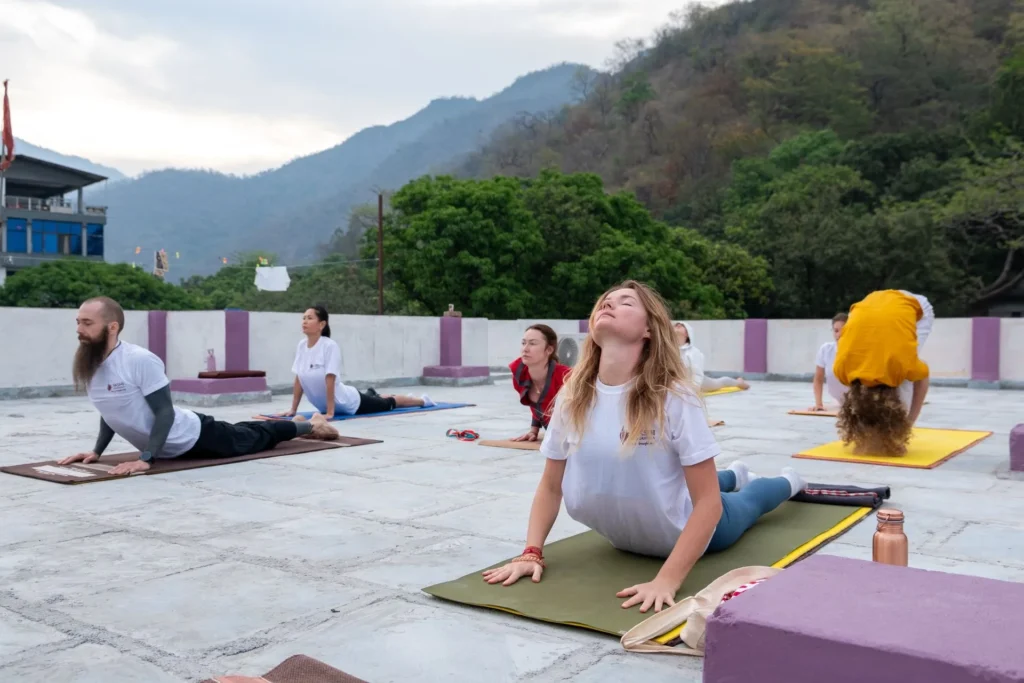
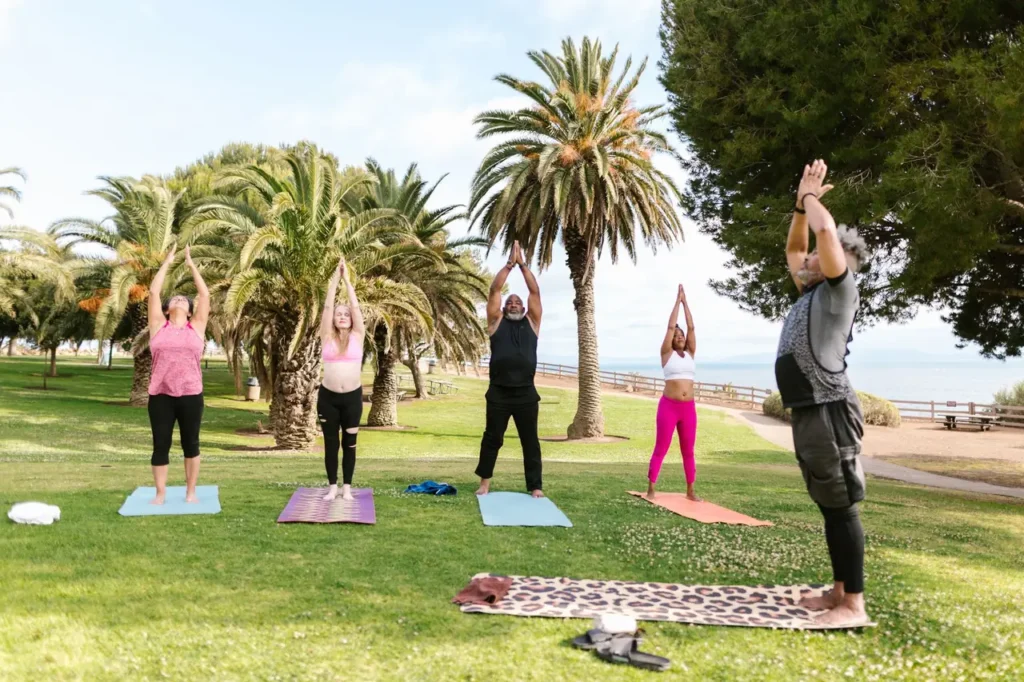
Yoga retreats. Prioritise movement clothes that stay in place in poses, layers for the cool-down at the end of practice, and grip socks if the studio floor is smooth. If you bring your own mat, a mat strap keeps it manageable. Skip “yoga fashion” — nobody is watching, and the practice is better without it.
Meditation retreats. Comfort for long sitting is everything: loose, warm layers, thick socks or soft slippers for the hall (shoes come off), and a shawl or blanket for sitting still — stillness gets cold faster than movement. If you sit on the floor at home, bring the cushion height you use; if you do not, plan to use a chair, and do not buy specialist equipment for one retreat.
Silent retreats. Add the silent-retreat section below. The main packing difference is not gear but preparation: everything you need must be packed before silence begins, because you cannot ask for it afterwards.
Wellness and spa retreats. Add swimwear (check whether the spa provides towels and robes — many do), a robe if yours is not provided, and comfortable walking shoes for grounds and nature walks. Spa retreats are where overpacking happens most: one swimsuit, one set of walking clothes, and the core list above are genuinely enough.
Nature and hiking retreats. Sturdy walking shoes you have already broken in (never new boots on a retreat), a daypack, sun protection, insect repellent if the season and region call for it, and layers for temperature swings between morning and midday. This is the one retreat type where a proper rain layer is non-negotiable, not optional.
By season: the layer that matters
Spring. The trickiest season: warm afternoons, cold mornings, and rain that arrives without warning. Pack a warm layer, a rain layer, and clothes you can add or remove in stages. Check the destination’s spring range, not just its average — mountain and desert springs swing 20 degrees or more in a day.
Summer. Light, breathable movement clothes, sun protection, and — counterintuitively — one warm layer for air conditioning and cool evenings. Desert retreats in summer need extra water capacity and sun protection, not extra clothes.
Fall. The best retreat season in much of the US, and the easiest to pack for: layers, a warm jacket, and closed shoes. Fall foliage retreats in New England and the mountains can turn cold fast after sunset, so the warm layer should be a real jacket, not a light cardigan.
Winter. Warm layers, warm socks, slippers for indoors, and lip balm. Winter retreats are often the quietest and most restorative — but only if you are warm. If the retreat involves outdoor practice or walks, add gloves and a hat; cold hands end a morning meditation faster than a noisy mind.
The silent-retreat add-on
Silent retreats deserve their own short list, because the rules change what “packed” means:
- Everything you need, packed before silence starts. Toiletries, medication, layers, charging cables — once silence begins, asking staff for forgotten items breaks the practice for you and others.
- A watch or simple clock if the retreat asks you to leave your phone behind, so you can keep track of session times without a screen.
- Warm layers, doubled. Sitting in silence for hours is colder than any other retreat activity. Bring the warmest layer you own, not the lightest.
- A journal. In silence, writing becomes the main outlet. Bring a notebook you like writing in, not a spare one.
- No books you have not started, no “just in case” projects. Silence is the practice, not a reading holiday. One book, if the retreat allows reading, is enough.
Phone, laptop, and valuables: the honest answer
This is the question every retreat packing list dances around, so here it is plainly.
Your phone: most retreats do not confiscate phones, but most ask you to limit use — and the retreat works better if you do. A practical middle path: bring the phone, keep it on silent and out of sight during sessions, and designate one or two check-in times a day (or none, if the retreat is fully unplugged). If the retreat is a digital-detox retreat, the rules are stricter — our digital detox trip guide explains the levels of unplugged and how to prepare for a truly offline stay.
Your laptop: leave it behind unless you have a specific, unavoidable work need — and if you do, be honest with yourself about whether this is the right retreat at the right time. A laptop in a retreat room has a way of turning a restorative trip into a remote office with nicer views.
Valuables: leave jewellery, expensive electronics, and anything you would worry about in shared lodging at home. Retreats are low-theft environments, but worry itself is the problem — every valuable you bring is something your mind has to track. Travel light in this sense too.
Shoes, bags, and the one-bag method
Shoes: two pairs, maximum. One pair for movement and walking, one pair of easy slip-ons for indoors and shared spaces. That is it. Retreat shoes do not need to match outfits; they need to be comfortable, broken in, and easy to take off at studio doors.
Bag: soft beats hard. A soft duffel or backpack fits under beds, in shared rooms, and in small closets in a way a hard suitcase does not. If you fly, a carry-on plus a personal item is enough for most retreats up to a week — checked luggage adds a failure point (a lost bag before a retreat is a miserable start) and a wait at the other end.
The one-bag method, in three steps:
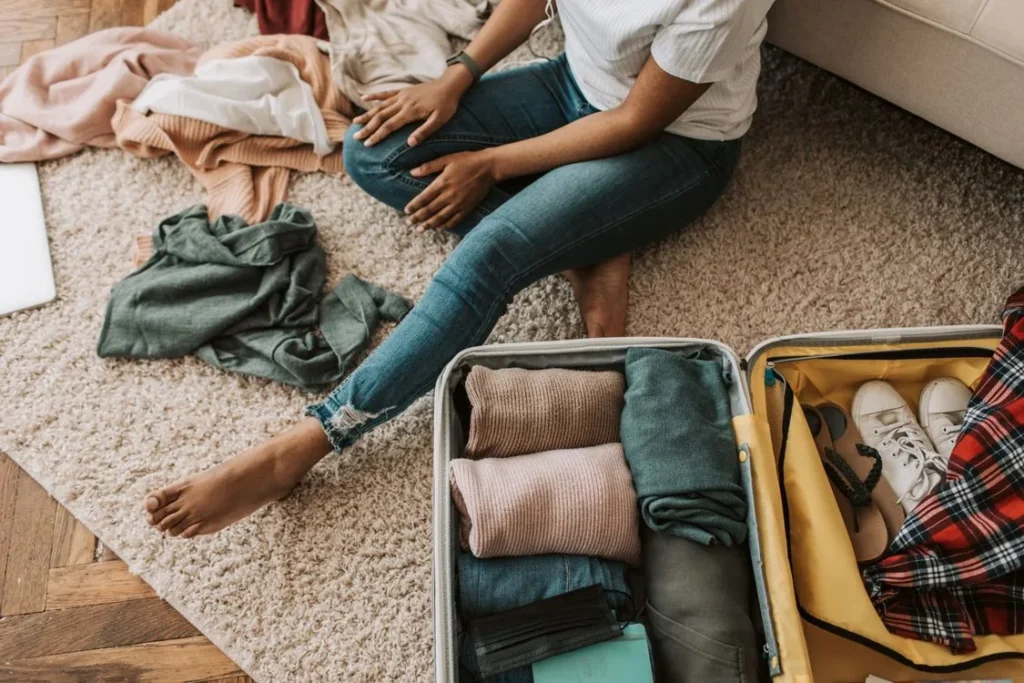
- Lay out everything on the bed, grouped by the sections above.
- Remove one item from each group. You will not miss it, and the bag will close without a fight.
- Pack the bag two days before departure, not the night before. Then leave it alone — the method only works if you stop reopening it. For the same pack-lighter principle applied to trip gear in general, see REI’s adventure travel gear checklist.
This is the same pack-early discipline our travel anxiety guide recommends for anxious travellers, and it works for the same reason: decisions made once, calmly, do not need to be remade under pressure.
What to leave behind
The leave-behind list is as important as the packing list, because overpacking is the most common retreat-packing mistake:
- Multiple “just in case” outfits. One spare set is preparation; four is anxiety in fabric form.
- Hair tools and full makeup bags. Retreats are not occasions for them, and shared bathrooms make them a burden.
- Work materials, unless unavoidable. See the laptop note above.
- Valuables and anything you would worry about losing.
- Snacks in bulk. Meals are provided; a small snack for travel day is enough.
- Books, plural. One book, not a library.
- Anything you bought specially for the retreat and have never used. A new mat, new shoes, new clothes — untested gear fails at the worst moment. Use what you already own and trust.
- Strong fragrances. Shared studios and meditation halls are scent-sensitive spaces. Unscented toiletries are the considerate choice.
Packing timeline
A week before: check the centre’s list, check the forecast for your destination, and make your list from the sections above — not from memory, not from anxiety.
Two days before: pack the bag, using the one-bag method. Lay out travel-day clothes separately.
The night before: charge devices, pack the calm kit (water bottle, notebook, earplugs, eye mask), put documents and ID in one place, and stop. The bag is done.
Travel day: carry medication, documents, phone charger, and one layer in your personal item — never in checked luggage. Everything else can wait; those four cannot.
Frequently asked questions
What should I pack for a wellness retreat?
Start with the core checklist in this guide — movement clothes for 2–3 days, one warm layer, sleepwear, a reusable water bottle, a notebook, toiletries, earplugs and an eye mask — then add the section for your retreat type and season. Check the centre’s own list first: most centres provide bedding, towels, mats, and props, so you should not pack those unless the centre says otherwise.
Do I need to bring my own yoga mat?
Usually not. Most yoga and meditation retreats provide mats and props. Bring your own only if you strongly prefer it and are willing to carry it — and check with the centre first, because a mat is bulky to transport for no reason.
What should I wear to a wellness retreat?
Comfortable movement clothes you can sit, stretch, and walk in, plus layers for temperature changes. Retreats are not occasions for fashion: prioritise clothes that stay comfortable through a long sitting or practice session, and one warm layer for early mornings and air-conditioned studios.
What should I NOT bring to a wellness retreat?
Work materials and a laptop unless unavoidable, valuables you would worry about in shared lodging, multiple “just in case” outfits, strong fragrances, and anything you bought specially and have never used. Overpacking is the most common mistake — one spare set is preparation, four is a burden.
Can I bring my phone or laptop?
Most retreats allow phones but ask you to limit use; a practical approach is silent, out of sight during sessions, with one or two check-in times a day. Laptops should stay home unless work is genuinely unavoidable. Fully unplugged retreats have stricter rules — check the centre’s policy before you go.
What do I pack for a silent retreat that’s different?
Everything you need before silence begins (you cannot ask afterwards), extra warm layers for long sitting, a journal, and a simple watch if phones are left behind. Pack no “just in case” projects — silence is the practice, not a reading holiday.
Keep reading: this checklist completes Cluster A’s first loop — choose, budget, pack. If you have not chosen yet, our wellness retreats for beginners guide is the hub that explains types, costs, and how to choose. And if the retreat you booked is in California, our California meditation retreats guide covers the desert, coast, and mountain options in detail, so you can pack for the region you are actually going to.