Most American vacations fail in the same quiet way. You come home with a camera roll full of landmarks and a body that feels like it needs another vacation. The problem is rarely the destination. It is the itinerary: too many stops, too many miles, too many days spent rushing between things you barely remember.
Slow travel is the opposite habit, and it is simpler than the philosophy-heavy articles about it make it sound. It is not about quitting your job to wander for a year, and it is not a European import that only works in Tuscany. It is a practical way to plan an ordinary American weekend or vacation week: fewer bases, fewer miles, one real thing per day, and enough unscheduled time that the trip can actually restore you.
This guide is the planning system for that kind of trip — built for US distances, US prices, and normal amounts of paid time off. If you have already decided you want to unplug while you travel, our complete beginner’s guide to planning a digital detox trip pairs with this system perfectly: slow travel decides where your time goes, and a detox decides where your attention goes.
What slow travel actually is (and what it is not)
Slow travel is a pace, not a place. Two travelers can visit the same small town and have opposite trips: one spends six hours driving to three towns in one day, the other spends three days in one town and leaves rested. The difference is not budget or luck. It is how many decisions, drives, and check-ins each day demands.
Slow travel is:
- Staying in one base for at least two nights, usually three
- Planning one anchor activity per day, not five
- Choosing the journey — a scenic drive, a train ride — as part of the trip, not dead time to minimize
- Leaving deliberate unscheduled hours every day for wandering, resting, or changing your mind
Slow travel is not:
- Doing nothing. A slow trip still has a plan; it just has a smaller, better one.
- Only for people with unlimited time. The system below works for a three-day weekend, and that is where most beginners should start.
- Always cheaper, though it often is — fewer hotel changes means fewer cleaning fees, less gas, and fewer “we’re already here, let’s just pay for it” tourist traps.
- A ban on popular places. It is a way of visiting them without the crowd-chasing schedule that ruins them.
One honest framing note: slow travel will not fix burnout on its own, and no honest guide should promise that. What it reliably does is remove the second job — the logistics job — that most vacations quietly add on top of your real job.
The 5 rules of a slow trip
Every decision in this guide comes back to five rules. If a plan breaks one of them, change the plan, not the rule.
Rule 1: Two nights minimum per base
One-night stays are the single biggest destroyer of slow trips. You arrive, unpack halfway, sleep, repack, and check out — and you have spent a whole day on logistics without seeing anything properly. Two nights is the floor. Three nights is where a place starts to feel familiar: you learn which diner opens early, which trail is quiet at sunset, and you stop navigating and start noticing.
For a three-day weekend, that means one base, period. For a five-day trip, two bases at most. For a full week, three bases is the ceiling, and two is usually better.
Rule 2: One anchor per day
Pick one thing per day that the day is about: a morning hike, a museum, a farmers market, a lake. Everything else is bonus. This rule sounds restrictive until you try it — then you realize it is the rule that gives you your afternoons back. The anchor gets your best energy. The rest of the day belongs to whatever you discover while you are already there.
A practical test: if your day’s plan needs a timed schedule with more than three entries, it is not a slow day. Cut it down to the anchor and let the rest happen.
Rule 3: The 2-hour drive rule
Keep driving between bases under two hours whenever possible, and never plan more than three hours of driving in a single day. American distances punish ambition: a “quick” four-hour drive plus stops, food, and traffic is a lost day, not a travel day. If the map says your next base is three-plus hours away, you have two honest options — pick a closer base, or add a night and make the drive itself the day’s anchor, with stops built in rather than bolted on.
This rule also protects your arrival day. Arriving somewhere at 7 p.m. after a long drive means your first “day” there is really just an evening. Arrive by mid-afternoon, and the trip starts the same day.
Rule 4: The journey is part of the trip
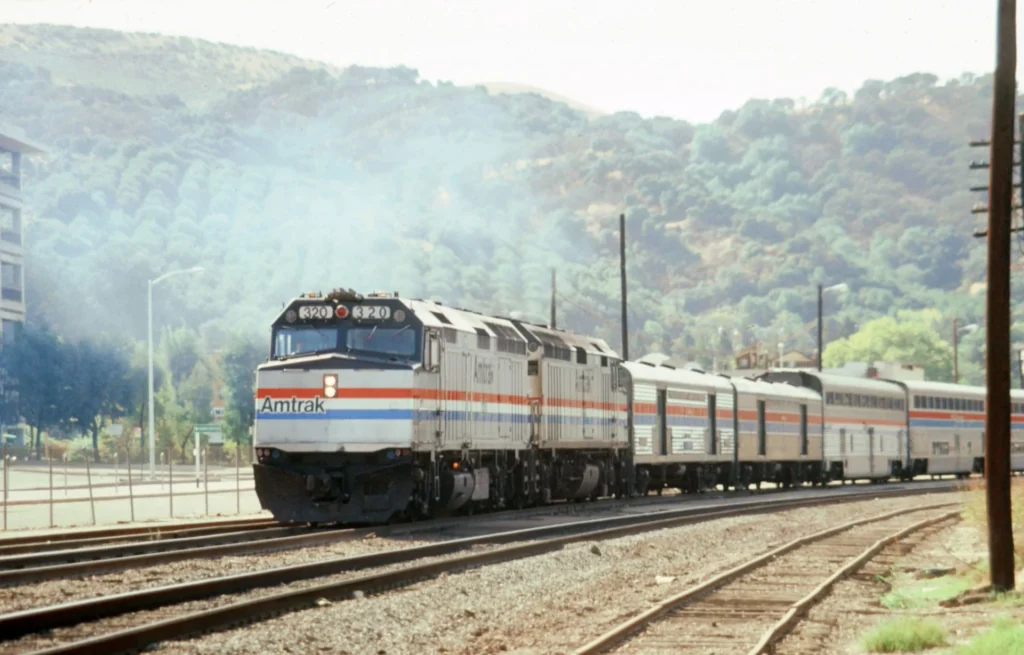
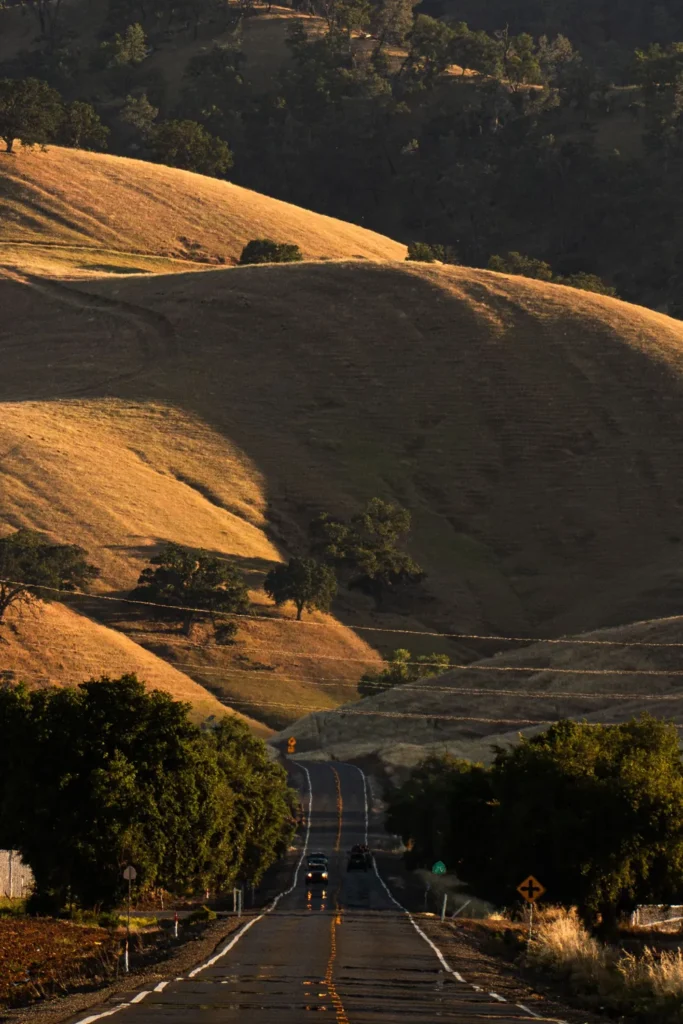
Slow travel treats getting there as content, not overhead. A scenic rail segment, a two-lane highway instead of the interstate, a ferry crossing — these are the parts of old trips people actually remember, because nothing was competing for their attention. This does not mean every trip needs a train. It means that when a slower route costs you an hour and gives you a river valley instead of a rest stop, take the river valley.
Our guide to the most scenic Amtrak routes for a slow, mindful journey builds this rule out for rail specifically: which single segments are worth riding even if you cannot do a whole route, and what coach versus roomette really costs.
Rule 5: Schedule the unscheduled time
Write “nothing” into your itinerary, on purpose, every day — at least two unscheduled hours, ideally an unscheduled afternoon. Beginners resist this because it feels like wasting a trip. In practice, it is where the trip happens: the bookstore you wandered into, the long lunch, the nap that made the evening enjoyable instead of exhausting. If you do not protect this time in advance, the itinerary will eat it. Every time.
Step 1: Pick your base the slow way
Most people pick a destination, then figure out where to sleep. Slow travelers reverse it: pick a base that makes slow days easy, and the destination takes care of itself.
A good slow base has four things:
- A walkable center. A main street you can explore on foot — diner, coffee shop, bookstore, park — so that a “do nothing” morning still feels like a trip.
- One natural anchor nearby. A lake, a trail system, a beach, a park — the National Park Service site is the reliable place to check hours, fees, and closures before you count on one. Nature is the easiest anchor because it does not require tickets, timing, or crowds.
- Lodging you actually want to return to. You will spend more time at your lodging on a slow trip — mornings, afternoons, evenings. A place with a porch, a yard, or a decent common room beats a room you only sleep in. This is worth paying slightly more for, because you will use it.
- A second-day reason. Ask yourself: if it rains on day two, is there still something good to do here? If the answer is no, the base is too thin for a multi-night stay. Pick somewhere with a museum, a historic downtown, or a covered market as backup.
Small towns are the classic slow base for exactly this reason — they are walkable, quiet, and cheap enough that slowing down does not feel wasteful. The mistake is trying to collect them: three small towns in three days is not a slow trip, it is a road trip with better scenery.
Step 2: Build the days around one anchor each
Here is how the rules turn into actual days. Start with the anchor, then add only what fits around it without a schedule.
Day 1 — Arrive and settle. Arrive by mid-afternoon (Rule 3). Unpack fully — yes, fully, even for two nights; living out of a suitcase keeps you in transit mode. Walk the main street with no goal. Eat somewhere local. This day’s anchor is the town itself.
Day 2 — The anchor day. Your one big thing: the hike, the lake, the museum, the market. Start it in the morning, when your energy is best. Afternoon is unscheduled by design (Rule 5). Evening is a long dinner or a sunset walk — not a second attraction.
Day 3 — The slow morning, then home. Sleep in. Breakfast without rushing. One last walk or coffee. Leave after lunch, not at dawn — a slow trip should not end with an alarm clock and a bleary drive. If you are staying longer, day 3 becomes another anchor day, and the pattern repeats.
Notice what is missing: no day with three towns, no “on the way we will also stop at” chains, no evening attraction after a full day. That is not laziness. That is the system working.
Step 3: Choose how you get there — drive, train, or fly (and when each wins)
Driving wins for most slow trips under about four hours from home, and for any trip where the base is rural. You control the pace, you can take the scenic route (Rule 4), and you avoid the airport’s hurry-up-and-wait cycle entirely. The cost is mostly gas plus wear: for a 200-mile round trip in a car getting 30 mpg at roughly $3.50 a gallon, fuel is about $25 — the cheapest part of the trip by far. The real cost of driving is time, which is why the 2-hour rule matters more than the fuel math.
The train wins when the route itself is the point. A scenic rail segment turns transit into the anchor for that day — you sit, watch the landscape, read, and arrive rested instead of drained. It also wins for solo travelers who do not want to drive, and for trips where the destination is a walkable city. It loses when schedules are thin (one train a day means a missed connection costs you a day) and when the destination needs a car once you arrive. Check both before booking: the train’s timetable on Amtrak and how you will get around at the other end.
Flying wins only when the distance makes driving unreasonable — roughly, anything over a full day’s drive each way for a short trip. For a three-day weekend, flying more than about 90 minutes each way plus airport time usually eats the trip. If you must fly, fly to one base and stay there; a fly-drive-fly tour of three cities in four days is the opposite of slow travel, however good the photos look.
Whichever you choose, one discipline applies: book the return journey with slack. A slow trip that ends with sprinting through an airport or driving home exhausted has undone its own point in the last three hours. Leave later than feels necessary.
Step 4: Two sample frameworks (copy one, then adjust)
The 3-day slow weekend
- Friday: Drive under two hours to one small-town base. Arrive mid-afternoon, unpack fully, walk main street, local dinner.
- Saturday: One anchor in the morning (trail, lake, market). Unscheduled afternoon. Long dinner.
- Sunday: Slow morning, coffee, one last walk. Leave after lunch.
Total driving: under four hours for the whole trip. Total attractions: one real one, plus whatever the town offered on its own. This is the framework to start with, even if you have a full week available — it teaches you what slow actually feels like before you scale it up.
The 5-day slow week
- Day 1: Arrive at base one (two nights). Settle, walk, local dinner.
- Day 2: Anchor day at base one. Unscheduled afternoon.
- Day 3: Slow morning, then a short drive (under two hours) to base two (three nights). Afternoon to settle.
- Day 4: Anchor day at base two.
- Day 5: Second anchor or a full unscheduled day at base two — this is the day that makes a week feel like a week instead of two weekends stitched together.
- Day 6 (or day 5 afternoon): Slow departure after lunch.
Two bases, three anchors at most, and at least one full day with nothing planned. If your five-day plan currently has five bases, cut it to two and watch the trip get better, not smaller.
Step 5: Budget a slow trip honestly
Slow travel is usually cheaper than a packed trip, but not because slow places are free. It is cheaper because of what you stop paying for: extra hotel nights, extra tankfuls, attraction tickets for things you did not really want to see, and meals eaten in a rush at the nearest place to the attraction.
For two people, a three-day slow weekend in the US in 2026 typically looks like this:
| Item | Typical range | What drives it |
|---|---|---|
| Lodging (2 nights) | $200–$450 | Small-town inn or cabin vs. resort town; weekend vs. weekday |
| Food | $150–$300 | One good dinner out + groceries/café meals; cooking one meal a day saves real money |
| Transport (drive) | $50–$150 | Gas + parking; a train segment replaces gas with a ticket ($50–$200 per person for scenic segments) |
| Activities | $0–$100 | Parks and trails are often free or $5–$35 per vehicle; one paid anchor is enough |
| Total, 2 people, 3 days | $400–$1,000 |
Three money notes. First, weekdays are the slow traveler’s discount: the same lodging often costs 20–40% less Sunday through Thursday, and the town is quieter too — the two benefits stack. Second, one paid anchor beats five cheap ones: a $60 guided kayak trip you remember beats five $12 attractions you forget. Third, the biggest hidden cost is the second base: every base change adds a cleaning fee, a check-in/out cycle, and a driving day. Staying put is both the cheapest and the calmest choice.
Beginner mistakes (the ones that quietly break slow trips)
Packing the itinerary “just in case.” A list of backup attractions becomes a to-do list the moment you feel bored. Boredom is not a problem to solve on a slow trip — it is the trip working. Keep backups to one rainy-day option, not ten.
Choosing a base for its photo, not its walkability. A stunning cabin forty minutes from the nearest town means every meal and walk requires a car. Beauty you have to drive to is not slow; it is a commute with a view.
Treating the travel day as free. The drive or train ride is a day of the trip. If you plan an anchor for arrival evening, you have planned two days in one, and you will pay for it with exhaustion the next morning.
Letting one person carry the logistics. Slow travel fails when one traveler is navigating, booking, and deciding while the other relaxes. Split the jobs before you leave: one person owns the route, the other owns food and lodging, or alternate days. A trip where one person works and one rests is not a shared slow trip.
Going slow everywhere except the phone. A slow itinerary with a fast phone is still a fast trip. If the point is to actually rest, the screen rules matter as much as the mileage rules — our digital detox trip guide covers the night-before phone checklist that makes this stick.
Frequently asked questions
Is slow travel realistic if I only have a long weekend?
Yes — a long weekend is the best place to start, not a compromise. One base, two nights, one anchor per day, and a drive under two hours each way is a complete slow trip, and it is the version most people repeat. A week-long slow trip is the same system with a second base added, not a different system. Start with the weekend framework above, notice how the unscheduled afternoon feels, and scale up only if you want more of that feeling — not more destinations.
Keep reading: if the journey itself appeals to you, our guide to the most scenic Amtrak routes for a slow, mindful journey shows how to make the train ride the best part of the trip — and if you want your slow trip to also be an unplugged one, our complete beginner’s guide to planning a digital detox trip gives you the phone rules, the levels of unplugged, and the re-entry plan that keeps the calm after you get home.