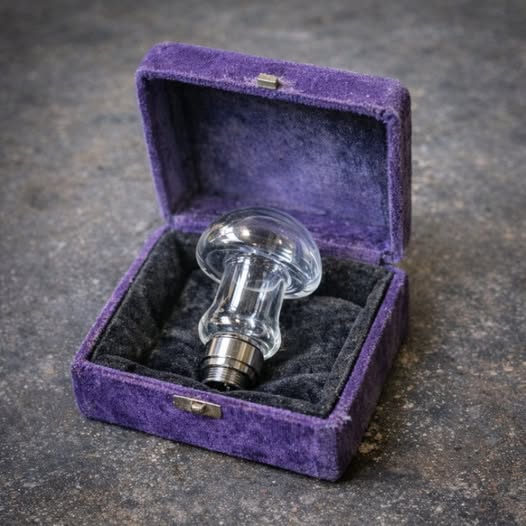
Estate sales have a way of turning up objects that feel like they belong in another world. Between worn furniture, family china, and boxes of forgotten keepsakes, there are sometimes items so unusual that they stop people in their tracks. One such discovery was a glass mushroom-shaped object stored inside a velvet-lined wooden box—beautiful, puzzling, and clearly made for more than decoration.
At first glance, it might look like a delicate art piece or an odd perfume accessory. But the details tell a different story. The clear glass body, the rounded top, and especially the threaded metal connector at the base suggest it was once part of a machine. And not just any machine. Based on its design, this mysterious estate sale find appears to be a vintage violet ray electrode, a leftover piece from the strange and fascinating age of early 20th-century medical gadgets.
An Elegant Object With a Hidden Purpose
Part of what makes this find so compelling is the way it was stored. A velvet-lined box with brass hinges implies that the object mattered to someone. People do not usually protect ordinary household items with that much care. The presentation alone suggests it once held value, whether practical, financial, or sentimental.
The glass piece itself is striking. It has a smooth cylindrical stem and a broad dome-shaped top, giving it the unmistakable silhouette of a mushroom. The proportions are refined, almost graceful. But the metal connector changes the whole story. Decorative glass objects do not usually have a base designed to attach to a device. That one feature strongly points to function over ornament.
Why the Metal Connector Matters
When identifying old objects, small mechanical details often reveal more than appearance does. In this case, the brass threaded connector is the biggest clue. It indicates the glass bulb was meant to be fitted into another component, most likely a handheld wand or electrical instrument.
That is where the violet ray theory becomes convincing. Violet ray machines were once sold across America as miracle devices for use at home. These machines used high-frequency electrical currents and interchangeable glass attachments, known as electrodes, which were applied to different parts of the body. The mushroom-shaped version was one of the more recognizable styles because it could cover a larger area during treatment.
A Look Back at the Violet Ray Craze
In the late 19th and early 20th centuries, Americans were introduced to all kinds of health devices that promised dramatic results with very little evidence behind them. Violet ray machines were among the most memorable. They were marketed as solutions for an astonishing range of problems, from skin conditions and headaches to fatigue, poor circulation, and chronic pain.
To many households, these devices seemed modern, scientific, and exciting. Electricity represented progress, and manufacturers were eager to tap into that public fascination. The machines produced a glowing effect and a buzzing sensation, which made them feel advanced and therapeutic. In reality, they belonged more to the world of quack medicine than proven treatment.
That is what gives objects like this glass electrode such historical interest. They are not just old medical tools. They are symbols of a time when technology, hope, and aggressive marketing blended into a booming industry of questionable cures.
What a Violet Ray Electrode Actually Did
If this estate sale item is indeed a violet ray electrode, its purpose was fairly specific. The glass attachment would connect to the main machine, allowing electrical current to travel into the bulb. Inside the glass was typically a gas that would react when energized, creating a visible violet or purple glow. Users would then place the glowing glass against the skin during treatment.
The mushroom shape was especially practical because it spread contact over a broader surface. That made it useful for areas such as the back, shoulders, abdomen, or other larger parts of the body. Other electrode shapes existed too—some resembled combs, spoons, or narrow probes—but the mushroom design stood out for its versatility.
This is why the object’s shape is so important. It was not randomly decorative. It was likely engineered to match a very specific type of use within an electrical wellness device.
Why Collectors Find These Pieces So Fascinating
Medical antiques occupy a unique corner of the collector world. They are often visually unusual, historically revealing, and tied to forgotten ideas about science and health. A glass violet ray electrode checks all of those boxes. It is attractive enough to display, but strange enough to spark immediate conversation.
Several factors make an item like this more desirable. Good condition is crucial, especially with fragile glass. Chips, cracks, or clouding can lower interest. Original packaging matters too. A velvet-lined box adds character and can increase appeal because it suggests authenticity and careful preservation.
Collectors also look for uncommon shapes, maker’s marks, and complete sets. An electrode by itself can still be valuable, but a piece that retains its box and shows minimal damage is often much more compelling than a loose example found in poor condition.
Is It Dangerous to Keep?
For display purposes, the glass electrode itself is generally harmless if it is not connected to a working machine. On its own, it is simply an inert antique object. The greater concern comes from attempting to use old violet ray equipment as originally intended.
Vintage electrical devices were not built to today’s safety standards. Worn insulation, damaged wiring, or aging components can pose real hazards. That means the safest approach is to treat the electrode as a collectible or historical artifact, not a functional wellness tool.
In other words, it can absolutely live on a shelf, inside a cabinet, or as part of a curated display—but it should not be brought back into service just because it still looks intact.
How to Confirm the Identification
Anyone who finds a similar object should inspect it carefully for markings, stamped names, or serial numbers. Sometimes manufacturers left clues on the metal connector or along the glass itself. Even faint lettering can help narrow down the age, origin, or brand.
Photographs can also be extremely helpful. Antique medical device communities, collector forums, and specialty groups often recognize these pieces quickly, especially when clear images of the connector and overall shape are provided. Comparing the object to documented examples online can help confirm whether it is truly a violet ray electrode or another kind of vintage electrical attachment.
A Small Object That Tells a Bigger Story
What makes this estate sale discovery so memorable is not just its unusual form. It is the way one small object opens a window into a larger chapter of American history. This glass mushroom is more than a curious collectible. It reflects an era when people were eager to trust machines that promised wellness, relief, and modern answers to old problems.
Seen in that light, the piece becomes more than a mystery. It becomes a conversation starter about early consumer health culture, medical misinformation, and the seductive power of new technology. That is a remarkable transformation for something found tucked away in a box at an estate sale.
From Forgotten Gadget Part to Display-Worthy Relic
For someone who enjoys antiques, medical history, or simply unusual objects, a find like this deserves a second life. Displayed on its own or alongside a short explanation of violet ray machines, it can turn from an anonymous oddity into a striking artifact from America’s past.
What was once confusing now feels surprisingly clear: this was likely not art, not a lamp part, and not random glassware. It was probably a mushroom-style violet ray electrode, once used in a device sold as a household cure-all.
And that may be the most fascinating part of all. In a world full of discarded things, sometimes the most mysterious object in the room is also the one with the most to say.