Ever looked at your hands and wondered whether they might reveal something about you beyond what you see on the surface?
For years, researchers have explored possible links between physical traits and behavioral tendencies, including finger length patterns.
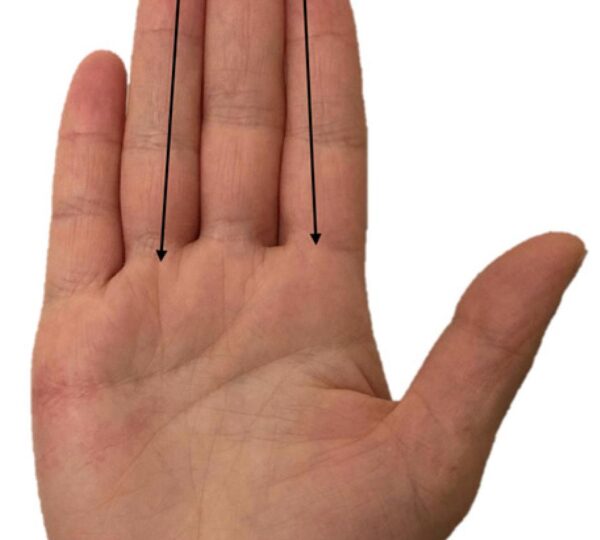
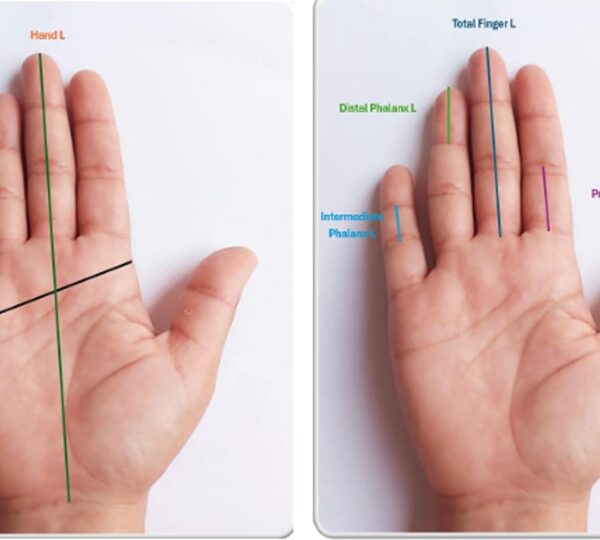
One of the most widely discussed concepts in this area is the 2D:4D ratio, which compares the length of the index finger (second digit) to the ring finger (fourth digit). Scientists study this ratio as a potential biological marker linked to prenatal hormone exposure.
The idea behind this theory is that varying levels of testosterone and estrogen in the womb may influence both finger development and certain behavioral tendencies later in life. However, researchers emphasize that these are correlations, not fixed rules.
It is important to understand that this field of study is still evolving, and findings are often based on population trends rather than individual predictions. Personality is shaped by many factors, including environment, education, and life experiences.
In general research discussions, individuals are sometimes grouped into broad patterns based on finger ratios, but these categories are not scientifically definitive personality types. They are better understood as observational models rather than diagnostic tools.
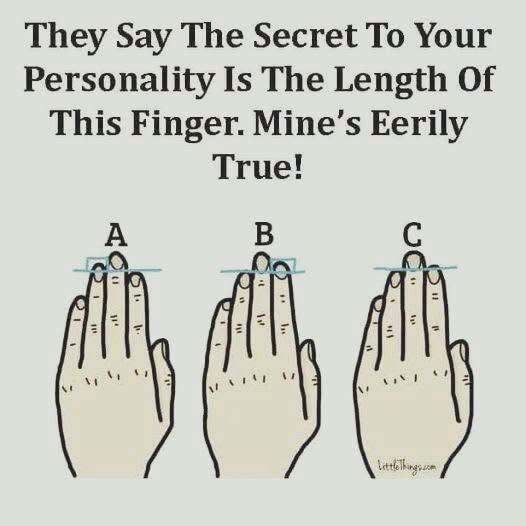
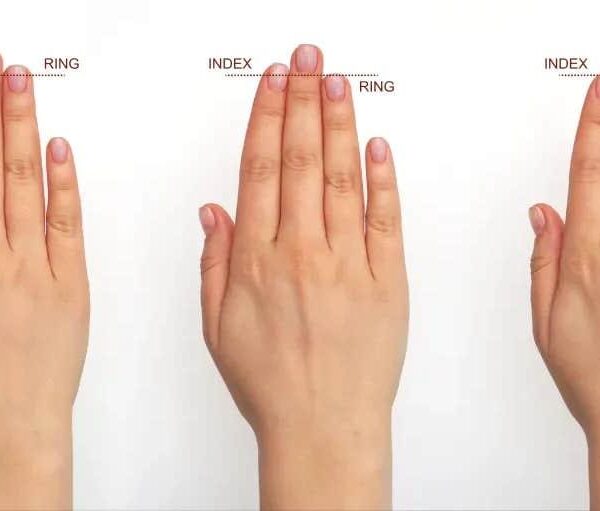
One commonly described pattern is when the ring finger appears longer than the index finger. Some studies suggest this may correlate with traits such as competitiveness, confidence, and a willingness to take risks in certain situations.
People who fall into this pattern are sometimes described in behavioral studies as more inclined toward action-oriented thinking, but again, this is not a rule and varies greatly between individuals.
Another observed pattern is when the index finger is longer than the ring finger. Some research has associated this with traits such as careful decision-making, structured thinking, and strong organizational tendencies.
Individuals in this group are often described as more reflective in their choices, preferring planning over impulsive action. However, personality cannot be accurately determined from physical features alone.
A third commonly discussed pattern occurs when the index and ring fingers are approximately equal in length. This balance has been loosely associated with adaptability and interpersonal awareness in some observational studies.
People with this pattern are often described as having flexible communication styles and an ability to understand different perspectives, although these traits depend heavily on personal development and life context.
While these general groupings are frequently shared in popular science discussions, researchers consistently caution against interpreting them as strict personality classifications or predictive indicators.
The 2D:4D ratio is influenced by biological development, but its connection to complex human behavior remains an area of ongoing research rather than established psychological fact.
Many scientists agree that personality is far too complex to be determined by a single physical measurement. Genetics, upbringing, culture, and individual experiences all play significant roles in shaping behavior.
Despite its limitations, this theory continues to attract interest because it offers a simple and visually accessible way to explore potential links between biology and behavior.
It is also important to note that studies in this area often show overlapping results, meaning no single finger pattern consistently predicts specific personality traits across all individuals.
This overlap reinforces the idea that human behavior cannot be reduced to simple categories based on anatomy alone, even if certain trends appear in statistical analysis.
Rather than viewing finger length as a definitive indicator, it is more accurate to see it as one of many small biological variations that may reflect developmental influences.
In scientific discussions, these types of markers are usually treated as probabilistic associations rather than deterministic truths, which means they may suggest tendencies but not determine outcomes.
Personality psychology, as a broader field, relies more heavily on behavioral assessments, cognitive patterns, and validated psychological models rather than physical characteristics.
Still, the curiosity surrounding physical traits and personality remains strong because people naturally seek patterns that help them understand themselves and others more easily.
This interest has led to many popular interpretations of the 2D:4D ratio in media and online discussions, though these interpretations often simplify complex scientific findings.
Experts generally encourage a balanced perspective, recognizing the difference between engaging educational theories and clinically supported psychological tools.
From a biological standpoint, finger length differences are real and measurable, but their behavioral implications remain limited and should not be overgeneralized.
Human development is influenced by a wide range of interacting factors, making it unlikely that any single physical trait can fully explain personality.
As research continues, scientists aim to better understand how prenatal conditions may subtly influence development, while still acknowledging the complexity of human behavior.
In conclusion, finger length patterns offer an interesting glimpse into how biology and development interact, but they should be viewed as exploratory observations rather than definitive personality indicators.
Ultimately, personality is shaped by far more than physical traits, and each individual represents a unique combination of experiences, choices, and environmental influences that cannot be captured by a single measurement.