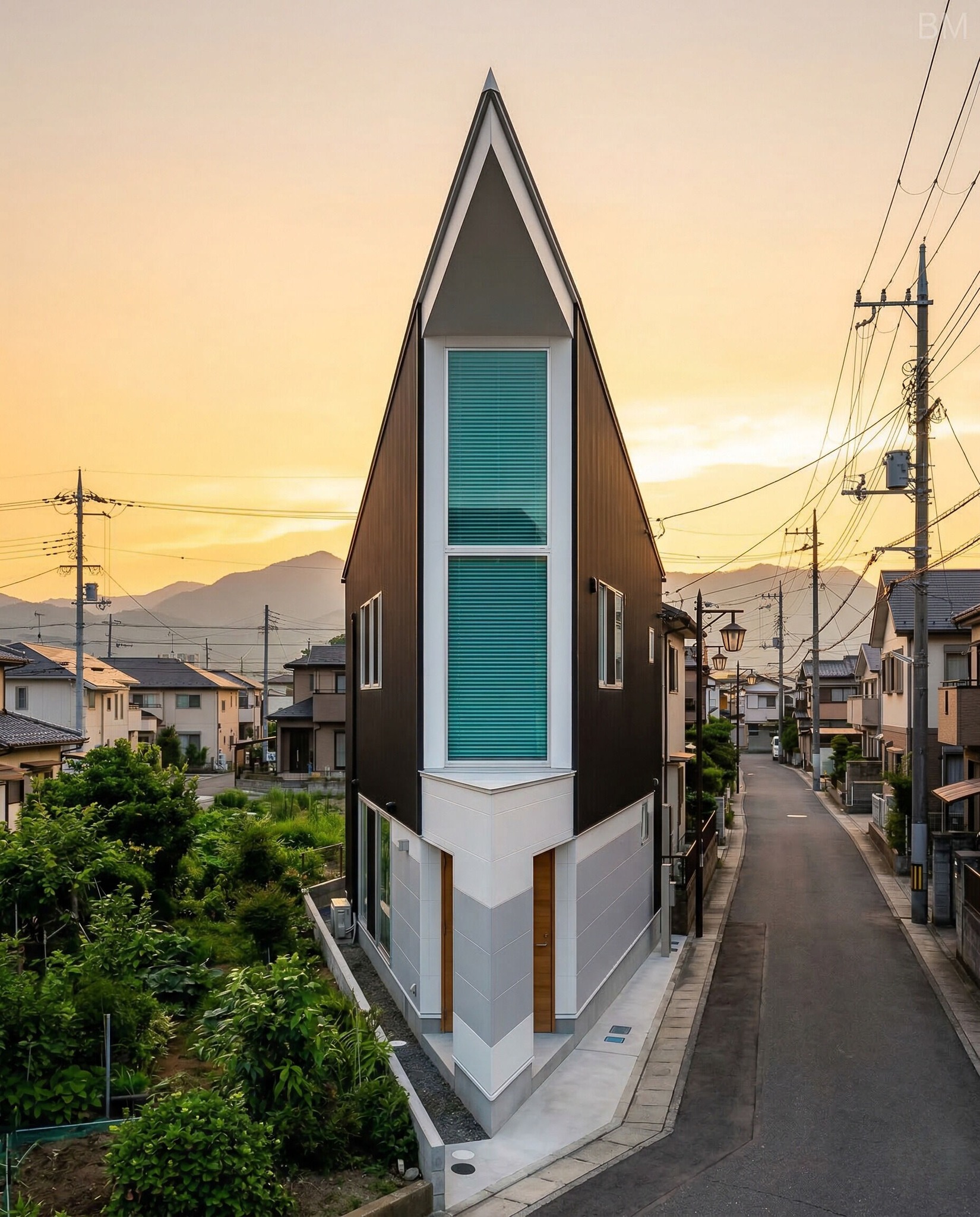
At first glance, this narrow home in Japan looks almost impossible to live in. Squeezed between neighboring buildings and built on a tight plot of land, it appears far too small for comfortable living.
But step inside, and everything changes.
This narrow house in Japan interior reveals a completely different story—one of smart design, creativity, and efficient use of space. What seems cramped from the outside becomes surprisingly open, bright, and functional inside.
Why Narrow Homes Are Common in Japan
Japan is known for its dense cities and limited land availability. Because of this, architects often work with extremely small or oddly shaped plots.
This led to the rise of a unique architectural style known as “kyosho jutaku”, or micro-homes, designed specifically for compact living spaces.
These homes are built to maximize every inch, often going vertical instead of horizontal. Instead of wide layouts, they use height, light, and clever design to create a comfortable living environment.
The First Impression: Small and Minimal
From the outside, narrow homes often look:
-
Slim and compact
-
Minimalist in design
-
Almost too tight to function
Some are only a few meters wide, making them appear more like a hallway than a house.
But this visual impression can be misleading.
Step Inside: A Completely Different Experience
Once inside, the narrow house Japan interior feels far more spacious than expected.
Architects achieve this through several smart design techniques:
1. Vertical Layout Instead of Horizontal Space
Instead of spreading rooms across one floor, these homes stack them vertically. Some homes even have multiple levels connected by compact staircases.
This approach turns limited ground space into a fully functional living area.
2. Open-Concept Design
Many narrow homes eliminate unnecessary walls. Instead of dividing space into separate rooms, they create flowing areas that feel larger and more connected.
In some designs, even floors are split into platforms rather than traditional rooms.
3. Smart Use of Natural Light
Large windows, skylights, and light-colored interiors help make the space feel open.
Natural light plays a huge role in creating the illusion of space, making even very narrow interiors feel bright and inviting.
4. Multi-Functional Furniture
Furniture in these homes is often designed to serve multiple purposes.
For example:
-
Beds with storage underneath
-
Foldable tables
-
Built-in shelves
This reduces clutter and maximizes usable space.
5. Minimalist Design Philosophy
Japanese design often follows a minimalist approach, focusing only on what is necessary.
This reduces visual clutter and makes small spaces feel calmer and more spacious.
How Architects Turn Limitations Into Advantages
Designing a narrow home is not just about saving space—it’s about rethinking how space is used.
Architects often treat limitations as opportunities.
For example:
-
Staircases become storage areas
-
Walls double as shelving
-
Open spaces serve multiple purposes
In some extreme cases, houses built on incredibly small plots still manage to feel livable and functional despite their size.
Why These Homes Feel Bigger Than They Are
The secret behind these homes is not size—it’s design.
Even though the actual square footage is small, the way space is arranged creates a feeling of openness.
Key factors include:
-
Vertical height instead of width
-
Continuous flow between spaces
-
Strategic lighting
-
Efficient organization
These elements combine to create a home that feels much larger than it looks.
What We Can Learn From Narrow Homes
Even if you don’t live in a narrow house, there are valuable lessons you can apply to your own space:
-
Use vertical storage to save floor space
-
Keep design simple and clutter-free
-
Let in as much natural light as possible
-
Choose multi-functional furniture
These principles can make any home feel more open and comfortable.
Final Thoughts
This narrow house in Japan interior proves one important idea:
Bigger doesn’t always mean better.
With the right design, even the smallest spaces can feel spacious, functional, and beautiful.
What looks tiny from the outside can hold a completely different world inside.
Sometimes, it’s not about how much space you have…
It’s about how you use it.