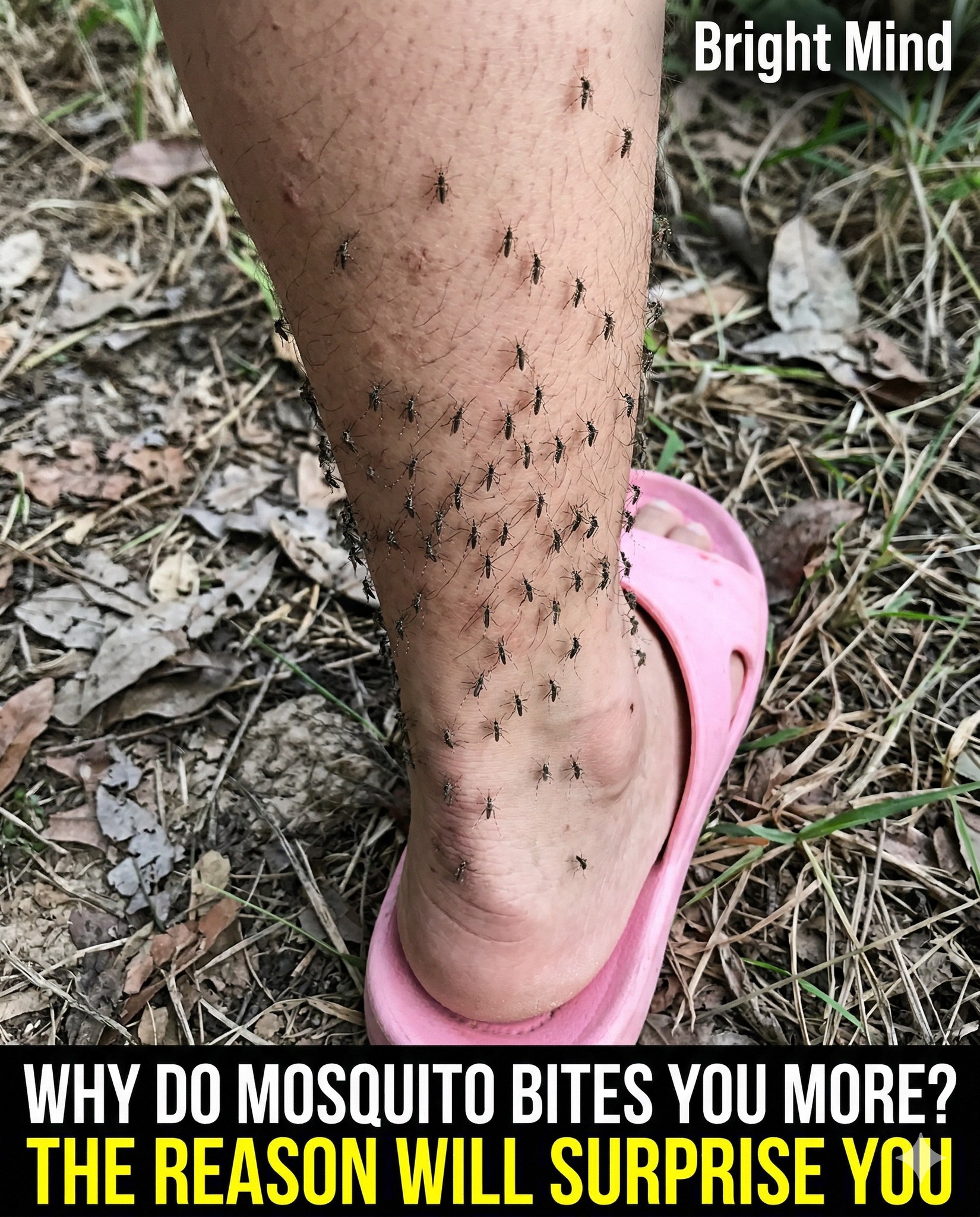
Have you ever noticed something strange?
You’re sitting with a group of people…
And somehow…
👉 You’re the only one getting bitten
Again.
And again.
And again.
Meanwhile, everyone else seems completely untouched.
If this has ever happened to you, you’ve probably asked:
👉 “Why me?”
The truth is…
👉 It’s NOT random
And science actually has a clear explanation.
📑 Table of Contents
- Do Mosquitoes Really Prefer Certain People?
- Carbon Dioxide: The Main Attraction
- Body Temperature and Sweat
- Blood Type Matters More Than You Think
- Skin Bacteria and Natural Scent
- What You Wear Can Attract Them
- Alcohol and Mosquito Attraction
- Why Some People Rarely Get Bitten
- How to Reduce Mosquito Bites
- Final Thoughts
🧪 Do Mosquitoes Really Prefer Certain People?
Yes.
Mosquitoes don’t choose randomly.
According to research, they are highly selective and use multiple signals to find their target.
That means if you’re getting bitten more than others…
👉 There’s a reason
🌬️ 1. Carbon Dioxide: The Main Attraction
The biggest factor?
👉 The air you breathe out
Mosquitoes are strongly attracted to carbon dioxide (CO₂).
The more you produce…
👉 The more visible you are to them
This is why:
- Adults get bitten more than children
- Larger people get bitten more
- Pregnant women attract more mosquitoes
Because they naturally produce more CO₂.
🔥 2. Body Temperature and Sweat
Mosquitoes are also drawn to heat.
If your body runs slightly warmer…
👉 You’re more likely to be targeted
Sweat also plays a big role.
Compounds like:
- Lactic acid
- Uric acid
- Ammonia
make your skin more attractive to mosquitoes.
That’s why you often get bitten more:
👉 After exercise
👉 In hot weather
👉 When sweating
🩸 3. Blood Type Matters More Than You Think
This one surprises a lot of people.
Studies suggest mosquitoes prefer certain blood types.
People with:
👉 Type O blood
tend to get bitten more often than:
👉 Type A or B
In fact, some research shows mosquitoes may land on Type O individuals nearly twice as often.
🦠 4. Skin Bacteria and Natural Scent
Your skin isn’t just skin.
It’s covered with bacteria.
And that bacteria creates a unique scent.
Mosquitoes use that scent to decide:
👉 Who to bite
Some people naturally produce odors that attract mosquitoes more.
Others produce scents that repel them.
That’s why two people standing side by side can have completely different experiences.
🎽 5. What You Wear Can Attract Them
Mosquitoes are also visual hunters.
They are more attracted to:
- Dark colors
- Black
- Navy
- Red
These colors stand out more to them.
So if you’re wearing darker clothes…
👉 You may become an easier target
🍺 6. Alcohol and Mosquito Attraction
Even small amounts of alcohol can increase your chances of getting bitten.
Why?
Because alcohol can:
- Raise body temperature
- Change body odor
- Increase sweat production
All of these make you more noticeable to mosquitoes.
🤔 7. Why Some People Rarely Get Bitten
You’ve probably seen it.
That one person who never gets bitten.
While everyone else is scratching.
This usually comes down to:
- Lower CO₂ output
- Less attractive skin bacteria
- Different body chemistry
👉 It’s not luck
It’s biology.
⚠️ 8. It’s Not About “Sweet Blood”
Many people say:
👉 “Mosquitoes like my blood because it’s sweet”
But that’s a myth.
Mosquitoes don’t taste sweetness in blood.
They detect:
👉 Chemical signals
Not flavor.
🛡️ 9. How to Reduce Mosquito Bites
If you’re someone mosquitoes love…
Don’t worry — you can reduce the risk.
✔️ Practical Tips:
- Wear light-colored clothing
- Use insect repellent (DEET or natural oils)
- Avoid heavy sweating when possible
- Shower after exercise
- Use fans (mosquitoes struggle in airflow)
- Eliminate standing water around your home
Even small changes can make a big difference.
💡 10. The Bigger Truth
Mosquitoes aren’t targeting you personally.
They’re responding to signals.
Your body is simply sending stronger ones.
🔚 Final Thoughts
If you always feel like mosquitoes choose you…
You’re probably right.
But now you know why.
👉 It’s your breath
👉 Your body chemistry
👉 Your temperature
👉 Your natural scent
Not bad luck.
Not coincidence.
Just biology.
And sometimes…
Understanding the reason is the first step to avoiding the problem.