Fans of the iconic Filet-O-Fish may be surprised to learn that an uncommon discovery inside the sandwich could actually be a sign the fish is the real deal.
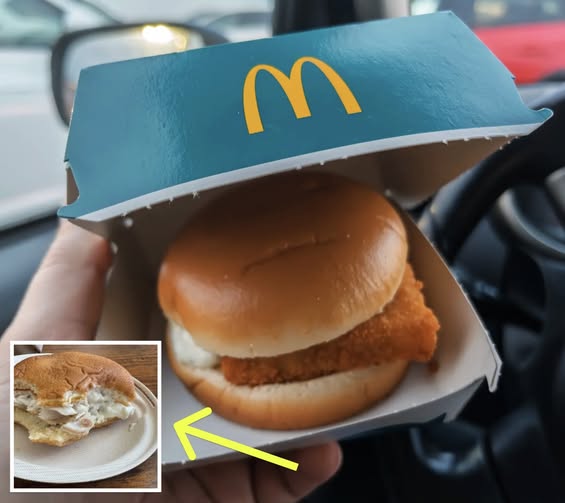
The conversation started after a user on Reddit posted a photo showing what appeared to be a tiny worm inside their fish sandwich purchased from McDonald’s. The post quickly gained attention online, sparking a wave of reactions from other users who said they had seen similar things before.
At first glance, finding a small parasite in food might sound alarming. But food experts say the explanation is far less dramatic than it appears.

According to culinary writer Matthew Spina of Tasting Table, encountering a tiny worm-like organism in wild-caught fish products can actually be fairly common. In fact, he noted that many fish harvested from the ocean naturally carry parasites during their lifetime.
In the case of the Filet-O-Fish, the sandwich is made with wild-caught Alaska pollock. Like many saltwater species—including cod, flounder, and halibut—pollock can occasionally host a type of microscopic roundworm known as a Nematode.
Online commenters with seafood industry experience quickly chimed in on the viral post. Some users pointed out that anyone who regularly eats wild seafood has almost certainly encountered these parasites before—whether they noticed them or not.

While the discovery might not be the most appetizing thought, experts say properly cooked fish containing these organisms is not considered dangerous. Health guidelines state that seafood heated to an internal temperature of 145 degrees Fahrenheit effectively neutralizes parasites. Because McDonald’s prepares its Filet-O-Fish patties using deep-frying methods, the cooking process easily surpasses that threshold.
Ironically, the presence of such parasites can sometimes serve as proof that the fish was harvested from the wild rather than farmed.

Still, there are situations where parasites in seafood can pose health concerns. Dishes that involve raw or lightly prepared fish—such as sushi or ceviche—can carry a small risk if the fish hasn’t been frozen or treated properly beforehand. In those cases, parasites like nematodes can lead to a condition called Anisakiasis, which may cause stomach pain, nausea, vomiting, and digestive discomfort.
That risk, however, does not apply to fully cooked seafood products like the Filet-O-Fish.

For its part, McDonald’s has emphasized that it follows strict food safety standards across its supply chain. The company told reporters that the fish patties undergo multiple inspections and quality checks throughout processing and preparation to ensure they meet safety requirements before reaching customers.
In other words, while the viral image may have caught diners off guard, experts say the discovery doesn’t necessarily indicate a problem—just a reminder that wild seafood sometimes comes with nature’s fingerprints still attached.
Sources: New York Post