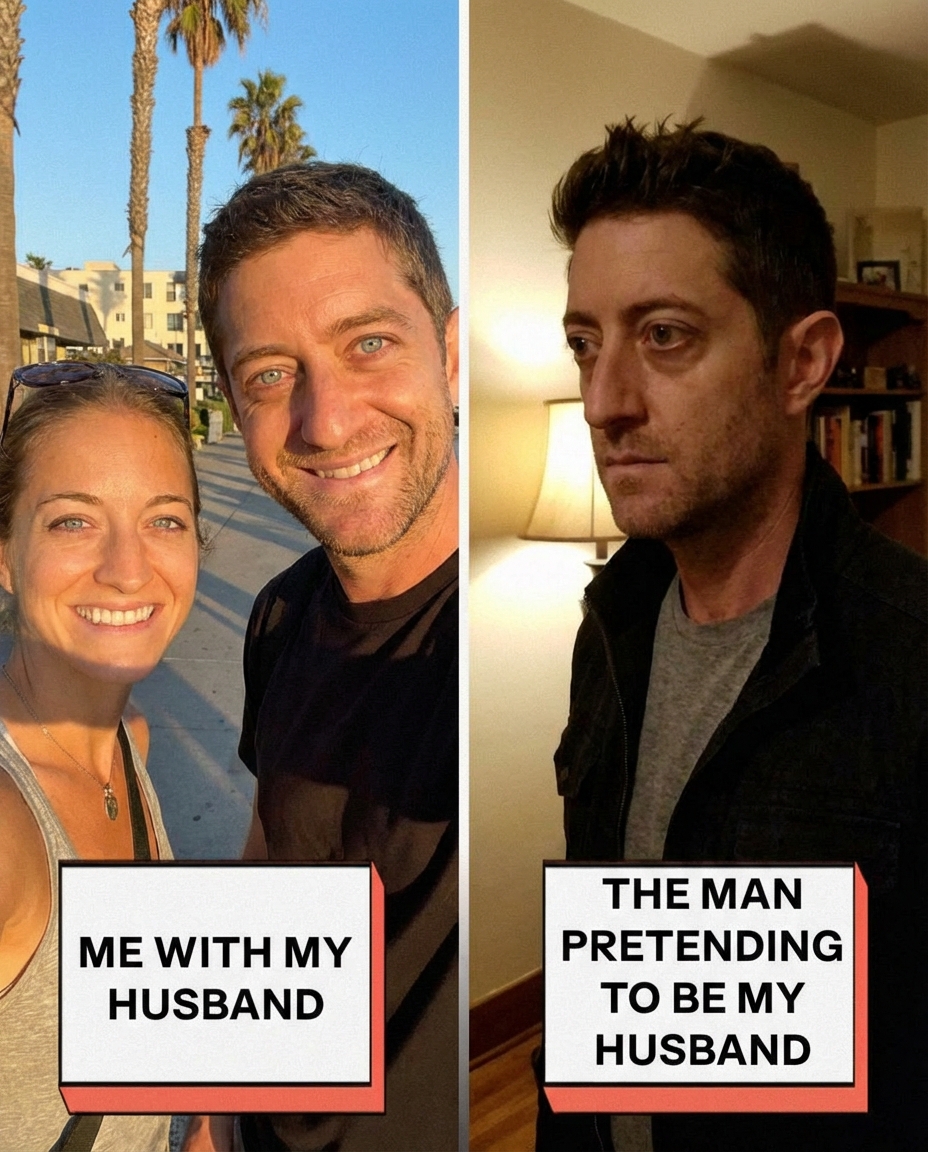
It started with sugar in his coffee. After nine years of marriage, you learn the rhythm of a person — the small, ordinary details that make them who they are. My husband Lloyd had always taken his coffee black, almost proudly so. So when I watched him stir two spoonfuls of sugar into his mug one quiet Monday morning, something inside me shifted. It wasn’t dramatic. It wasn’t loud. But it was wrong. Within days, more changes followed — different TV shows, different habits, even writing with the opposite hand. The man I loved felt like someone wearing his face. And the night I uncovered the truth, I nearly collapsed from the shock of it.
The unraveling came in layers. Lloyd suddenly loved football instead of baseball. He hummed songs I’d never heard him play. He slept in socks, something he always hated. I told myself people evolve, that stress changes routines. But the details kept piling up. Then one night, I noticed dark ink smeared across the back of his pajama shirt. When I pulled the collar aside, my heart stopped. The tattoo I knew by memory — the compass rose that ran across his shoulder blade — was gone. In its place was a cheap transfer tattoo rubbing off onto the fabric. I demanded answers, ready to call the police. That’s when the man standing in front of me said something I never expected: “If you love Lloyd, hear me out.”
He wasn’t an impostor. He was Lloyd’s twin brother — a twin no one had known existed. Separated at birth and raised in different states, they had only discovered each other months earlier through a DNA test. Simon, that was his name, had a daughter in desperate need of a liver transplant. Lloyd turned out to be a match. Without telling me, without preparing me, my husband had agreed to donate part of his liver to save a 14-year-old girl he had only just learned was family. To keep the surgery secret — fearing I would try to stop him — he asked Simon to step into our home temporarily. What he saw as a sacrifice, I experienced as psychological chaos.
When I walked into Lloyd’s hospital room and saw the bandages across his side, pride and anger collided inside me. He had saved his niece’s life. He had done something extraordinary. But he had also let me question my sanity for days, brought a stranger into our bed, and decided I couldn’t handle the truth. Love isn’t just about grand gestures — it’s about partnership, honesty, and shared decisions. I brought him home after surgery, but I moved into the guest room that night. Healing takes time. A liver regenerates. Trust doesn’t grow back quite so easily.