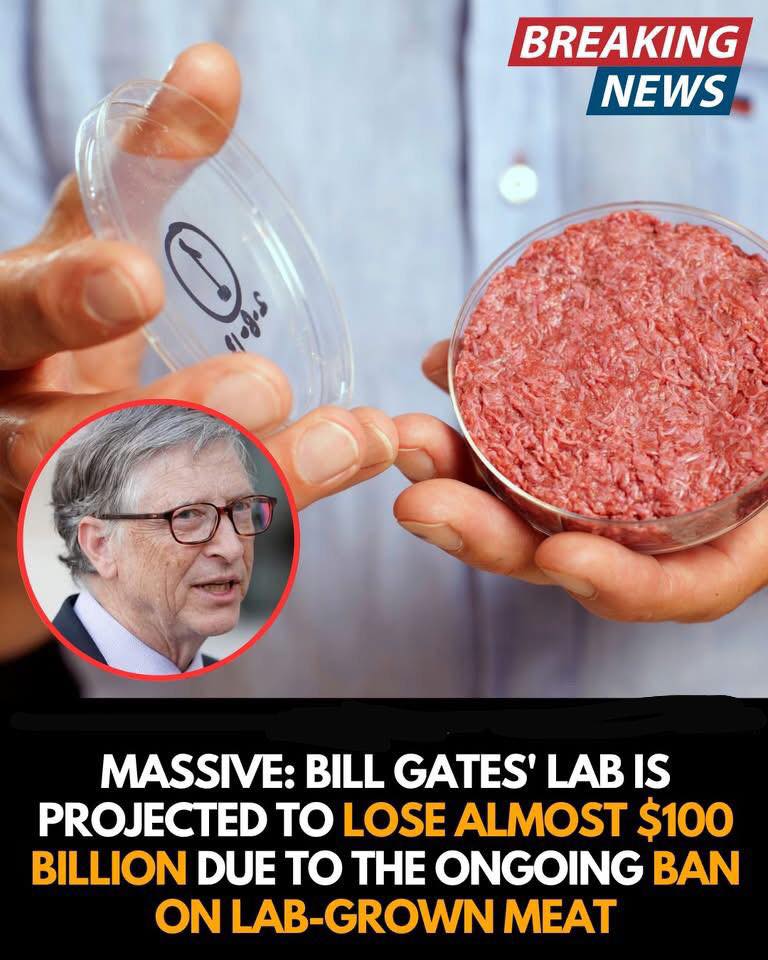
Bill Gates has become a primary target of criticism as a growing number of U.S. states and international governments enact bans on lab-grown meat to protect traditional agriculture. While viral claims suggest his “lab” is projected to lose $100 billion, actual market data shows the entire global plant-based and cultivated meat industry was valued at only around $7.8 billion to $27.9 billion as of 2020–2025.
As of February 2026, Texas, Florida, Alabama, Mississippi, Nebraska, Montana, and Indiana have all passed legislation to ban or heavily restrict the sale of cell-cultured proteins. Governor Ron DeSantis of Florida explicitly framed the ban as a strike against “the global elite’s plan” to replace traditional ranching with “meat grown in a petri dish”. Italy also became the first nation to criminalize synthetic foods in 2023, imposing fines of up to €60,000 for violators.
Gates has invested millions into alternative protein companies like Upside Foods (formerly Memphis Meats) and Impossible Foods, advocating for rich nations to shift to 100% synthetic beef to combat climate change. However, the industry faces severe “green premiums” and technical hurdles, as producing lab-grown meat currently requires significantly more energy than traditional farming, potentially emitting more CO 2 in the long term.
Critics, including the National Cattlemen’s Beef Association, argue that Gates’ push for synthetic meat ignores the nutritional benefits of real beef and threatens the livelihoods of millions of ranchers. Despite the legislative pushback, some firms like Upside Foods are fighting back with lawsuits, claiming state bans violate the Commerce Clause of the U.S. Constitution.
The future of these investments remains uncertain as political opposition continues to mount ahead of the 2026 midterms. While Gates remains optimistic about the long-term role of “clean” steel, cement, and food in a zero-emissions future, the immediate “war on meat” has created a multi-billion-dollar roadblock for his climate agenda.