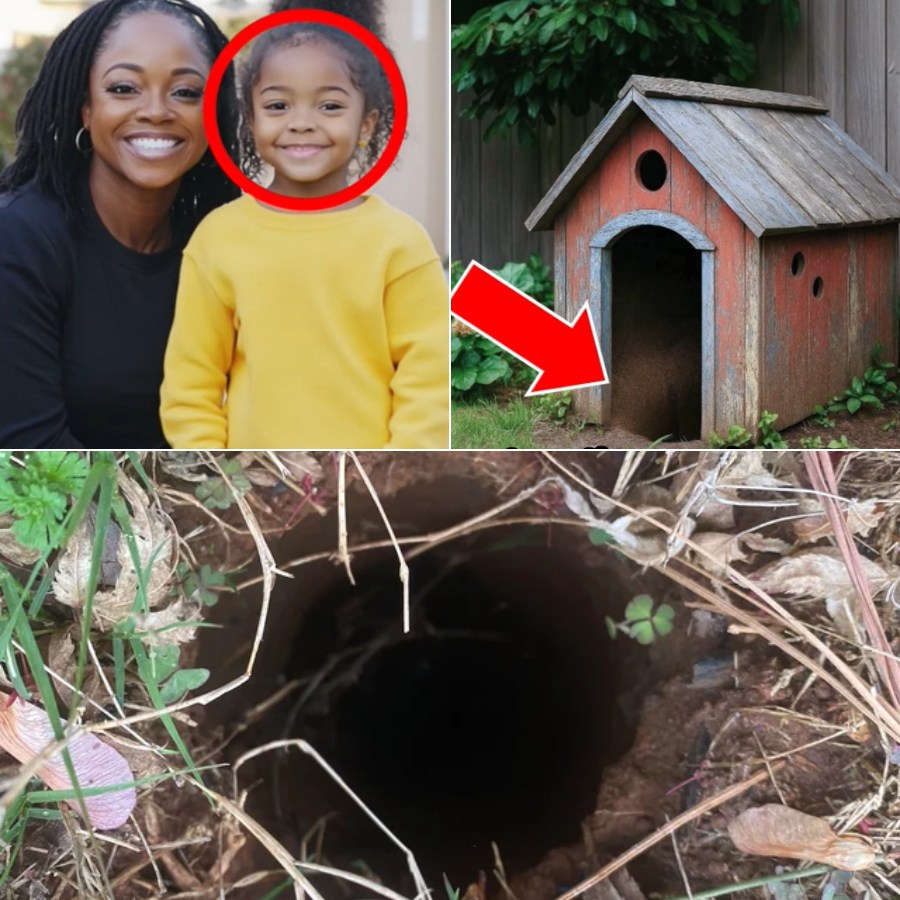
On the morning his daughter disappeared, Terrence Marshall woke up before his alarm.
For once, it wasn’t because of the nightmares.
It was the light.

The bedroom curtains were cracked just enough for a blade of Saturday sunshine to cut across the room, landing right on the picture frame that always lived on his nightstand. Imani’s gap-toothed smile beamed out at him from behind the glass. Beads at the ends of her braids caught the light like tiny drops of amber.
He stared at the photo for a long time, feeling the strange softness that came in the moments before the day hardened into its usual responsibilities. Monica was already awake; he could hear the faint clatter of pans in the kitchen, the radio humming some old R&B song they both liked but never remembered the name of.
“Daddy!” a voice shrieked from down the hallway. “Daddy, get up! You promised!”
He smiled without meaning to, a reflex more than a choice. The bedroom door banged open a second later and Imani launched herself onto the bed like a tiny missile, knees and elbows everywhere.
“You said hopscotch!” she accused, as if this were a breach of contract. “You said if it’s sunny we can draw it with the big chalk and I can jump to ten.”
Terrence groaned theatrically and pulled the blanket over his face. “Mmm. I recall no such agreement. You must be confusing me with some other extremely handsome father.”
“Mom!” Imani yelled, turning her head toward the hallway. “Daddy lying!”
Monica’s laugh floated in from the kitchen. “Terrence, stop torturing that baby and get up. Breakfast’s almost done.”
He poked his face out from under the blanket like a turtle from its shell and grabbed Imani around the waist, pressing loud, obnoxious kisses to her cheek until she shrieked and giggled and tried to escape.
“Okay, okay, hopscotch attorney, I remember,” he said, finally releasing her. “Let me pee and put on some pants and we’ll chalk up the whole sidewalk, all right?”
“And a rocket,” she added seriously, already sliding off the bed. “And a unicorn. And a… what’s that thing that go in the sky?”
“A plane?” he offered.
She shook her head. “No, with the fire.”
“A rocket,” he repeated.
“Yeah, I said that,” she replied, hands on her tiny hips. “Come on!”
She ran out of the room, the beads on her braids clicking like tiny castanets. Terrence lay there for one more second, staring at the ceiling, listening to the sounds of his little family moving around the house.
It had been two years since Monica’s breast cancer scare, the one that had almost shattered them. It turned out to be benign, but the shadow of those weeks—waiting for test results, rehearsing the possibility of loss—had never really gone away. It hung over him like thin fog, never quite blocking the sun, but never letting him forget that everything he loved could vanish in an instant.
Maybe that was why he treasured mornings like this. The ordinary ones. The ones that didn’t feel like they were leading anywhere.
He got up, splashed water on his face, brushed his teeth using Imani’s bright yellow toothbrush by mistake and laughed at himself, then changed into jeans and a faded T-shirt. The kitchen smelled like pancakes and syrup. Monica stood at the stove, hair wrapped, wearing his oversized college hoodie.
“You look twelve,” he told her, kissing the side of her neck.
“Flattery will not distract me from the fact you left your socks in the sink again,” she said, but she leaned back into him just the same.
At the table, Caleb was shoveling cereal into his mouth, half-reading a comic book propped up beside his bowl. At ten, he’d perfected the art of being in the room without fully being in conversation.
“Hey, man,” Terrence said, clapping a hand on his son’s shoulder. “You gonna come out and referee your sister’s extremely serious hopscotch tournament?”
Caleb shrugged without looking up. “Maybe,” he mumbled around a mouthful of milk and cornflakes.
Imani sat cross-legged on her chair, humming to herself as she carefully arranged blueberries into a smiley face on her pancake. She wore her favorite yellow T-shirt with a tiny heart stitched near the collar—Monica had done that by hand, a little extra love hidden in plain sight.
“Daddy, how many jumps you think I can do without falling?” she asked.
“A hundred million,” he said.
She squinted at him like he was trying to pull one over on her. “That’s not a real number.”
“Sure it is.”
“No, ‘cause Ms. Thomas said numbers go in order and there’s no hundred million in first grade.”
“Then Ms. Thomas is holding out on you,” Terrence replied, and Monica snorted into her coffee.
They ate. They argued about whether cartoon heroes could beat superheroes in a fight. Caleb rolled his eyes at everything, because that was his job now, apparently. The ordinary-ness of it all was almost painful in its sweetness, though Terrence didn’t have words for that. He just knew that as he drank his coffee and listened to his wife and children talk over each other, some part of him felt… full.
After breakfast, Imani dragged him to the front yard before he could even rinse his mug.
“Chalk, chalk, chalk,” she chanted, hopping from foot to foot. “Come on, daddy!”
The air outside was already warm, the kind of early-summer heat that promised it would be a hot afternoon. Their block looked like it always did on weekends: Mrs. Garcia watering her roses next door, Mr. Patel sitting on his stoop reading the paper, kids a few houses down arguing over a basketball. A dog barked from somewhere, deep and booming.
Across the street, two doors down, the Mullins house sat quiet and closed. The yard was neat, lawn trimmed, fence straight. The only thing that ever drew attention was the kennel, a big chain-link rectangle shaded by a dark tarp, sitting in the corner of the yard. The Rottweiler inside sometimes exploded into furious barking when kids walked past, hurling itself against the fence until they hurried by.
Terrence barely glanced at it as he stepped onto the sidewalk with Imani. He pulled the bucket of sidewalk chalk out from behind the porch, the same bucket they’d had since Caleb was little. The pieces were worn down and dusty, colors half-used. Imani chose yellow and pink and blue, the chalk staining her fingers immediately.
“Okay, we gotta make the boxes,” Terrence said, crouching down and drawing the familiar pattern: one square, then two, then one, up to ten. Imani watched, impatient, bouncing in place.
“Don’t step on the lines, right?” she reminded him.
“Exactly. The lines are lava.”
“Lava,” she repeated reverently.
Caleb wandered out onto the porch with his juice box, flopped down on the top step, and squinted at the sun.
“You supervising?” Terrence asked.
“I’m making sure y’all don’t cheat,” Caleb said, but there was a hint of a smile at the corner of his mouth.
Terrence tossed the chalk to Imani. “Okay, champ. Show us what you got.”
She threw the piece of chalk at the first square, giggled when it bounced off the edge instead of landing inside.
“That’s a foul,” Caleb announced.
“Shut up,” she snapped automatically, then gasped. “Sorry. Not shut up. Mom said that’s rude.”
Terrence laughed. “I think he deserves it sometimes.”
He watched as she tried again, tongue sticking out between her teeth in concentration. The chalk landed in square one. She jumped, careful little hops, arms out for balance. The beads in her hair clicked with every landing.
“Daddy, look,” she called, glancing back at him, her face glowing.
“I see you!” he said, grinning. “World champ!”
His phone buzzed in his pocket. He fished it out and saw the little battery icon red and accusing. Five percent.
“Shoot,” he muttered.
“What?” Imani asked, mid-hop.
“My phone’s about to die. I’m just gonna run in and grab my charger,” he said. He pointed at Caleb. “You’re on official big-brother duty, all right? Keep an eye on your sister.”
Caleb rolled his eyes. “She’s literally right there.”
“Exactly. Keep her right there,” Terrence replied. He bent down and kissed the top of Imani’s head. “Two minutes, pumpkin. Don’t go past the mailbox, okay?”
“I know,” she said, instantly offended, as if he’d just suggested she might forget how to breathe. “I’m not a baby.”
“You’ll always be my baby,” he said out of habit, and she made a face at him.
He jogged up the porch steps, into the dimmer cool of the house. The charger was in the bedroom, half-hidden under a pile of mail. He untangled it, plugged it in, checked a text from his boss, answered with a quick “Will call later” and slipped his phone back into his pocket.
He was gone for maybe ninety seconds.
When he stepped back onto the porch, the sunlight was the same. The air was the same. The chalk squares were still there, a pale rainbow smeared across the concrete.
But the sidewalk was empty.
For a heartbeat, his brain refused to accept the sight. It slotted other explanations into place automatically.
She’s crouched down, he thought. Behind the steps. Hiding.
He stepped forward. No Imani.
Maybe she’d darted around the side of the house. He trotted down the steps, walked to the end of the short walkway, looked left and right.
“Imani,” he called, sing-song, expecting a giggle from behind a bush.
Nothing.
The street looked so offensively normal. Mrs. Garcia, still watering her roses, glanced up and waved. The basketball down the block thumped against asphalt. The Rottweiler two doors down gave a single bark behind its tarp.
“Imani!” he called again, louder.
No answer.
Annoyance pricked at him. She knew not to go past the mailbox. She knew the rules. Maybe she’d run to show Monica something without waiting. He turned, stepping back toward the porch.
Caleb sat in the same spot, his juice box in his hand, comic book beside him. His eyes were wide in a way that sent a strange chill down Terrence’s spine.
“Where’s your sister?” Terrence asked casually.
Caleb’s mouth opened. Closed. Opened again. “She… she was just playing,” he stammered. “I was… I looked down at my phone for a second. I swear it was just a second, Dad. And then when you came out she wasn’t…”
Terrence’s stomach dropped.
He turned back to the sidewalk, his pulse thudding in his ears.
“Imani!” he shouted, the word ripping out of him now. “Baby, this ain’t funny. Come on out.”
He walked fast to the end of their yard, peered into the neighbor’s garden. Nothing but flowers and a garden gnome. He strode to the edge of the next yard. No small yellow T-shirt. No beads. No braids.
A car drove by slowly, the driver glancing at him and then away.
Terrence’s chest tightened. The world seemed to tilt, just slightly.
He picked up his pace, heartbeat rising with every step. “Imani!” he roared, sticking his head through Mrs. Garcia’s open gate. “Have you seen Imani? She was just out front.”
Mrs. Garcia startled, nearly dropping the hose. Water sprayed in an arc across her roses.
“No, mijo, I just saw her with you,” she said, eyes already filling with concern. “She wandered off?”
“She doesn’t just wander off,” he said, but his voice sounded far away to his own ears. “She knows the rules. She was right there. I was gone for—”
He didn’t finish. He was already moving, running now, checking every front yard, every porch. He knocked on doors without registering who lived where, words tumbling out—“Have you seen my daughter? Little girl, yellow shirt, braids?”—over and over.
“No, sorry.”
“No, I just got home.”
“Haven’t seen her today, man.”
Each answer stung like a slap.
He ran back to the house, stumbling up the steps. Monica stood in the doorway now, dish towel in her hands, brow furrowed.
“What’s going on? I heard you yelling—”
“Imani’s gone,” he said.
He meant to say something calmer, something like I think Imani wandered off, but the words that came out were raw and bare.
Monica’s face changed in an instant, as if someone had pulled the bones inside the skin. “What do you mean gone?”
“She was playing hopscotch. I went in to get my charger. Caleb was right there, and then—” His voice broke. “She’s not here, ’Nic. I can’t find her. I checked—”
Monica shoved past him, her eyes scanning the street; her whole body was already running before her mind caught up.
“Imani!” she screamed, stumbling down the steps. “Imani, answer me!”
Caleb stood frozen on the porch, the juice box trembling in his hand, his face gone gray. “I told her not to go nowhere,” he whispered. “I told her.”
Terrence grabbed his phone with fingers that suddenly didn’t feel like they belonged to him. He dialed 911, struggled to make his voice clear.
“My daughter,” he said. “My little girl, she’s missing. She was just outside, and I came back and she’s gone. She’s six. Her name is Imani. You have to—”
Sirens never sound as loud on television as they do when you’re waiting for them.
By the time the squad cars pulled up—blue and red lights bouncing off windows, sirens slicing through the thickening air—neighbors had already stepped out onto their porches. Some approached, concerned, asking questions in low voices. Others hovered at a distance, arms crossed, watching.
The officers moved quickly, asking questions, scribbling notes. They asked what she was wearing. How long she’d been unsupervised. Whether she’d ever run away before.
“She’s six,” Monica snapped, voice shrill with disbelief. “She doesn’t run away, she plays hopscotch and watches cartoons.”
One of the officers, a woman with tired eyes, put a hand up to calm her. “We’re going to canvas the neighborhood right now, ma’am. We’ll get an Amber Alert started if we don’t find her in the next hour.”
“The next hour?” Terrence repeated, numb. “You want us to wait an hour?”
“That’s protocol,” the officer said, gentle but firm. “Right now, every second counts. We’re going to search.”
Neighbors formed impromptu search lines, spreading out in every direction. They looked under cars, behind trash cans, in alleyways and storm drains. They called Imani’s name until it blurred into noise.
“Imani!” Terrence shouted, again and again, his voice cracking. “Baby, answer daddy! Please!”
He crawled under porches, scraped his knees, peered into the shadows where cats sometimes slept. He knocked on doors until his knuckles were raw.
They searched the empty lot at the end of the block. They searched the little park a street over. They searched the small grove of trees near the bus stop. A helicopter thumped overhead, the sound vibrating in Terrence’s chest like a second heart, but it found nothing.
The Rottweiler two doors down barked and barked behind its tarp, agitated by the commotion. Its owner, Ronald Vickerson, stood on his porch for a moment watching, then went back inside without a word.
Thirty minutes passed. Then an hour. Then two.
By nightfall, there were floodlights erected on the street. Police tape fluttered weakly in the gathering wind. Cameras arrived, reporters murmuring into microphones from the corner, their faces somber.
Monica sat on the curb, still in her flour-dusted sweatshirt, rocking back and forth with her head in her hands. Caleb pressed himself against her side, crying silently, his tears soaking into her sleeve. Terrence walked in circles, from the sidewalk to the porch to the street and back again, like a caged animal.
The officer with the tired eyes approached him as the sky darkened to bruised purple. “Mr. Marshall,” she said quietly. “We’re going to keep looking through the night. We’re issuing the Amber Alert now. We’ve notified the surrounding precincts and hospitals. But I need to prepare you… there’s a possibility that…”
She didn’t finish. She didn’t have to.
Terrence stared at her, at the yellow plastic cup she held with the department’s logo, at the way the streetlight cast a halo across the brim of her hat. He felt completely detached from his own body, like he were watching someone else’s life from a great distance.
“She was right there,” he whispered. “I was gone for two minutes. Two minutes.”
“We’re going to find her,” the officer said, though her voice had the brittle edge of habit. “We’re doing everything we can.”
But days later, they hadn’t found anything. No tire tracks. No security footage—the camera across the street had been broken for months. No witnesses who saw a van or a stranger or heard a scream. No trace at all.
They found the piece of yellow chalk on square four of the hopscotch grid, broken clean in half.
Grief doesn’t arrive all at once. It seeps in, like water through a ceiling, drop by drop, until one day you look up and realize the whole room is soaked.
In the first week, Terrence barely slept. He stayed up with Monica, answering calls, talking with detectives, staring at the television as Imani’s school photo appeared on the local news with the words MISSING CHILD printed underneath.
He watched himself in shaky footage, standing on the sidewalk, eyes wild, pleading into the camera. “She was six,” he heard his own voice say, as if it belonged to someone else. “She doesn’t just vanish. Somebody took her. Please, if you know anything…”
Monica created a Facebook page called “Bring Imani Home.” She posted pictures: Imani in her Halloween costume as a unicorn, Imani blowing out candles on her fifth birthday cake, Imani asleep on the couch with her head in Caleb’s lap while he pretended not to notice. Strangers shared the posts, offered prayers, theories, platitudes.
Aunties drove in from other cities to help. Monica’s sister Keisha printed flyers at Kinko’s until the clerk started giving her discounts. They plastered them everywhere—bus stops, laundromats, corner stores, church bulletin boards. Each flyer had the same picture, the same description, the same desperate phone number.
Caleb stopped talking.
At first, Terrence thought it was just shock. But days passed, then weeks, and his son’s voice seemed to have gone wherever Imani had. He answered questions with shrugs, actions instead of words. The therapists they saw called it trauma-induced mutism, the brain’s way of shutting down to survive.
Terrence quit his job three weeks after the abduction. He could no more sit behind his desk and answer calls than he could fly. Every ring sounded like it might be someone saying We’ve found her, and when it wasn’t, when it was just a coworker asking about a file or a client complaining about a delay, he wanted to smash the phone against the wall.
He started walking instead.
At first it was just around the block where she’d vanished, a tight orbit around the wound in the center of his life. But soon it grew, expanding to the surrounding neighborhoods, then to the entire district. He left the house every morning with Imani’s photo in his pocket and walked until his knees ached and his shoes were soaked through with sweat and rain.
He learned the way light filtered through the leaves in every alley. He learned which junkyards had dogs and which didn’t. He peered into abandoned buildings, called her name into empty lots, checked under overpasses and behind shopping centers.
Sometimes he’d see a little girl with braids in the distance and his heart would leap, his body already moving before his mind could warn him. “Imani!” he’d shout, running, only to skid to a halt when the child turned and revealed a totally different face.
Once he got so close that the girl’s father shoved him back and yelled something Terrence didn’t even hear. He just stumbled away, apologizing under his breath, his face burning with shame.
The police did what they could, at least at first. They followed leads, interviewed neighbors, cross-checked registered offenders nearby. They questioned the man with the Rottweiler, Ronald Vickerson, twice.
He lived alone in the small, neat house two doors down. No wife, no kids. He said he was a contractor, that he kept to himself. The Rottweiler, Bruno, was “for protection.”
“He been barking all day that day,” Mrs. Garcia told the officers. “But he always barking. I don’t think nothing of it.”
Ronald said he’d been inside all afternoon watching TV. He said he hadn’t seen Imani. He let the cops look around his yard. The kennel sat in the back corner, thick tarp pulled down on one side to give the dog shade. The concrete pad underneath was stained in places with muddy paw prints. A metal food bowl sat half full.
“Mind lifting that tarp for us?” one of the officers asked.
Ronald narrowed his eyes for a fraction of a second that no one but Bruno seemed to catch. Then he shrugged and pulled it aside.
Nothing. Just the dog, lip curling in a low growl, chain clinking as it shifted its weight.
Inside, the house was spare and tidy. Couch, TV, a couple of framed landscapes on the wall. The kitchen cabinets were full of canned goods and stale crackers. His bedroom had a bed, a dresser, and a closet full of neatly hung shirts. Maybe a little too neat, the detective thought, but neat wasn’t a crime.
They asked where he’d been at the time Imani disappeared. He said home alone. They asked if anyone could vouch for that. He shook his head. They asked if they could check his computer. He refused without a warrant.
They didn’t have enough to push further. There were other leads, other tips, all of them fizzing out into nothing.
After six months, the calls from the detectives slowed. After a year, they stopped altogether, unless Terrence called them first. The case moved from active to cold, a file on a shelf, waiting for something that might never come.
Life didn’t stop, exactly. It just changed shape.
Monica went back to work eventually, though she came home every day with the weight of the world hanging off her shoulders. She still posted on the Facebook page, still went on local news when they’d have her, still organized candlelight vigils every year on the anniversary of Imani’s disappearance.
They lit candles on her birthday and lined them up on the porch steps. Neighbors came at first, bringing casseroles, hugs, their own grief. But as the years passed, fewer people showed up. The world moved on; school kids grew taller, houses changed hands, new families moved in who didn’t know what had happened or only knew it as a rumor, a cautionary tale to tell their own children.
“Don’t play out front by yourself. Remember that little girl who disappeared?”
Caleb grew taller, his voice deepening, his shoulders broadening. His adolescence unfolded in the shadow of his sister’s absence.
He started skipping school. Getting into fights. Once the police brought him home after he tagged the side of the old utility building with Imani’s name in huge letters, the spray paint still wet.
“You trying to get locked up now too?” Monica snapped between angry tears. “Is that what you want?”
“I just want her back,” he said, the words bursting out like something sharp lodged in his throat. “I looked away for two seconds, Mom. Two seconds. If I hadn’t—”
Terrence put his hand on his son’s shoulder, but Caleb shrugged it off, storming down the hallway and slamming his bedroom door.
His file at school started collecting labels: defiant, oppositional, conduct disorder. None of them mentioned the word guilt. None of them mentioned the chalk squares on the sidewalk, the memory of his sister’s braids swinging as she jumped.
He ended up in juvie at fifteen after a fight that left another boy with a broken nose and a concussion. Terrence visited as often as they allowed, sitting in the plastic chair across from his son, trying to find the right words and coming up empty.
“If I’d watched her better, she’d be here,” Caleb said one afternoon, staring at the scratched tabletop. “If you hadn’t gone inside for that stupid charger, she’d be here.”
The words sliced through Terrence, but he didn’t flinch. He deserved them. “You were ten, son,” he said quietly. “You were just a kid. This wasn’t your fault.”
Caleb’s jaw clenched. “Feels like it is.”
It wasn’t much, but it was something. At least he was talking.
Still, the house felt half-empty, no matter how many bodies were inside it. Imani’s room remained untouched. The stuffed bear she’d slept with, Mr. Buttons, still sat on her pillow, arms open as if perpetually waiting for a hug that never came.
Sometimes, late at night, Terrence would sit on the edge of that small bed and hold the bear in his hands, feeling ridiculous and broken all at once. He’d press his face into the worn fabric and breathe in the faint, fading scent of baby shampoo and crayons and something that was purely her.
“I should have kept you safe,” he’d whisper into the dark. “I failed you, baby. I’m so sorry.”
Monica found him there once and didn’t say anything, just sat beside him and leaned her head on his shoulder. Their grief sat between them like a third presence, heavy and familiar.
They could have divorced. Many couples did under this kind of strain. But somehow, instead of pushing them apart, their shared loss welded them together in strange, painful ways. They didn’t always know how to talk about it, but they knew they were the only two people on earth who understood exactly what the other had lost.
Ten years passed. One day at a time. One missed birthday at a time.
Imani would be sixteen, Monica would say sometimes, staring out the kitchen window. She’d be in high school. She’d be asking about driving.
Terrence would nod, imagining a girl he barely dared to picture. Would her braids be longer? Would she still like yellow? Would she hate him for losing her?
The hope that she might be alive grew thinner every year, stretched until it was almost transparent. But it never broke completely. Not for him. Not for Monica. Not for Caleb, though his hope was buried under layers of anger and sarcasm.
Every year, on the anniversary of the day she vanished, Terrence stood on the same sidewalk where the chalk had been. He stared at the spot as if it might give up its secret at last.
Sometimes he screamed until his throat burned, the sound tearing out of him like something wild. Sometimes he whispered Imani’s name under his breath like a prayer. Sometimes he just stood there, silent, counting the minutes he’d been inside that day as if he could go back and rearrange them.
He never sold the house. Monica suggested it once, half-heartedly, the night their landlord offered them a place across town with cheaper rent and a newer kitchen.
“How we supposed to move away from the last place she was?” Terrence asked, not unkindly, but with a finality that ended the conversation. “What if she comes back and we ain’t here?”
Monica didn’t bring it up again.
The summer Imani turned sixteen—a fact noted only on Monica’s hidden calendar and a Facebook post three people liked—was a heavy one. The air felt like wet wool, clinging to the skin. Tempers ran hotter, temp jobs were scarce, and the news was full of arguments about things that never seemed to change.
Terrence’s knees hurt more when he walked now. His back ached when he got up from the couch. Grief had carved permanent lines into his face, but his eyes were still sharp, scanning, always scanning.
He’d long since expanded his walking routes beyond their block. But he always began and ended there.
On one particular afternoon, the sky was hazy white, the sun a dull coin behind the clouds. Terrence walked slowly along the sidewalk, his mind half on the path ahead, half in a memory of Imani’s voice begging him to draw the hopscotch squares a little longer.
As he neared the corner, something caught his eye: movement in the backyard of a house he hadn’t really thought about in years.
The Simmons place.
That’s what everyone still called it, even though the Simmons family had moved away five years ago after their mother died. The house had sat empty since then, a slowly decaying reminder that nothing in the neighborhood stayed the same forever. Kids used to dare each other to run up and touch the front door and then sprint away, squealing about ghosts.
But today, the house didn’t look empty.
From where he stood on the sidewalk, Terrence could see the back corner of the yard through a gap in the fence. A man was out there, hauling something heavy across the patchy grass—a bag of cement mix, by the look of it. Sweat darkened the back of his T-shirt. His hair was cut close to his scalp, his skin pale against the summer glare.
Terrence slowed, eyes narrowing. The man set the bag down beside a structure Terrence hadn’t seen there before: a dog kennel. Big. Bigger than any kennel he’d seen in a regular backyard. Chain-link walls, metal posts sunk into fresh concrete. A tarp half-draped across the top.
The man bent, opened another bag, poured its powder into a wheelbarrow. His movements were efficient, practiced. As he straightened up, his gaze flickered toward the street.
Their eyes met for a split second.
Something in Terrence’s gut clenched. It wasn’t anything he could describe in a police report. The man’s expression wasn’t overtly guilty or angry. If anything, he just looked startled for half a heartbeat, his features tightening, then smoothing into a neutral mask. He turned away, busying himself with the cement.
Terrence walked on, but his feet felt suddenly too heavy.
A dog kennel. A big one. In the yard next to the vacant lot where kids had once played, where he’d once searched for his daughter until his legs gave out. Why did it have to be that yard? Why did he feel like the air had gone thin around him?
He told himself he was being paranoid. He told himself lots of people had dogs. That man had every right to build a kennel in his own yard. But the image of the cement, the tarp, the quick, furtive glance haunted him all night.
He slept in fits, waking up over and over, heart pounding, convinced he’d heard a scream. Each time, the house lay silent around him, save for the refrigerator’s hum and Monica’s quiet breathing.
“You okay?” she asked at one point, not opening her eyes.
“Yeah,” he lied. “Just a bad dream.”
In the morning, after he walked Caleb to his bus stop—his son now wearing headphones like armor against the world—Terrence did something he hadn’t done in a while.
He went to the city records office.
It was a beige building downtown that smelled faintly of toner and old coffee. Behind the counter, a clerk with tired glasses and a name tag that read SANDRA pointed him to a terminal where he could look up property deeds.
He typed in the Simmons address with stiff fingers.
The name that popped up on the screen wasn’t Simmons.
VICKERSON, RONALD.
His blood went cold.
He walked back home faster than he should have in the heat, sweat soaking through his shirt. On the way, he called Caleb.
“Yeah?” Caleb answered, his voice distracted, probably in between classes.
“You got a short day today, right?” Terrence asked. “You coming straight home after?”
Pause. “Why?”
“Because I need your help with something,” he said. “Be home by three.”
He hung up before Caleb could argue.
At three-thirty, father and son stood near the Simmons—no, Vickerson—house, pretending to admire the cracked sidewalk across from it.
“This is crazy,” Caleb muttered, hands stuffed into his pockets. “You can’t just… stalk some dude because he bought a house. The cops already cleared him, remember?”
“They questioned him ten years ago,” Terrence said. “How thorough you think they were? How much time you think they really spent looking at a Black girl from our block when they had other cases to deal with?”
Caleb didn’t answer.
The kennel sat in the back corner of the yard, visible through gaps in the wooden fence. The tarp was fully up now, draped over half the structure, casting a deep shadow. Terrence could just make out the glint of metal underneath, the curve of the concrete base.
He crept around the side of the property, Caleb reluctantly trailing behind. They crouched behind a thick clump of overgrown bushes that belonged, technically, to the vacant lot next door. From there, Terrence had a clearer view.
The concrete around the base of the kennel looked… wrong. Uneven, like it had been laid in layers instead of all at once. A darker patch in one corner caught his eye, as if something had been dug up there recently and then hastily patched over.
“Dad,” Caleb hissed. “What are we even looking for? A missing bone? This dude probably just poured the concrete himself and messed up the corners. That doesn’t make him a kidnapper.”
Terrence opened his mouth to answer when he heard it.
A sound, faint under the distant hum of traffic and the buzz of a lawnmower two blocks over. A soft, ragged cough.
He stilled.
“You hear that?” he whispered.
“Hear what?” Caleb said, frowning.
Another sound. Not the booming bark of a dog. A low, hoarse moan, like someone trying not to cry out.
Caleb’s face drained of color. “Dad,” he whispered. “What the hell was that?”
Terrence didn’t think. Thinking was for later. Now there was only movement.
He climbed the fence, ignoring Caleb’s frantic hissed protests. The wood scraped his palms; splinters bit his fingers. He dropped down into the Vickerson yard with a grunt.
“Dad!” Caleb called, voice strangled. “We can’t just—call the cops!”
“Keep an eye out,” Terrence shot back, already moving toward the kennel.
The tarp flapped in a faint breeze, the sound unexpectedly loud in his ears. As he drew closer, the smell hit him: a sour mix of dog, bleach, and something metallic underneath. The hair on his arms rose.
The kennel door was padlocked. Through the chain-link, he could see an empty dog bowl, a chewed-up rubber toy. No dog.
The sound came again. This time, unmistakable: a cough, then a choked, wordless whimper.
“Hello?” Terrence shouted, his heart jackhammering. “Is somebody there?”
No answer. Just the faint scrape of something against something.
He grabbed the tarp and yanked it aside.
In the corner of the concrete pad, partially hidden under a warped sheet of plywood, was a hatch.
His vision tunneled. The rest of the world fell away. All he could see was that rectangle of metal, dull and innocuous, with a padlock hanging from its latch.
He dropped to his knees and hammered on it with both fists.
“Hey!” he shouted. “Hey! Is someone in there?”
For a moment, there was only silence. Then: thump. Thump. Weak but deliberate.
His hands shook so badly he could barely fish his phone out of his pocket.
“911,” the operator said. “What is your emergency?”
“This is Terrence Marshall,” he said, voice shaking. “You have a file on my daughter, Imani. She was taken ten years ago. I’m at 214 Harris Street. There’s a hatch in the backyard. Someone is down there. You need to send everybody. Now.”
The sirens this time arrived faster. Or maybe he was keeping time with his heartbeat instead of the clock.
Police cars screeched to a halt out front. Caleb stood on the sidewalk, waving them in, his face pale and stunned.
Officers poured into the yard, weapons drawn, shouting commands. Neighbors gathered at the fence, eyes wide. Some of them remembered the first time this had happened. Some of them were new, whispering to each other, piecing together the story in real time.
They pulled Ronald out of the house in handcuffs. He didn’t look particularly surprised. His eyes slid over the crowd, over Terrence, over the officers, as if he were watching a mildly interesting television show. Bruno was nowhere to be seen.
“Where is she?” Terrence shouted, lunging forward. Two officers held him back. “Where is my daughter?”
Ronald smiled a small, strange smile. “I don’t know what you’re talking about,” he said.
The officers broke the lock on the hatch with a crowbar. The metal screamed in protest. When they hauled it open, a wave of stale, damp air rose from below, thick with the smell of mold and something else. Something that made Terrence’s stomach flip.
A narrow stairwell descended into the darkness. An officer clicked on a flashlight and started down, another close behind. Their feet echoed on the wooden steps.
“Police!” the first officer called. “If anyone’s down here, we’re here to help. Show us your hands.”
Silence. Then a small, choked noise.
They reached the bottom and their flashlights cut through the gloom, illuminating a room carved out of concrete and cinderblock. A bare mattress lay on the floor, its springs rusted, its surface stained. A metal chain was bolted to the wall, its end lying coiled on the ground like a sleeping snake. A plastic bucket sat in one corner, a cracked mirror in another.
And in the farthest corner, curled in on herself under a thin, filthy blanket, was a girl.
She flinched as the light hit her, throwing an arm over her face. Her hair hung in tangled braids, clumped and matted, beads missing and broken. Her skin was pale beneath the dirt, stretched tight over bones that jutted too sharply. Scars raised and pale circled her wrists.
“Sweetheart,” the officer said, his voice gentler now. “We’re here to help you. Can you tell me your name?”
The girl whimpered, pressing herself against the wall. Her eyes were wide, pupils blown, darting from side to side like a trapped animal’s.
Another officer moved the flashlight’s beam away from her face. “It’s okay,” she murmured. “We’re not going to hurt you.”
She reached out, very slowly, and extended a hand. The girl shrank away at first, then, after a moment, inched forward, her movements stiff and tentative.
“My name is Officer Reyes,” the woman said. “You’re safe now, okay? We’re going to get you out.”
Up above, Terrence stood at the edge of the open hatch, his heart lodged somewhere in his throat. The officers helped lift the girl up the stairs, one step at a time. She squinted against the daylight, eyes watering, like someone who’d been in a dark room for a very long time.
As her head rose above ground level, the crowd went silent.
Terrence saw a narrow face streaked with dirt, eyes ringed by dark circles. He saw a yellow heart stitched near the collar of a shirt that had once been bright but now hung limp and gray. He saw braids, messy and uneven, beads missing.
His knees almost gave out.
“Imani,” he whispered.
Her gaze swept across the faces surrounding the hatch, skittering away from anyone male, flinching when an officer reached out to steady her. She clutched the blanket around her shoulders like a shield.
“Sweetheart,” Officer Reyes said softly. “Do you know who this is?” She jerked her chin toward Terrence.
The girl’s eyes landed on him, and for a moment, there was nothing there but fear.
It gutted him.
He took a shaky breath, forcing himself not to move too fast. “Baby,” he said, his voice barely more than a rasp. “It’s daddy. It’s me. You remember me?”
Her brow furrowed. She looked from his face to his hands, as if searching for something familiar. The world held its breath.
“Imani,” he said again, the name breaking under the weight of ten years. “Pumpkin. It’s daddy. I’m here. I—”
Her lips trembled. Her fingers clenched in the blanket. For a second, he thought she’d turn away.
Then, so softly he almost didn’t hear it, she said, “Daddy?”
The sound of it cracked him open.
He stumbled forward and would have fallen straight into the hatch if two officers hadn’t grabbed his arms.
“Let me go,” he choked. “Please, let me—”
“It’s okay,” Officer Reyes said to both of them. “Let him through.”
They parted just enough for him to reach for her, his hands shaking like an old man’s. He touched her face, the dirt rough against his palms, the bones of her cheeks sharper than they had any right to be.
“It’s me,” he said, tears spilling freely now. “I’m so sorry, baby. I’m so, so sorry. I never stopped looking for you. Not one day. Not one.”
She flinched at his touch, her body tensing, the reflex of someone who’d learned that hands often meant pain. But then her eyes, those same big brown eyes he’d kissed goodnight a thousand times, softened just a fraction.
She made a small, wounded sound and launched herself the remaining inches into his chest, her arms wrapping around him with desperate strength.
He caught her like a man catching something sacred.
He could feel every rib. He could feel her heart hammering against his own. He held on as if someone might try to pull her away again, burying his face in her tangled hair.
“I got you,” he whispered, over and over, the words a mantra. “I got you, I got you, I got you.”
Monica arrived minutes later in a cab she didn’t remember calling. Caleb came running from down the street, having sprinted the entire way back from his friend’s house when his phone exploded with messages.
Monica saw Imani and collapsed to her knees in the grass, a sound tearing from her that was equal parts joy and agony. “That’s my baby,” she sobbed. “That’s my baby girl.”
Imani turned her head toward the voice. Something in her face shifted. Her mouth opened, then closed.
“Mom?” she whispered, like it was a word she hadn’t allowed herself to think in years.
Monica crawled forward, hands shaking, and cupped her daughter’s face as if it might vanish. “It’s me,” she said, crying so hard she could barely speak. “I’m right here. I never stopped waiting. Not one day. I’m so sorry I wasn’t there. I’m so—”
Imani leaned forward and pressed her forehead to her mother’s, eyes squeezed shut. She didn’t say anything. She didn’t need to.
Caleb stood a few feet away, frozen, his hands hanging uselessly at his sides. He looked taller than Terrence remembered, suddenly, his shoulders broader, his jaw harder. But in that moment, he looked five years old again.
“Hey,” Terrence said, reaching out with one arm and pulling his son into the tangled knot of their family. “Come here, man. She gonna need her big brother.”
Imani turned her head, eyes fluttering open at the word brother. For a moment, confusion flitted across her face. Caleb had been a boy when she’d last seen him, all skinny arms and missing tooth. Now he was practically a man.
“C-Caleb?” she said, stumbling over the name like she wasn’t sure it fit this new person.
He let out a sound that was half laugh, half sob. “Yeah,” he said, voice cracking. “Yeah, it’s me. I… I’m sorry. I’m so sorry, Im—”
She reached out a trembling hand and touched his wrist. “You were just a kid,” she whispered. “So was I.”
Paramedics moved in then, gently prying her from their arms, settling her onto a stretcher. She clutched the blanket and looked around wildly, her breath quickening.
“I’m going with her,” Monica said immediately.
“Me too,” Terrence added.
“One parent, please,” a paramedic said apologetically. “There’s not much room.”
Monica and Terrence looked at each other. There was no question in either of their eyes.
“Go,” he said. “I’ll be right behind you. Caleb and me, we’ll meet you there.”
Monica nodded, climbing into the ambulance and grabbing Imani’s hand. The doors closed, the siren wailed, and the vehicle sped off toward the hospital.
Caleb stood beside his father on the sidewalk, watching the red lights disappear.
“She’s really back,” he said, as if testing the words for weight.
“Yeah,” Terrence said, his voice hoarse. “She’s really back.”
He didn’t add the part that echoed in both their minds: But she’s not the same.
How could she be?
The hospital room felt too bright.
Imani lay in a narrow bed, the sheets crisp and white, the thin blanket tucked tightly around her. Electrodes clung to her chest. An IV line snaked into the back of her hand. The fluorescent lights above buzzed softly, their glow too harsh for eyes that hadn’t seen sunlight in days, or weeks, or years.
She flinched at every sudden motion. At the hiss of opening doors. At the clatter of a dropped clipboard. At the rich baritone laughter of an orderly passing in the hallway.
“Can we dim these?” Monica asked the nurse as gently as she could manage. “They’re too bright for her.”
“Of course,” the nurse said, flipping a switch. The room softened instantly, shadows pooling in the corners.
Imani’s eyes seemed to relax by a fraction.
She didn’t speak much. When doctors asked questions, she answered in short, clipped phrases, as if each word cost her. Sometimes she stopped mid-sentence, her gaze going distant, like she’d run into a wall inside her own mind.
“Do you remember how old you are, sweetheart?” the pediatrician asked.
Imani squinted at him, her expression wary. “Six,” she said automatically, then hesitated. “No. I… I don’t know.”
“You’re sixteen now,” Monica whispered, her hand on Imani’s arm. “Ten years, baby. It’s been ten years.”
Imani’s eyes widened. Sixteen. The number didn’t seem real. She stared at her hands, turning them over as if seeing them for the first time. They looked too big and too small at the same time, fingers long and thin, knuckles knobby, scar tissue pale and tight around her wrists.
The doctors did their tests, their scans, their blood work. They spoke in quiet voices outside the room, words like malnourished and stunted and chronic trauma floating back to Monica’s ears like poison.
“She has multiple fractures that healed improperly,” Dr. Reyes, a pediatric specialist, explained. “We see evidence of repeated injuries. Her bone density is low. She’s severely deficient in vitamin D, iron, and several other nutrients. She’ll need physical therapy.”
“What about her… mind?” Terrence asked, his voice cracking on the last word.
A psychiatrist named Dr. Chen stepped forward. She was small, with kind eyes and a notebook she rarely looked at while speaking. “She exhibits signs of complex post-traumatic stress,” she said. “Hypervigilance, dissociation, startle responses. Her brain adapted to survive in captivity. Coming back into the world… will be overwhelming.”
“Can she… heal?” Monica asked, her fingers twisting the fabric of her shirt. “Will she ever be…”
She couldn’t finish. Normal felt like a word from a language she’d forgotten.
Dr. Chen took a breath. “She may never be the exact child she was before,” she said gently. “None of us can go back. But with long-term therapy, a stable environment, and unconditional support, she can build a new life. It won’t be easy. It won’t be quick. But it’s possible.”
Terrence nodded numbly. Monica bit her lip until she tasted blood.
Back in the room, Imani lay awake at night, staring at the ceiling. Sometimes she’d sleep for an hour, restless, whimpering, waking with a stifled gasp. Sometimes she refused to close her eyes at all, watching the shadows move across the walls as if they might reach for her.
Monica stayed by her bedside almost constantly, sleeping in the reclining chair, her neck kinked, her back aching. She wanted to touch her daughter, to hold her, to make up for ten years of missed hugs in one long embrace. But she learned quickly that too much contact, too fast, sent Imani spiraling.
She couldn’t bear the sound of metal doors closing. She jumped when anyone turned off the light. She refused to let male nurses near her; once, when a young male nurse reached gently for her wrist to check a pulse, she shrieked, a high, animal sound, and curled into a ball, covering her head with her hands.
“Only women in here,” the attending physician ordered after that. “At least for now.”
Caleb hovered in the doorway more often than he entered, leaning his shoulder against the frame, hands in his pockets. He blamed himself for that, too—his own height, the deepness of his voice. He didn’t want to be another thing she feared.
One evening, when the hospital was quieter and the sky outside the small window had gone the color of bruised peaches, he stepped fully into the room and sat in the chair on the other side of her bed.
Imani turned her head slightly, studying him. “You’re really my brother?” she asked, her voice soft and hoarse.
He huffed a wet laugh. “Last I checked.”
“You got big,” she said.
“You got old,” he countered, and for a second, something flickered behind her eyes that looked almost like amusement.
“Do you… remember anything?” he asked cautiously. “From… you know. Before.”
She frowned, looking at the ceiling. “Sometimes,” she said. “Sometimes I remember… hopscotch. Chalk. You teasing me.” Her brow furrowed. “I remember Mom’s pancakes… and Dad… singing wrong words in the car.”
Caleb smiled despite himself. Terrence did always mess up the lyrics.
“Do you remember…” He swallowed hard. “Do you remember that day?”
Her body tensed. The room seemed to shrink.
“No,” she whispered, too quickly. “I don’t want to.”
“I’m sorry,” he said, eyes stinging. “I shouldn’t’ve asked. I just… I thought… I don’t know.”
She turned her head toward him again, really looking this time. His jawline, the familiar shape of his nose, the scar on his left eyebrow from the time he’d fallen off his bike trying to show off.
“You blame yourself,” she said, like stating a fact rather than asking.
He opened his mouth to deny it, then closed it. “Yeah,” he admitted. “I do.”
She stared at him for a long time. Then, very slowly, she extended her hand across the space between them and laid it over his.
“Stop,” she said. “We both were kids. It wasn’t us.”
He let out a breath he didn’t know he’d been holding. It didn’t erase ten years of guilt. But it was a start.
Dr. Chen brought crayons and paper to their first official therapy session.
“We don’t have to talk if you don’t want to,” she told Imani. “You’ve had a lot of people asking you questions. This can just be… drawing time. For you.”
Imani eyed the crayons suspiciously at first. They looked too bright against the stark hospital tray, their paper wrappers intact and clean. She picked up a black one, broke it in half without seeming to mean to, then grabbed another.
For a long time, she just held it above the paper, her hand hovering, not touching down. Then, slowly, she began to draw.
She didn’t look at the paper as she worked, not really. Her eyes stared through the wall, her hand moving in quick, jerky lines.
When Monica came in later and saw the drawing, her knees almost gave out.
It was a room, crudely sketched but unmistakable. A rectangle with no windows, a square in the center for a bed, a circle in the corner that had to be the bucket. A single dangling bulb near the top. A door with a thick black bar drawn across it.
In the bottom corner, she’d drawn a small figure sitting on the floor, knees pulled to chest, arms wrapped around legs. The figure’s eyes were two empty circles.
In the opposite corner, almost hidden by the edge of the page, was a tiny heart, drawn in pink, crooked but deliberate.
Monica pressed her fingers to her mouth. She wanted to tear the paper up, to erase the image from existence. But Dr. Chen touched her elbow gently.
“This is good,” she murmured. “This is her way of putting it somewhere outside her body. Let her draw. Let her use the crayons instead of her nightmares.”
Terrence couldn’t bring himself to look at the drawings at first. When Monica showed him the folder Dr. Chen had started collecting, he turned his face away.
“I don’t need to see what he did to her,” he said through clenched teeth. “I can’t—”
“It’s not about you,” Monica snapped, then immediately softened, regret flashing across her face. “I’m sorry. I just… this is how she’s talking right now. It’s not for us. It’s for her.”
He nodded, shame prickling his skin. He sat with Imani the next session, watching as she drew quietly. This time it was a door, slightly open, light spilling through the crack.
In the hallway outside, the television in the family lounge played news segments about the case. Reporters stood in front of their house, microphones in hand, their voices full of urgency that had been absent ten years ago.
MISSING GIRL FOUND ALIVE AFTER DECADE IN CAPTIVITY.
Neighbors who had never said more than hello now spoke into cameras about how they “always had a bad feeling” about Ronald. Commentators debated how someone could hide a child in plain sight. Police officials shuffled papers and promised improved systems, better coordination, more vigilance.
Terrence watched one of the segments for a few seconds, then turned it off.
“I don’t care about their headlines,” he muttered. “I care about my daughter.”
The district attorney, however, cared very much about headlines. He visited the Marshalls in the hospital waiting room, his tie slightly askew, his smile practiced but not entirely insincere.
“We’re going to pursue this to the fullest extent of the law,” he said. “What Ronald did is… unspeakable. We will be charging him with kidnapping, false imprisonment, multiple counts of assault, and a host of other charges. With the evidence we’ve found… he won’t see the outside of a prison again.”
“What evidence?” Terrence asked, his voice dangerously calm.
The DA hesitated, then glanced at Dr. Chen, who shook her head slightly.
“We found… videos, Mr. Marshall,” he said. “Photos. Logs. He kept records. Detailed records.”
Terrence’s hands clenched into fists. Monica reached for him, her fingers curling around his wrist, grounding him.
“No,” Imani said from the doorway, her voice very small. Everyone turned.
She stood there in her hospital gown, hair pulled back, eyes too big for her face.
“I don’t want to know,” she whispered. “I don’t want to hear about… him. Or what he did. I know what he did. I was there. I just… I want to be here now. With you.”
The DA cleared his throat. “Of course,” he said. “We won’t discuss case details in front of you. You won’t have to testify unless you want to. We have enough evidence without—”
“I don’t ever want to see him again,” she said.
“We’ll do everything we can to make sure you don’t have to,” the DA replied.
Bringing Imani home was both everything they’d dreamed of and nothing like they’d imagined.
The house smelled the same: a mix of laundry detergent, old wood, and the faint citrus of Monica’s cleaning spray. The living room couch sagged in the same spot. The refrigerator still made that odd humming noise when it kicked on.
But for Imani, each object seemed both familiar and alien, like stepping into a dream of someone else’s life.
She paused in the doorway, clutching the strap of the backpack the hospital had given her. Her gaze flicked around the room—TV, coffee table, framed photos on the wall. She lingered on one in particular: a picture of a much younger her between Caleb and their parents, all four of them wearing ridiculous matching holiday sweaters.
“That’s you,” Monica said softly, following her gaze.
Imani nodded, swallowing. “I look… small.”
“You were small,” Terrence said, trying to smile. “You used to fit on my shoulders. Now you’d probably break my back.”
Imani’s mouth twitched. It didn’t quite become a smile, but the corners tilted up for a half-second.
Her old room was just as they’d left it. The pink butterflies on the walls. The small bed with the flowered comforter. The shelf lined with stuffed animals and dolls frozen in a decade-old arrangement.
Imani stood in the doorway, breathing shallowly. She took one step inside, then another, her fingers brushing the edge of the dresser.
“I remember… this,” she said, touching a chipped ceramic jewelry box Monica’s mother had given her. “And this.” Her hand hovered over Mr. Buttons, the bear on the pillow.
She picked him up slowly, holding him at arm’s length. His fur was more matted now, his one remaining button eye scratched. She pressed him to her chest on instinct and then flinched, as if the softness itself confused her.
“Do you want to repaint?” Monica asked. “Or get a bigger bed? We can change anything you want. It doesn’t have to stay like… like time stopped.”
Imani shook her head, eyes fixed on the wall. “Not yet,” she said. “I… I want to know what I lost. I want to see it. For a while.”
That first night, despite Monica’s invitations to sleep in the bed, Imani dragged the blanket onto the floor and curled up in the corner of the room, facing the door.
“I can’t sleep with my back to it,” she whispered when Monica tried to coax her into the mattress. “I need to see if it opens.”
Monica swallowed the lump in her throat. “Okay,” she said. “Okay, baby. However you need.”
She placed a small nightlight on the dresser, its soft blue glow coloring the walls. She kissed Imani’s forehead—the first time her daughter didn’t flinch—and lay down on a thin mattress just outside the bedroom door.
For weeks, that’s where she slept, her body half in the hallway, half in the room, close enough that if Imani reached out in the dark, she’d find her.
Tasha, Monica’s cousin, suggested they get a therapy dog. At first, Terrence scoffed.
“You think some dog is gonna fix this?” he asked, gesturing vaguely toward the house, toward his daughter, toward the mess of their lives.
“It won’t fix it,” Tasha said. “But it might help.”
They went to a program that paired trauma survivors with specially trained dogs. Imani sat stiffly on the bench as dog after dog was brought in—gentle labs, eager retrievers, calm shepherds. She barely looked at them. Her eyes darted to the door whenever a male trainer entered.
Then they brought in Marbles.
He was a medium-sized mutt with one ear that wouldn’t stand up right and a coat that looked like someone had splashed white paint across black fur. He trotted in, sniffed the room, then sat down right in front of Imani and tilted his head.
Imani stared back, frozen.
Marbles lay down, stretching his paws out. He inched forward on his belly, slow, giving her time to move away if she needed to. She didn’t. His nose touched the toe of her sneaker. He sniffed, sneezed, then rolled onto his back, exposing his belly in canine surrender.
A small sound escaped Imani—half laugh, half bewildered gasp. She reached out, hand trembling, and touched his chest. His tail thumped once, twice, then sped up.
“That’s it,” the trainer said softly. “I think he picked you.”
For the first few days, Imani didn’t pet Marbles so much as tolerate his presence. He followed her from room to room, always maintaining a few feet of respectful distance, lying down where he could keep her in sight but not crowd her.
One night, Monica woke up and realized the house was too quiet. She padded down the hallway, heart racing, and looked into Imani’s room.
Her daughter lay on the mattress in the corner as usual. Marbles lay pressed up against her chest, her fingers curled in his fur. They both snored softly.
Monica leaned her head against the doorframe and cried silently, relief and sorrow mingling in her tears.
Caleb came home later and found flour all over the kitchen floor.
He stepped into a cloud of white dust and coughed, waving a hand in front of his face. “What the—”
Imani stood in the middle of the mess, holding an empty bag of flour. Her cheeks were dusted white, her hair sprinkled with it like snow. Marbles shook himself, sending up another puff.
Monica sat at the table, laughing so hard she cried.
“What happened?” Caleb asked, grinning despite himself.
“I was trying to make pancakes,” Imani said, dead serious. “But the bag… poofed.”
Caleb looked from her to the flour, then back. Something inside him eased at the sight of her, ridiculous and messy, doing something so beautifully normal.
“You look like a ghost,” he said.
Imani wrinkled her nose. “Do not.”
“Do too.”
“Do not.”
“Do too.”
The rhythm of their old bickering returned for a moment, worn but still functional.
“Okay, Ghost Girl, move,” Caleb said, grabbing a dish towel. “Let a professional show you how it’s done.”
“You are not a professional,” she scoffed, stepping aside. “Mom says you burn toast.”
“Mom is a liar and a hater,” he said with mock offense, and Monica laughed again, the sound filling the kitchen.
Little by little, the corners of Imani’s world brightened.
She started drawing again, not just dark rooms and closed doors, but also suns, trees, people. At first, all her people had hollow eyes. Slowly, color crept in—brown, blue, green. She drew Marbles, his crooked ear and mismatched spots rendered with painstaking detail. She drew herself sitting on a porch with her family, a big heart hovering over them like a cartoon thought bubble.
She began attending a special trauma-adapted school program a few days a week. The first morning, she clung to Monica’s arm outside the building, her breath coming fast.
“It’s too loud,” she whispered, watching kids spill off buses, laughing, yelling, shoving each other. “Too many people. Too many doors.”
“We can go home,” Monica said. “We don’t have to do this today. Or ever. We can—”
“No,” Imani said, jaw tightening. “I want to try.”
She walked into the building with Marbles at her side, his presence anchoring her. In the classroom, she sat at a desk near the window, where she could see the sky. The teacher, Ms. Alvarez, spoke in a calm, steady voice. The other students gave her quick, curious glances, but no one bombarded her with questions.
At lunch, a girl with pink streaks in her hair slid into the seat across from her. “Hey,” she said. “I’m Tiana. Your dog is, like, ten out of ten perfect.”
Imani’s lips twitched. “He snores,” she said.
“Even better,” Tiana replied.
Imani’s journey wasn’t a straight line up. Some nights, the nightmares were so bad she woke up screaming, convinced she was back in the basement, the air thick and stale. Monica would rush in and sit on the floor beside her, rocking her gently, whispering, “You’re home, you’re home, you’re home,” until her breathing slowed.
Some days, a random trigger would send her spiraling—a certain cologne worn by a man on the bus, the clang of a metal gate, the way a shadow fell across a doorway. She’d go silent, her eyes going distant, her body tense.
Dr. Chen taught her grounding techniques. “Look around,” she’d say when Imani started to dissociate. “Name five things you can see. Four things you can touch. Three things you can hear. Two things you can smell. One thing you can taste.”
It felt silly at first, but slowly, it helped. So did the journal Dr. Chen gave her.
“You can write whatever you want,” she said. “You can rip up the pages if you don’t want anyone to see them. Or you can keep them. It’s yours.”
Imani wrote about little things at first—what she ate, what Marbles did, what Ms. Alvarez wore. Then, as the months went on, bits of her story seeped onto the paper. She described the basement in careful detail. The routine of her days. The way Ronald—she still couldn’t bring herself to call him by any other name—would bring food at irregular times, making it impossible to predict anything.
She wrote about the lies he told her: that her family had moved away, that they’d gotten a new daughter, that the world outside was full of disease and chaos, that he was the only one who cared about her now.
“Sometimes I believed him,” she wrote one night, her pen pressing hard into the page. “Sometimes it was easier to think nobody was looking for me than to think they were and still hadn’t found me.”
She wrote about the day the hatch opened and the light poured in.
“I thought I was hallucinating,” she wrote. “I thought maybe I’d finally gone crazy. But then I saw Daddy’s face. He looked older and sadder and somehow exactly the same. I didn’t recognize him and I recognized him all at once.”
She didn’t show those pages to anyone at first. But knowing they existed, outside of her body, made her feel a tiny bit less heavy.
The trial began almost a year after Imani was rescued.
In that time, the media frenzy had ebbed a little, moving on to other stories, other outrages. But the courthouse was still full on the first day—reporters with notepads and cameras, strangers who’d followed the case closely, victims’ advocates.
Terrence wore his only suit, one that felt too tight in the shoulders now. Monica wore a simple black dress and a necklace Imani had made her from cheap beads and string. Caleb wore a button-down shirt that he tugged at nervously.
Imani didn’t attend at first. The very idea of being in the same building as Ronald made her stomach twist. Dr. Chen assured her she didn’t need to testify; the mountain of physical evidence, the forensic analysis of the basement, and Ronald’s own recorded statements were more than enough for a conviction.
Terrence went to every hearing anyway.
He sat in the second row, gripping the back of the bench in front of him so hard his knuckles went white. Ronald sat across the room at the defense table, hands folded, expression unreadable. He looked smaller without the shadow of his house around him, his shoulders slouched, his skin sallow under the harsh courtroom lights.
The prosecutors presented photos of the basement, diagrams of the hatch, lists of supplies he’d purchased: soundproofing materials, canned goods, chains. They played portions of his interrogation, where he spoke in a calm, flat voice about “keeping her safe” from the world.
“She was mine,” he said on the recording. “They didn’t want her. They made that clear. I gave her purpose.”
Terrence had to be escorted from the courtroom once when he surged to his feet, a roar tearing from his throat. Monica grabbed his arm, tears streaming down her face.
“He doesn’t deserve your time,” she whispered fiercely. “He doesn’t deserve anything from you.”
Back home, Imani stayed away from the TV, asking her family not to talk about the trial around her. She focused on school, on therapy, on slow, daily acts of reclaiming her life.
One evening, she sat at the kitchen table, journal open, pen hovering. The house was quiet. Marbles lay under her chair, snoring lightly.
“I want him to hear my voice,” she wrote.
The next morning, she told Dr. Chen, “I want to testify.”
Dr. Chen blinked. “Are you sure?” she asked gently. “You don’t have to. No one will think less of you if you choose not to. This isn’t about anyone else’s idea of courage.”
“I know,” Imani said. “But he told me for ten years that nobody was coming. That nobody cared. That my voice didn’t matter. I want… I want him to know he lied. I want him to hear it from me.”
They prepared her carefully. The prosecutor walked her through the questions they’d ask, the layout of the courtroom, the location of the exits. They arranged for her to enter through a side door to avoid the press. They coached her on breathing exercises in case she panicked.
On the day she took the stand, the courtroom was so quiet she could hear the ticking of the clock on the back wall.
She wore a navy blue dress Monica had bought for the occasion and a small yellow pin on her collar. Her hair was braided neatly, beads clicking softly as she walked. Caleb sat at the end of the row in the gallery, hands clasped together so tightly that his knuckles blanched.
Terrence watched his daughter step up to the witness stand with a mixture of awe and terror. Part of him wanted to run and scoop her up and carry her far away from this room, from this man. Another part understood that this was something she needed to do, for herself.
The bailiff swore her in. Her voice shook as she promised to tell the truth, the whole truth, and nothing but the truth, but she didn’t falter.
“Can you state your name for the record?” the prosecutor asked.
She looked at the jury, then at the judge, and finally, very briefly, at Ronald.
“My name is Imani Marshall,” she said. “Ten years ago, my name was… just Imani. I didn’t know my last name for a while.”
“How old are you now, Imani?”
“Seventeen,” she said. “I turned while all this was… happening.”
“Do you see the man who kept you in his basement in this courtroom today?” the prosecutor asked.
She nodded, her throat working. “Yes.”
“Can you point to him and describe what he’s wearing?”
She lifted a hand that trembled only slightly and pointed at Ronald. “He’s wearing a gray suit,” she said. “A blue tie.”
“Let the record show the witness has identified the defendant, Ronald Vickerson,” the prosecutor said.
Silence.
“Imani,” the prosecutor said more softly. “You told us you wanted to speak today. In your own words. Do you feel ready to do that now?”
She drew in a breath that seemed to fill her whole body. Then she looked directly at Ronald for the first time.
“You told me no one would look for me,” she said, her voice clear despite the tremor. “You said my family had moved away. You said they had a new daughter. You said… I was lucky you took me, because nobody else wanted me.”
She swallowed, eyes glistening.
“I believed you, sometimes,” she continued. “Because years went by and nobody came. Every day felt the same. I forgot what my mom’s voice sounded like. I forgot the feel of the sun on my face. I forgot how it felt to be… real.”
She straightened a little, her shoulders squaring.
“But you were wrong,” she said. “My father walked every day for ten years, looking for me. My mother never stopped posting my picture, never stopped praying, never stopped hoping. My brother blamed himself for something he didn’t do. They never stopped. Not one day. You didn’t break them. And you didn’t break me.”
A murmur rippled through the courtroom. The judge rapped his gavel once for silence, but even his eyes looked suspiciously bright.
“I’m not the girl you kept in the dark,” Imani said, her voice growing steadier. “I’m not the girl you tried to erase. I’m the girl who came home. I’m the girl who got out. I’m the girl who will spend the rest of her life making sure people know what you did and making sure it doesn’t happen to anyone else.”
Ronald stared at her, his expression finally cracking. Something like confusion flickered across his face, as if he genuinely couldn’t understand how the narrative he’d constructed had slipped out of his control.
Imani held his gaze for one more second, then turned away, facing the jury.
“I don’t want your pity,” she said to them. “I want justice. Not just for me, but for every kid who didn’t get to come home.”
When she stepped down from the stand, Monica met her halfway, hugging her so tightly it was a wonder they both didn’t topple over. Caleb wiped his eyes with the heel of his hand, pretending not to. Terrence just sat there for a moment, overwhelmed, clapping slowly, his heart too full for his body.
The jury deliberated for less than four hours.
Guilty on all counts.
The judge sentenced Ronald to life in prison without the possibility of parole. He spoke about the severity of the crime, the premeditation, the lack of remorse. He mentioned Imani’s bravery on the stand, calling it “nothing short of extraordinary.”
Ronald was led away in handcuffs, chains rattling at his ankles. He didn’t look back.
Outside the courthouse, reporters crowded the steps, microphones thrust forward.
“Imani, how do you feel?”
“Imani, what would you say to other kids who are still missing?”
“Mrs. Marshall, Mr. Marshall, are you satisfied with the sentence?”
Imani lifted a hand, shielding her eyes from the flashbulbs. She could have let her parents speak. She could have said nothing. Instead, she took a small step toward the cluster of cameras.
“I feel… tired,” she said honestly. “But also… free, in a way I haven’t felt in a long time.”
“What’s next for you?” one reporter asked.
She thought of her drawings, her journals, the therapy group Dr. Chen had started bringing her to, filled with other survivors whose stories echoed parts of her own.
“Living,” she said simply. “Whatever that looks like.”
There were other girls.
Some Imani met in person, at support groups in community centers and church basements. Some she read about in articles clipped from newspapers or shared in online survivor forums.
Amaya, whose mother recognized the yellow sweater hanging on a neighbor’s clothesline ten years after she went missing.
Zariah, found beneath a dog kennel just a few houses down from where she’d been taken as a child, her captor insisting “she was mine” as if a person could be owned like a piece of furniture.
Amina, who had been held in a basement and later wrote a book titled The Girl in the Basement that made Imani sob and laugh and feel less alone.
Their stories were different in details but eerily similar in shape. A moment of inattention. A van. A room. Years erased and then given back all at once in a rush of light and noise.
In group therapy, they sat in a circle—some with dogs at their feet, some with parents hovering in the doorway, some alone. They shared as much or as little as they wanted.
“My captor told me he was the only one who could keep me safe,” Amaya said one evening, her fingers twisting the sleeve of her hoodie. “That my family had thrown away my stuff, that they were glad I was gone. For a long time I thought if I screamed loud enough, someone would hear, but then… nobody did. So I stopped.”
“And now?” Dr. Chen asked.
Amaya smiled, small but real. “Now I scream at rallies,” she said. “Feels more productive.”
The group laughed, the sound a little jagged around the edges, but genuine.
“I still sleep with my back to the wall,” Zariah admitted. “Even in my own house. My mom keeps telling me I don’t have to, but… it’s the only way I feel like I can see everything coming.”
“It’s okay,” Imani said. “My mom slept in the hallway outside my door for six months. We all got weird habits. They kept us alive. They can change later, if they want. Or not. Whatever.”
Amina, older than most of them, with steady eyes and a notebook always in her lap, said quietly, “Surviving is loud. Healing is… quiet. Nobody throws you a parade for getting through a panic attack at the grocery store.”
They all nodded.
Imani listened, absorbing their words. For so long, she’d felt like a singular tragedy, a headline, an exception. Now, in this room, she realized she was also part of a pattern, a horrifying one, but a pattern nonetheless.
There was comfort in that, in a strange way. Not in the fact that such things happened, but in the knowledge that she wasn’t the only one learning how to live in the after.
She started to write more seriously.
What began as journal pages morphed into short essays, then into stories. She fictionalized some things, changed names, changed settings, but at the core, the emotional truth remained.
She wrote about the feel of the concrete beneath her cheek as a child trying to fall asleep on a mattress thinner than her hope. She wrote about the first ray of sunlight hitting her face after ten years underground. She wrote about her mother’s hands holding her as if she were both fragile glass and unbreakable steel. She wrote about Marbles, snoring through her nightmares, reminding her body that not every sound in the dark meant danger.
Monica found her one afternoon hunched over the kitchen table, papers spread out everywhere, lips moving as she edited sentences.
“What are you working on?” Monica asked, pouring herself some tea.
“Just… stuff,” Imani said, then hesitated. “Stories. About… all of it. But not just the bad parts. The in-between parts. The stupid little parts.”
“Like what?” Monica asked, sliding into the chair across from her.
Imani smiled faintly. “Like the first time you tried to teach me to cook and I burned the eggs so bad the smoke alarm went off,” she said. “Or the way Dad sings off-key. Or how Caleb pretends he doesn’t like Marbles but always sneaks him bacon.”
“He does?” Monica said, eyebrows up.
Imani grinned. “I have evidence.”
“So… are you writing this just for you? Or…”
“I don’t know,” Imani admitted. “Sometimes I think… maybe other girls like me might want to know they’re not the only ones. Like how Amina’s book helped me. But I don’t know how to do any of that publishing stuff. I’m just… writing.”
Monica reached across the table and squeezed her hand. “One step at a time, baby,” she said. “You already doing more than most people ever even try.”
Years passed, as they always do, one uneven day after another.
Imani graduated high school through a mix of in-person classes and online courses. Her diploma felt like a miracle in her hands, a piece of paper that said, in formal script, that she had completed something the world had once assumed she’d never get to start.
Terrence cried as he watched her walk across the small stage in the gym. Monica waved a camera wildly. Caleb, now working part-time and taking community college classes, whooped loud enough to draw glares from nearby parents.
At the small barbecue they held afterward in their backyard, neighbors who had once whispered about them came over with potato salad and congratulations. Kids who’d only known Imani as a story growing up now saw her as a person, laughing with friends, tossing a tennis ball for Marbles.
Terrence caught her at one point standing under the old oak tree, head tilted back, eyes closed, sunlight filtering through the leaves onto her face.
“You okay?” he asked, stepping up beside her.
She nodded, a small smile tugging at her lips. “Yeah,” she said. “Just… remembering.”
“Remembering what?” he asked.
“The last time I stood outside under a tree and didn’t think about… doors,” she said. “It’s nice.”
He swallowed past the lump in his throat. “I’m proud of you,” he said.
She glanced at him, eyes shining. “I know,” she said. “I’m proud of you, too. For not… giving up on me.”
He laughed, a sound edged with tears. “That was never an option,” he said.
When she was twenty-one, a small independent press published her collection of essays under the title What the World Didn’t Take. The cover showed a hand reaching up toward a square of light.
Michelle Rhodes, Amina’s mother, came to the book launch, hugging Imani like a niece. Tasha and Amaya stood in the back, cheering. Zariah sent flowers with a note that read, “For the girl who came home.”
The bookstore was packed. Cameras were there, but this time, it was different. The questions they asked weren’t just about the horror of what had been done to her, but about her words, her craft, her thoughts on healing and justice.
When it was time to read, Imani stood at the podium, her pages trembling slightly in her hands.
“My name is Imani Marshall,” she began. “When I was six years old, I was stolen. When I was sixteen, I came home. For a long time, I thought those were the only two things anyone would ever know about me.”
She paused, letting her gaze drift across the faces in the room—her parents in the front row, Caleb leaning against the wall, arms crossed but eyes soft. Dr. Chen, smiling from near the end of the aisle. Amina giving her an encouraging nod.
“But I am not just what was done to me,” she said. “I am what I’ve done since. I am my mother’s relentless hope. I am my father’s stubborn search. I am my brother’s dumb jokes when I needed them most. I am my dog’s snoring. I am late-night walks and early-morning therapy sessions and the courage to go to the grocery store even when the doors scare me.”
A few people chuckled softly.
“I used to think survival meant I had to be strong all the time,” she continued. “But I’ve learned that strength isn’t never breaking. It’s being willing to put yourself back together, again and again, with whatever pieces you have left. It’s letting other people help you hold the pieces when they’re too heavy.”
She read an essay about the first time she laughed after her rescue, really laughed, when Caleb slipped on spilled flour and ended up covered head to toe, and Monica cried not because it was sad but because it was so normal.
She read about meeting other survivors and realizing that their collective existence was a kind of rebellion against everything people like Ronald had tried to do.
When she finished, the applause went on and on, a wave of sound that washed over her. She took a breath and let it in, not flinching away.
Afterward, an older woman approached her, her hands shaking slightly. “My granddaughter went missing when she was five,” she said. “We never found her. Listening to you… it doesn’t make it okay, but it makes me feel like… somewhere, maybe, somebody’s listening. Thank you.”
Imani took her hand. “I’m so sorry,” she said. “Your granddaughter deserved to grow up. No matter what happened to her, she matters. You matter.”
At home that night, after the last guest had left and the house was full of empty cups and the faint smell of perfume and sweat, Imani stepped out onto the porch with Terrence.
The street looked different and the same. The Mullins—no, Vickerson—house had been sold again, renovated, the kennel long gone. A new family lived there now. Their toddler’s toys littered the yard. A small, friendly mutt wagged its tail at passersby from behind a low fence.
The Hopkins kids rode scooters up and down the sidewalk, their laughter echoing faintly. Somewhere, a radio played an old R&B song.
Imani walked to the patch of concrete where the hopscotch squares had once been. The chalk was gone, washed away by a decade of rain, but sometimes she thought she could still see faint ghosts of the lines.
She stood there for a long moment, then looked over at her father.
“Do you ever… hate this place?” she asked.
Terrence considered the question. “Sometimes,” he admitted. “Sometimes I look at this sidewalk and I want to pour gasoline on it and start over somewhere there’s no ghosts.”
“Why didn’t you?” she asked quietly.
“Because if you ever came back here and we weren’t here…” He shrugged, looking at his hands. “I couldn’t stand the thought of you finding an empty lot instead of a door to knock on.”
She nodded, her throat tight. “Thank you,” she said.
They stood in silence, the evening air warm around them.
Finally, Imani bent down, picked up a small pebble, and traced an invisible square on the concrete with its edge.
“One,” she said softly. Then she hopped forward, landing with both feet together. “Two.”
Terrence watched, something inside him breaking and mending all at once.
“Three,” she said, her voice a little louder.
Caleb opened the front door, leaning against the frame. “What are you doing?” he called.
“Practicing,” she said, straightening up. “I never finished my game.”
He smirked. “You’re gonna break your ankles if you try that old lady.”
“Shut up,” she said automatically, then grinned. “Come show me how it’s done then.”
He stepped down onto the sidewalk, Marbles trotting after him.
The three of them—father, son, daughter—stood together in the place where everything had shattered ten years ago. There were still cracks, still scars, but there they were.
Living.
Imani hopped again, landing a little unsteadily. Terrence reached out, steadying her by the elbow. She looked up at him, their eyes meeting, and for a brief, shimmering second, he saw her as she’d been at six and as she was now, layered on top of each other like two transparencies.
The girl who vanished. The woman who returned.
She turned her face toward the setting sun, the light catching the beads in her braids, making them glow.
“I’m still here,” she whispered, mostly to herself. “And I’m not going anywhere.”
The wind picked up, rustling the leaves in the old oak tree, carrying her words down the block, past the houses and the yards and the lives that had continued around them while theirs had been frozen in grief.
The world would keep moving. Bad things would still happen. There would always be people like Ronald, lurking at the edges of neighborhoods, waiting for a moment of inattention.
But there would also always be people like Monica, like Terrence, like Caleb. People who refused to stop looking. People who stood on sidewalks year after year, eyes on the horizon, refusing to let a missing girl become just a headline.
And there would be people like Imani.
Who had walked through the darkest of basements, climbed up through a hatch, squinted into the light, and decided that the story didn’t end there.
Not if she had anything to say about it.