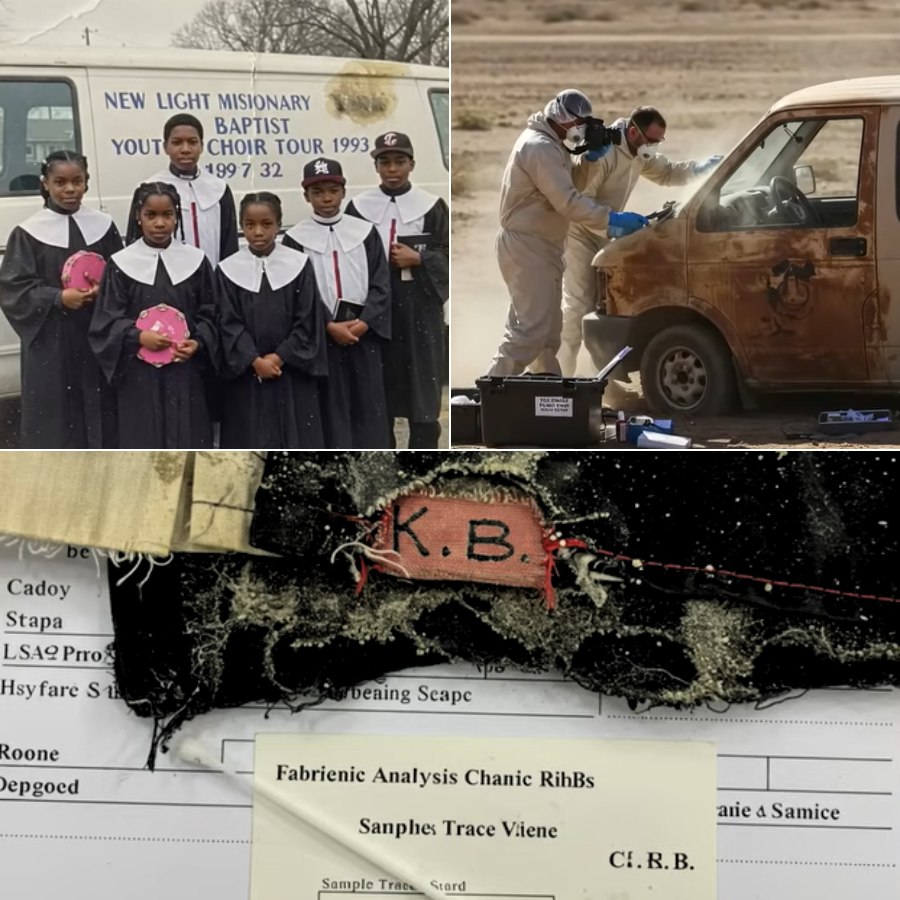
Not the clean, dry kind you get in the desert, but Southern heat — sticky, humming, alive with insects and the low thrum of old air conditioners fighting for their lives. It was June 10th, 1993, in Augusta, Georgia, and the gravel lot behind New Light Missionary Baptist Church shimmered like a mirage.
Seven folding chairs sat in a neat circle out back, waiting for a prayer meeting that would never quite happen. Inside the church, the youth choir was still rehearsing, voices rising and falling in a patchwork of alto and tenor, someone off-key enough to make their friends snicker, someone else nailing a high note and pretending it was nothing.
The man watching over them, hands folded, eyes soft, was Reverend Paul Shepard.
He was in his mid-forties, short-sleeved button-down shirt, dark slacks, a tie loosened halfway as a concession to the humidity. The lines at the corners of his eyes were from more than just age; they were from marching and being shoved and cuffed and tear-gassed in places whose names most of the kids in front of him knew only from history books.
He’d been arrested three times by the time he was twenty-five. He had scars on his wrists you could only see if his sleeves rode up. He had stories he rarely told.
But what he worried about now, more than any baton or fire hose, was a fifteen-passenger van full of Black children on unfamiliar highways in the deep South.
“All right, saints,” he called, clapping his hands together as the last chord of the hymn faded. “If y’all sing like that in El Paso, the Spirit gone beat us there and be waiting on the steps.”
The kids laughed, the way teenagers laugh when they’re excited and a little embarrassed and mostly just happy to be together. Robes were being folded and stuffed into garment bags. Lyric sheets were crumpled into backpacks. Somewhere in the corner, someone was still humming their part just to make sure they had it.
In the front pew, thirteen-year-old Jamal Rivers traced his finger along a scratch in the varnish, mouthing the words to the song under his breath. Jamal was the smallest of the group, with big eyes and a nervous, eager smile. He’d never been farther than the next county before this trip. Every time someone said “tour,” his heart kicked like it wanted to leap out of his chest.
Near the side wall, Denise Hill had Kiana Brooks seated between her knees, fingers moving quickly through Kiana’s hair, sectioning and braiding.
“Girl, I don’t know why I’m doing this,” Denise teased. “You know you gon’ sweat it out as soon as we hit Mississippi.”
Kiana rolled her eyes but sat perfectly still. She was fourteen, with a voice that curled around a melody like ribbon, and the kind of shyness that evaporated the moment she started to sing.
“Let me be cute for at least the first stop,” she said. “After that, I can be hot and holy.”
Denise laughed out loud, loud enough that a few other kids turned to look at them and grin. Denise was sixteen, quick-witted, always the one to push a joke just a little too far, always the one the adults both worried about and secretly admired for refusing to shrink.
At the aisle, Travis Milton was narrating into his little cassette recorder like he already had a syndicated radio show.
“This is day one of the New Light tour,” he said in a dramatic voice, angling the recorder toward his mouth and then toward the choir around him. “Watch out, world. We coming.”
Someone threw a balled-up paper program at his head. He ducked and kept recording.
Outside, under the sun that made the asphalt look soft, the van waited.
Maurice Tucker was under its open hood.
Maurice was seventeen and looked older when he furrowed his brow, which he did a lot. He’d been taking things apart since he could walk — radios, clocks, the blender once, to his mother’s horror — and by sixteen he had the kind of reputation where neighbors showed up at the front door with alternators and starter motors and said, “Baby, you think you can fix this?”
Paul trusted him in a way he did not trust himself to stay awake behind the wheel after midnight. So Maurice had been at the church since dawn, checking brakes, checking belts, checking fluid levels like he was prepping a small spaceship for orbit.
He wiped his hands on a rag as Reverend Paul stepped out into the heat.
“She sounds good?” Paul asked.
Maurice patted the fender. “Good as she gonna. I topped the oil and coolant. I’ma check the tire pressure one more time before we roll.”
Paul nodded, letting his gaze sweep the lot — the cracked pavement, the lone oak tree leaning toward the street, the kids’ scuffed duffel bags piled by the side door. For a moment, he imagined all the invisible lines that led away from this place: highways fanning out across Georgia, Mississippi, Louisiana, Texas, and beyond. Opportunity. Danger. Both.
Inside his pocket, folded to the size of a playing card, was the tour itinerary.
Jackson. Baton Rouge. Shreveport. El Paso.
That’s what he’d planned first, months before, when they’d dreamed it all up. Then the diocese office in Atlanta called. There was a “partner church,” they said, in a small East Texas town that needed “bridge building.” The word they used was urgent. The phrase was “spiritual opportunity.”
The town was Vidor.
Paul had hesitated, the pen hovering over the map on his kitchen table. He knew the town by reputation. Little stories slipped through over the years — a sign at city limits in the wrong decade, people whispered, not written in official records but remembered. A place you did not linger in after dark if you were Black and had any say in the matter.
“It’ll be brief,” Bishop Redden had promised over the phone. “One night. A goodwill visit. These people need exposure to a different kind of worship, Reverend. You can be a bridge.”
And Paul, who still believed in building bridges even when they shook under his feet, had said yes. He’d told himself he was being paranoid. The world had changed. Hadn’t it?
He watched Maurice close the hood and slam it with a confidence that reverberated through the metal.
“We rolling at six,” Paul said. “You got your license on you?”
Maurice patted his pocket, squinting in the sun. “Yes, sir. You trust me?”
Paul gave him a long look. “If I didn’t, you’d be cleaning out closets and I’d be driving myself.”
They loaded the van like they’d practiced, an assembly line of limbs and laughter. Robes in garment bags, coolers of sandwiches made by church aunties, crates of hymnals and food donations, a plastic bag of cassette tapes — gospel, R&B, one bootleg mix Travis swore no adult had to know about.
Parents hugged their kids a little tighter than usual, pretending it was just standard pre-trip fussing and not the ache of something unnamed.
Denise’s mother, Carolyn, pulled her daughter close and whispered, “You don’t let nobody talk over you, you hear me? You know how to be respectful and you know when not to be quiet.” She kissed Denise’s forehead like punctuation.
Maurice’s parents watched from the shade, his mother gripping his father’s hand so tightly he had to pry his fingers loose one by one to wave goodbye. They had not wanted him to drive. They had not wanted him to go at all, truth be told. But their son had looked so proud, so grown, so sure. And it was the church. The safest place they knew.
New Light gathered in a circle around the van, hands clasped. Paul prayed over them all, voice steady, asking for traveling mercies and open hearts and for the Lord to go before them on every mile of road they’d never seen.
“Amen,” the circle murmured.
Then the engine coughed to life, the lot filled with the smell of gasoline and exhaust, and they were rolling.
Three days into the trip, it all still felt blessed.
In Jackson, Mississippi, they filled a small sanctuary with sound. People clapped along, shouted “Sing, baby!” and wiped their eyes. An old woman pressed a ten-dollar bill into Jamal’s hand afterward and said, “You got an angel in your throat, don’t let nobody steal it.”
They slept on church floors with box fans whirring overhead, the kind of sleep you fall into hard after hours of singing and laughing. Denise complained about her back in the morning and still volunteered to help in every kitchen. Travis recorded everything — the way the Louisiana air felt different on his cheeks, the way Maurice grinned when some mechanic in Baton Rouge complimented the condition of the church van.
In Baton Rouge, Gloria rewrote a verse of “His Eye Is on the Sparrow” in her red notebook, adding a little run, a small harmony. She had dreams of becoming a songwriter, of seeing her name on cassette sleeves one day. The others teased her, but when she sang what she’d written, they hummed along and shook their heads and said, “Okay, Gloria, we hear you.”
At each stop, Reverend Paul watched the kids slip into new versions of themselves — a little bolder, a little more sure. He was exhausted, bone-tired from sleeping in upright chairs and worrying about gas money and keeping to schedule, but there were moments when he sat back in a folding chair and thought, This is what it’s supposed to feel like. Community moving. Faith on the road.
Then came Vidor.
You could almost feel the shift before they hit the town line. The highway narrowed. Pine trees crowded closer, their branches knitting the sky into a thinner strip of blue. Gas stations grew sparser, billboards more faded. And the air — still hot, still heavy — took on a different kind of weight.
They rolled past the city limit sign in late afternoon.
The van quieted.
The kids didn’t know the stories the way Paul did, but they knew enough from the way grown folks said certain town names with tight mouths. Denise glanced out the window and swallowed. Jamal chewed his lip. Kiana reached for the small cross in her pocket without thinking about it.
“Remember what I told y’all,” Paul said from the front, not turning around. “We are guests. We are representatives of New Light, of our families, and of God. We move together. We stay together. We do what we came to do, and we keep it moving.”
“Yes, sir,” came the chorus, weaker than usual.
The address they’d been given belonged to a church on the outskirts of town. When they pulled up, the building looked tired in that way some churches do — paint peeling, grass overgrown, a sign out front missing letters. The parking lot was mostly empty.
Inside, the air smelled faintly of mildew. A lone man in a short-sleeved button-down met them at the door. He introduced himself as the associate pastor and shook Paul’s hand without fully making eye contact.
“You’re earlier than we expected,” he said.
Paul checked his watch. “We’re right on schedule. We can help set up.”
The man shook his head. “Actually, we… decided to postpone. Low turnout.” He gestured vaguely at the empty sanctuary. “Communications issue. Sorry you came all this way.”
Paul blinked. The kids behind him stood in a loose cluster, cradling robe bags and Bibles, their faces shining with the kind of nervous hope that comes right before performance.
“Postponed?” Paul repeated. “Sir, we drove from Georgia.”
“I understand,” the man said. “The diocese should have informed you. There’s a motel on Highway 12, if y’all need a place to stay the night.”
He nodded in the general direction of town, then moved aside to let them leave, as though the matter were settled.
Outside on the steps, Denise turned to Paul, eyes narrowed. “So that’s just it? We drove all this way to stand in an empty church?”
“We still sang,” Gloria said quietly, more to herself than anyone else. Her fingers itched for her notebook. If no one heard them tonight but the walls, it still counted, didn’t it?
The motel on Highway 12 was half empty, but the manager — a middle-aged man in stained khakis with a cigarette stuck to his lower lip — told them there were no vacancies.
“Plumbing’s out,” he said flatly, not bothering to remove the cigarette. “Can’t have y’all staying with no water.”
Paul glanced at the empty parking lot, at the row of doors with curtains drawn.
“You got nothing?” he asked, keeping his voice polite.
“Nope. Try up the road.”
Up the road, a diner had “Restrooms out of order” handwritten on a sheet of cardboard taped to the glass. The gas station’s card reader mysteriously refused their church fuel card, though it had worked just fine two hours earlier. Every adult they encountered wore a smile like a mask that didn’t quite fit, eyes sliding past them or lingering just long enough to send the same silent message:
You shouldn’t be here.
They ended up behind a shuttered gas station, the van tucked as far from the road as they could manage, near a sagging chain-link fence and a pile of old pallets.
It was not where Paul wanted to be, but they were low on options and lower on gas.
“We’ll sleep in the van,” he said, making the decision out loud so it wouldn’t feel like giving up. “We lock the doors. We keep watch in shifts. We’re gone at first light. This is a bump, not a wall.”
The kids filed in, grousing and cracking jokes to keep the unease from getting teeth.
Travis set his recorder on the dashboard, feeling the shape of it under his palm like an anchor. “This is day four of the New Light summer tour,” he announced into the mic, trying to inject his usual bravado. “We just rolled into Vidor, Texas. Still no AC. Gloria is tired. Denise is mad. Reverend Paul told us we could rehearse before lights out. So, here we go.”
Gloria’s voice rose first, clear and steady despite the sweat beading at her temples. She led them into “His Eye Is on the Sparrow,” and one by one, the others joined in. Jamal’s high harmony, Kiana’s soft undercurrent, Denise’s alto grounding them, Travis tapping out a rhythm on the dashboard, the tambourine wedged between two seats.
For a few minutes, the van was all sound and breath and the kind of holy thing that has nothing to do with stained glass.
Denise heard the crunch of tires on gravel first.
Her voice faltered a fraction. She shifted in her seat, peering past Kiana through the smudged glass. A truck had pulled into the lot, its headlights off. It rolled to a stop at an angle, front end pointed toward the van.
“Reverend,” she whispered. “Somebody here.”
The song petered out. The van fell silent except for the tick of the cooling engine.
A knock came at the driver’s side window. Not aggressive yet. Just deliberate.
Paul closed his Bible and leaned forward. “Stay put,” he said over his shoulder. “Don’t open any doors unless I say so. Maurice, you stay in that seat.”
He rolled the window down halfway.
“Evening,” he said, voice gentle.
A man in a mechanic’s uniform leaned down, one hand on the top of the door. His cap cast a shadow across his eyes, but his mouth was visible — a hard, thin line.
“What y’all doing here?” he asked.
“Resting,” Paul replied. “Church group traveling through. We’ll be out of your hair in the morning.”
The man’s gaze slid past Paul into the interior of the van. His eyes lingered on the robes, on the young faces. Something in his jaw tightened.
“You shouldn’t be here,” he said. “Town don’t like… gatherings.”
“We’re not making trouble,” Paul said. “We just needed somewhere off the road for the night. We’ll be gone before sunrise.”
The man held his stare for a beat, then straightened up, stepping back without another word. He walked to his truck, climbed in, and started the engine.
He didn’t leave.
He just sat there, idling.
Denise edged forward from the back. “He’s not going, Reverend,” she whispered. “We should go.”
Paul stared at the gas gauge. A quarter tank, maybe a hair above. The next town on the map, with a motel and a gas station that might actually take their card, was more than thirty miles away. On a good day, in perfect conditions, they’d make it. This didn’t feel like a good day.
“We wait,” he said softly. “One minute. See if he moves.”
He didn’t. Instead, a second pair of headlights swept across the lot as another truck pulled in from the opposite side. This one parked behind the van, blocking the back doors.
“Reverend,” Jamal said, and his voice cracked on the second syllable.
Travis’s hand found the recorder again. Without thinking, he slid the switch to “Record.”
“You keep rolling,” Denise had once told him, half teasing, half serious. “You never know when history gon’ start.”
Another minute passed. A third truck rolled in slow, like it had nowhere else to be, and took up position off to the right.
Paul felt the oppression of it then — the quiet, the headlights off, the low rumble of engines boxing them in.
He whispered a prayer he’d learned as a boy, when his own father had taken him through counties that felt like this.
“Everyone stay calm,” he said, forcing the words past the tightness in his throat. “Don’t open any doors. Don’t make sudden moves. Just stay inside.”
A flashlight beam shot through the driver’s window, bright enough to make him squint.
“We’re trying to leave,” he called through the half-open glass. “Just let us back out, we’ll—”
“Open that door,” a voice barked from the dark.
Paul opened his own door just enough to step out. The air hit him like a wall, thick and hot, the gravel crunching under his shoes louder than it should have. He kept his palms up, visible.
“They’re children,” he said. “We don’t want trouble. We’re just passing through.”
Someone stepped closer, just beyond the reach of the headlights. Another man, or the same one, it was hard to tell. Boots. A belt buckle catching a fragment of light. A smell of sweat and cigarette smoke.
“You people always say you just passing through,” the man said. “Funny how you keep ending up where you ain’t wanted.”
Paul heard movement behind him in the van. A whimper. The shuffle of feet. He wanted to turn and tell them it was okay, but he knew if they saw fear on his face, it would be over.
He stood his ground.
What happened next, we can only reconstruct from impressions — from Travis’s tape, which caught sound but no picture; from the bruises on bones found three decades later; from the way people who were not there still flinch when someone knocks on a window too hard.
There was another voice, sharper, coming from the left. A slam of a palm against metal. A shout.
“Get ’em out. Open it up.”
Denise threw herself across Kiana, pressing her down toward the floor.
“Don’t move,” she hissed. “Don’t you move.”
Jamal squeezed his eyes shut and started praying out loud, words tumbling, half remembered, half improvised, as if speed mattered more than theology.
Travis kept the recorder running. It captured scuffling, the thud of something heavy hitting the side of the van, the crack of glass. A scream — high, ragged, cut short. A grunt. More shouting. Then a sound like the air itself being punched.
Static bloomed over everything.
The tape ran for two more minutes of nothing.
In the official records, the van never left Georgia.
In the church’s quiet bulletin, printed a week later, the line was simple: “Due to internal confusion, the youth choir summer tour has been postponed.” No further details. No explanation.
On the Sunday the choir was supposed to be in El Paso, the sanctuary in Augusta filled instead with confused parents and relatives, their Sunday clothes pressed, their eyes darting from the empty choir stand to the pulpit.
The man standing there, hands trembling not quite visibly, was not Reverend Paul. It was Reverend Richard Elwood, junior pastor, the one who’d stayed behind to handle things while Paul took the kids on the road.
He unfolded a piece of paper and read words that had been given to him by the diocese office, words that tasted wrong in his mouth.
“There has been a… misunderstanding,” he said. “The tour has been postponed. Reverend Shepard is no longer leading the trip. We expect all youth to return as soon as possible.”
A murmur rippled through the pews.
“Where are they now?” someone called.
Elwood froze. The answer the bishop’s office had given him was flimsy even when he’d heard it in a quiet office over the phone.
“They… deviated from the approved route,” he said finally. “We have been assured they are safe. We will share more when we can.”
Denise’s mother, Carolyn, stood up so abruptly her purse tumbled off the bench.
“Assured by who?” she demanded. “My daughter ain’t called home. She knows better than that. Reverend, don’t stand there and read them paper lies to me. Where is my child?”
Elwood opened his mouth. Closed it. The paper in his hand fluttered.
He was twenty-nine years old. He believed in the church more than he believed in his own ability to survive outside it. And in that moment, standing under the weight of eyes and expectation, he did what he hated himself for later.
He folded.
“We are working with the proper authorities,” he said, knowing that no one from the sheriff’s office had yet returned his calls. “We urge you to pray.”
Carolyn didn’t sit. She walked out, her shoes sharp on the tile, tears already streaking her cheeks.
By midweek, she had printed her own missing posters.
Denise Hill, 16. Last seen leaving Augusta, Georgia, with church youth choir.
She taped them to telephone poles, to the walls of corner stores, to the bulletin board at New Light itself. Six days later, when she drove past the church again, her posters were gone.
Someone had taken them down.
The police never opened a missing persons case in Augusta. The report that did exist, quietly filed on June 16th, 1993, did not list seven missing souls. It listed a single asset.
Fifteen-passenger van, property of diocese. Reported stolen.
No further action taken.
Years folded themselves on top of that week like layers of dust. The kids’ names turned to echoes, to cautionary tales no one quite finished out loud.
“Remember that choir back in ’93,” some older member would begin, then trail off when a child entered the room. “Well. Never mind. Get my hymn book, baby.”
Families were unofficially told to grieve privately. To stop “stirring up trouble.” To accept that people sometimes left and did not come back.
In Maurice Tucker’s family, they said that he’d run away.
They said it so many times, in so many different tones — angry, despairing, matter-of-fact — that even the children who knew better started to doubt their own memories.
His niece, Amina, was eleven.
She remembered her uncle as a pair of hands that could fix anything, as laughter at family cookouts, as the one who’d slipped her extra ice cream when her mother said she’d had enough.
She also remembered the way her mother’s eyes had turned hard when she talked about the church after 1993.
“Don’t you ever think a building loves you more than your family,” she’d say. “And don’t you let nobody tell you to stop asking questions. You hear me, Amina?”
But after a while, when every question hit the same wall, when every phone call ended in vagueness or psalms, even Amina stopped asking.
She grew up.
She moved away.
She became Dr. Amina Tucker, forensic anthropologist, with a specialty in bones that had been buried where they were never meant to be.
By the summer of 2023, Amina lived most of her days in labs and archives, teaching students how to listen to the stories a skeleton tells — healed fractures, nutritional scars, traces of violence no one had reported. She sat on panels about mass graves in other countries, about accountability and truth.
She did not talk about 1993.
Then the drought came.
Northern New Mexico had been dry before, but this was something else. Reservoirs shrank into cracked bowls. Rivers pulled their edges inward, leaving boats stranded in mud that used to be water.
Abiquiu Reservoir, north of Española, had always been more than a man-made lake. Locals used it for fishing, for camping, for baptisms in summers when the water was full enough to swallow sins and secrets alike.
By July 2023, it looked like the earth had opened its mouth and evaporated the lake whole. The waterline receded, leaving behind stretches of baked mud that split into slabs. Sun-bleached fish bones surfaced, soft-drink cans from decades ago, a bicycle frame wearing a coat of algae and time.
A research team from the University of New Mexico’s environmental sciences program went out to study sediment levels. Twenty-four-year-old grad student Devon Scott was ankle-deep in the cracked bed, sweat running down his spine under a faded UNM T-shirt, when his boot caught on something solid.
He went down hard, palms scraping, a curse half bitten off.
“Y’all, something’s under here,” he called.
At first he thought it was a fishing boat. The curve of metal he could see suggested a hull. But as they brushed away mud with gloved hands, more shapes emerged. Glass, twisted and dirty, that looked like windows. A side panel. The corner of a door.
They dug until letters appeared, ghost-pale under layers of rust and lake silt.
…TH MISSIONARY BAPTIST CHURCH
YOUTH CHOIR TOUR
The rest was obscured, but the year, pressed faintly beneath the flaking paint, was there.
It should have been just another old vehicle, some unfortunate accident from long ago. The kind of thing the news would show a picture of with the caption “Drought Reveals Long-Lost Car Wreck,” a curiosity between weather and sports.
But for Amina, who happened to be a guest lecturer on campus that week, it was something else entirely.
One of the grad students who’d been at the reservoir came running into her temporary office the next morning, breathless.
“Dr. Tucker? You might want to see this,” he said, holding out his phone.
The photo on the screen was grainy, washed out by sun. It showed a van half-emerged from cracked mud, tilted to one side. The letters on the side were barely legible, but Amina’s brain filled in the missing pieces faster than her eyes could register them.
NEW LIGHT MISSIONARY BAPTIST CHURCH
YOUTH CHOIR TOUR 1993
The room tilted.
She gripped the edge of the desk to stay upright and forced herself to breathe.
“Where is this?” she asked, though she already knew from the file name at the top.
“Abiquiu,” the student said. “They’re sending State Police out now, I think. It could be…”
He didn’t finish. He didn’t have to.
By the time she reached the reservoir, the site was already cordoned off with yellow tape. State troopers stood with arms folded, squinting against the sun. Environmental researchers hovered near their equipment, looking both important and sidelined.
The van sat in the center of it all, a relic the earth had coughed up.
Paint peeled, windows clouded, bumper half buried in what used to be the lake bed. It leaned slightly forward, stuck in hardened sediment like it had tried and failed to crawl out.
Amina flashed her credentials. It wasn’t the badge that made the officer on duty move aside. It was the look on her face.
She approached slowly. The heat radiating off the metal made the air shimmer. There was a smell, faint but there — old water, rust, something organic that had long since ceased to be flesh.
She rested one gloved hand on the side panel. It was warm under her palm. Beneath the flaking paint, she could feel the faint impression of letters.
“New Light,” she whispered.
Inside, through the grime-streaked glass, she could make out shapes. A tangle of seats. A dark slump near the back. Something round and warped that might have once been a tambourine.
Her chest tightened.
She had spent most of her career learning how to detach, how to treat remains with respect but not with the kind of personal grief that could paralyze you. This was different.
This was the ghost story no one had ever wanted to name.
When they pried the back doors open later that day, with crowbars and a lot of careful force, a wave of trapped heat and mildew rolled out. It smelled like wet cloth and gone time.
The choirs’ things were still there, fused to the interior by mud and years.
Robes in shades of blue, cream, and pale pink lay stiff and dark. A tambourine swollen by water sat wedged between seats. A nametag dangled from a cracked lanyard, the ink faint but legible.
GLORIA BELL.
Amina catalogued each item in her notebook, hands moving automatically, the professional in her taking the lead even as the niece in her screamed.
A church bulletin, ink blurred but name still clear: Reverend Paul Shepard.
A broken inhaler.
A small backpack that had burst at the seams, spilling out a soggy spiral notebook and a pen whose plastic casing had warped.
Under the front passenger seat, her gloved fingers brushed something thicker than paper.
She pulled it out carefully.
It was a hymnal, swollen and warped at the edges, the cover stuck to the first few pages. On the inside back cover, in small, slanted handwriting, were maintenance notes.
Rotate tires before Mississippi.
Fuel at 1/2.
Check oil. Slow leak.
M. Tucker.
Amina’s knees gave out before she realized she was falling. She sat down hard in the dirt beside the van, hymnal clutched in her hands.
He hadn’t run.
He’d made a list.
He had done what responsible people do when they’re planning to come back.
Her uncle had not been a boy who abandoned his responsibilities and left his family with silence. He had been a seventeen-year-old with a church van and a leaky engine and enough sense to write down when to top off the oil.
For thirty years, her family had lived under the shadow of a story someone else wrote for them. Now the earth itself had produced a different version.
The state investigators worked fast once they realized what they had. The van was transported to a forensic facility in Santa Fe, the cracked lake bed returning to its unnatural silence as machinery and people rolled away.
Amina requested to stay with the vehicle as a consultant. She did not mention that she was next of kin. Her professional title was the only language the officials seemed to understand at first.
That night, in the lab garage, under fluorescence too bright to be kind, she returned to the van alone.
Technicians had removed as much silt and debris as they dared. The dashboard compartment hung open, its contents laid out on a tray nearby. Old registration papers. A melted pen. Candy wrappers half dissolved.
Something rectangular still wedged in the back of the compartment caught her eye.
She reached in and felt the cool, familiar shape of a cassette tape.
She eased it out and held it under the light.
The label was smeared but she could make out two words burned into her brain from the moment her eyes recognized them.
Sunday practice
Vidor
Her stomach clenched.
She slipped the tape into an evidence bag, labeled it with shaking hands, and carried it to the audio forensics room like it was a live wire.
The next morning, she met the man who would become her reluctant ally in all this.
Detective Mark Dandridge ran the cold case unit liaison for the state. Late fifties, pressed shirt, tie slightly off center. He had the tired eyes of someone who had seen too many cases file themselves into cabinets with no resolution.
He shook Amina’s hand with a grip that was firm but not performative.
“Dr. Tucker,” he said. “I’ve read your work.”
“Then you know I’m not usually on this side of the table,” she replied.
They sat together behind a glass partition as a technician prepared the cassette for playback. The tape had warped, but not irreparably. With careful cleaning and some gentle coaxing, the machine whirred to life.
Static filled the room, then the low hum of background noise.
Then a voice.
“This is Travis,” a teenage boy announced, his tone carrying that mix of bravado and joy Amina remembered in every boy from church who thought a tape recorder was a magic wand. “We’re parked in Vidor, Texas. Gloria is mad ‘cause she think her note is flat, but she wrong. Anyway, y’all, it’s Sunday night and we still together. Thank God for small miracles.”
A girl’s laugh, muffled by distance.
A faint beat on a tambourine.
Then, soft and pure and painfully clear even through the years and the distortion, a hymn.
“His Eye Is on the Sparrow.”
The voices layered — Gloria’s strong lead, another voice weaving beneath hers that Amina thought might be Denise, Jamal’s higher tone, the others humming. For a moment, the lab around them fell away. It was just the van, humid and crowded, filled with the sound of young people singing themselves calm.
The song faded into background chatter — joking, someone complaining about the heat, someone else asking if they’d be in El Paso on time.
A hard knock echoed through the speakers.
It made everyone in the lab jump, even though they’d expected it.
A man’s voice, sharp, unfamiliar.
“You people shouldn’t be here.”
A deeper voice replied. Calm, measured. Paul.
“We’re resting, sir. We’re just passing through.”
The knock came again, harder. Metal ringing.
“Open the door.”
Voices rose. Fear slipped in at the edges.
There was a scrape, a shout, a high-pitched scream that cut off mid-breath. More impact sounds — bodies hitting metal, feet shuffling.
Then static. Hiss. The vacuum left by sudden silence.
The tape clicked as it reached its end.
No one said anything for several seconds. The hum of the lab equipment felt unbearably loud.
“They didn’t run,” Amina said softly, staring at the spools inside the cassette deck. “They didn’t steal that van. They were trying to get home, and somebody stopped them.”
Dandridge flipped through a thin file on the table.
“As far as the record shows,” he said, “this van was reported as stolen property on June 16th, 1993. Filed by the diocesan office in Atlanta. No mention of a missing driver. No missing youth. The vehicle was marked as recovered weeks later. No further action taken.”
“So they never filed a missing persons report at all,” Amina said. It wasn’t a question.
“Not that we’ve found,” Dandridge replied.
She let the anger sit in her chest, heavy and hot.
“They buried it,” she said. “Not just the van. The story.”
He closed the file.
“Well,” he said. “Looks like the ground had other plans.”
Once you start pulling on a thread like that, other things start to come loose.
Amina knew that bones and vehicles told one kind of story. Paper told another. If they wanted the full picture, they’d have to chase both.
Devon Scott, still a little stunned that the thing he’d tripped over had become the center of something like this, volunteered to help dig through church and diocesan records. He had a knack for finding things other people thought they’d hidden well enough.
In a storage closet at New Light, behind Vacation Bible School decorations and stacks of bulletin paper, he found a box labeled YOUTH SUMMER MATERIALS.
Most of it was blank or water-damaged. But in one battered folder lay an itinerary.
In neat typewriter font, the route was listed.
Augusta → Jackson → Baton Rouge → Shreveport → El Paso.
Underneath, in pen, a later addition.
Vidor.
Further down, in different handwriting, another note:
Vidor → Albuquerque reroute approved.
The words Vidor → Albuquerque were scratched out in red ink so fiercely the paper had torn. Underneath, someone had written: Use secondary route. NO STOPS.
Devon brought the itinerary to Amina and to Detective Mara Gaines, who had joined Dandridge on the case when it became clear they needed someone who knew how to work with communities the system had failed before.
Mara was in her early forties, Black, with hair pulled into a tight bun and an expression that could go from kind to terrifying in half a second.
They spread the map out on a conference table at the university, boxes of evidence crowding the corners — photos of the van, of the recovered cassete, of the artifacts.
“I’ve seen this handwriting before,” Mara said, running her finger along the red ink. “That R. That’s Bishop Thomas Redden. He signed my request for records when I was a baby detective in 2001 and denied me everything I asked for. I never forgot that loop.”
“So the diocese rerouted them themselves,” Devon said. “They knew they were going to New Mexico. And they didn’t tell anyone.”
“Or they told the wrong story on purpose,” Amina added.
They built a timeline on the whiteboard. June 10th, departure. June 13th, Vidor. June 14th, a handwritten towing invoice Mara had pulled from an old diocesan account — a fifteen-passenger van transported from Texas to church-owned land near Española, New Mexico. Paid in cash. No driver listed.
The land near Española had been pegged for a retreat center back then, according to the records. It had never been built. In 2002, the diocese sold the property to a solar energy company, which now operated a field of gleaming panels on those dry acres.
There was one detail in the land survey that didn’t fit.
A concrete slab, about the size of a small garage, had been poured in late summer 1993. It had no listed purpose.
No foundation built on top.
No plumbing laid underneath.
Just a slab.
“They poured it to cover something,” Mara said quietly.
Bishop Thomas Redden lived in a quiet Catholic retirement home outside San Antonio by 2023. The hallways smelled of lavender cleaner and overcooked vegetables. The crucifixes on the walls were all the same size, all hanging at the same careful angle.
A nurse wheeled him into a sunlit sitting room. He was seventy-nine, his face softened by time, hearing a little faded. But his eyes were still sharp in flashes, like sparks beneath ashes.
“Bishop Redden,” Mara began. “We’re here to ask you about the New Light youth choir tour in 1993. From Augusta.”
“Augusta,” he murmured. “Yes.”
“Do you remember the route?” Amina asked. “They weren’t supposed to stop in Vidor originally, were they?”
He frowned as if trying to pull memories from thick mud.
“The tour was cancelled,” he said after a moment. “Heatwave. No air conditioning on the bus. Liability.”
“They went anyway,” Amina said, her voice level but hard. “Seven teenagers, plus Reverend Paul Shepard. My uncle, Maurice Tucker, was driving. They never came home.”
The bishop’s eyes flickered at the name.
“I… signed off on fuel cards,” he said. “Told them to go west, not south. Too much tension after Baton Rouge. Told them not to stop.”
“But someone rerouted them,” Mara said, placing the itinerary in his lap. “This is your handwriting, is it not?”
He stared at the page for a long time.
“I told them not to stop,” he repeated quietly. “Drive through. No stops.”
“But the van did stop,” Amina said. “And after that, you arranged to have it towed. We have the invoice. Paid by your office. Destination: Española, New Mexico.”
Mara slid the towing document onto the arm of his chair.
“Why, Bishop?” she asked. “Why tow an empty van seven hundred miles and not file a missing persons report?”
He swallowed, throat working.
“They told me it was empty,” he whispered.
“Who?” Amina pressed.
“Field office,” he said. “Vidor. Said the kids took the van without authorization, then abandoned it when it broke down. Said they’d run off. That there was no damage, no… issue. Said the world didn’t need another scandal. That… that no one would care about a few missing Black children in East Texas.”
The words hung there, heavy and obscene.
“You believed them,” Mara said flatly.
“I didn’t ask more,” he replied, and that, perhaps, was the first honest confession he’d made in decades.
He closed his eyes.
“I signed what they put in front of me,” he said. “Property loss. Not souls. I thought…” He trailed off. He didn’t finish the sentence. There was nothing he could say that would make sense in the face of what he had not done.
Amina stood, her chair scraping lightly.
“You thought it was easier,” she said. “Easier to file a paper than to face what might have happened to children your organization was responsible for.”
He did not deny it.
The solar field in Española stretched out like a black ocean, each panel catching the sun and reflecting it in a way that hurt the eyes. The land underneath had its own history, one that had never been printed on any glossy brochure.
The project manager met Mara and Amina at the edge of the field, hard hat under his arm, clipboard in hand.
“We got your warrant,” he said, uneasy. “We don’t want trouble, but this is… unusual.”
“You have a slab,” Mara said, holding up the land survey. “Poured in 1993. It’s not on any of your plans. You built around it.”
He nodded. “We assumed it was some old foundation. We didn’t think much of it.”
“We think there’s something underneath,” Amina said.
By noon, the scanners were set up, their readings humming into laptops under makeshift tents. Ground-penetrating radar sent signals down through concrete and soil, bouncing back images that looked like static to the untrained eye and like patterns to those who knew what to look for.
“There,” one of the techs said, pointing at the screen. “See that? Irregular voids. Not consistent with natural soil layers. Disturbance.”
“How many?” Mara asked.
“Seven distinct anomalies,” the tech replied. “One larger, slightly offset. Six clustered.”
The core drill bit into the concrete in a steady, teeth-grinding whine. Dust plumed up. The air thickened with the smell of cement.
When they broke through, the first thing that rose was a breath of old earth, cooler than the desert air around it. Then, slowly, shape.
A curve of bone.
A scrap of cloth.
They stopped drilling and called the coroner. They marked each emerging outline with flags, not thinking of them as graves yet, just as facts.
Seven.
Excavation began with brushes, not shovels. With reverence. Amina oversaw, gloves on, mask in place, but her eyes bare, fierce.
The first skeleton they raised was small. The bones were curled slightly, as if the person had died in a protective huddle. Cloth still clung to parts of the frame, rotted but identifiable. A sleeve, hemmed in pink thread.
Around the neck, a rusted chain still held a locket.
They cleaned it carefully, enough to see the faint letters etched on the metal inside.
KB.
“Kiana,” Amina whispered.
She stepped back, pressing a fist against her mouth.
One by one, the others came out of the ground like truths.
Two had fractures in their arm bones that had healed wrong — sign of someone who might have raised their hands to protect their head. One skull bore the unmistakable signature of blunt force trauma, a depression that had never healed.
The last skeleton, the one set slightly apart, was larger. Knees bent, arms folded over the chest, head bowed.
“Reverend,” someone murmured.
Paul Shepard had been buried as if in prayer.
No coffins. No markers. No attempt at ceremony. Just bodies lowered into shallow pits, covered hastily, and sealed under concrete meant to outlast questions.
The local paper ran a small story the next morning. REMAINS FOUND AT SOLAR SITE TIED TO 1993 CHURCH VAN CASE.
There was no national outcry. No primetime coverage. No breaking news banner.
New Light issued a short statement, drafted by someone who’d been in elementary school when the van left the church lot thirty years earlier.
We are saddened by the tragic incident rooted in miscommunication. We mourn the loss of those who never returned.
Miscommunication.
Like a missed phone call. Like a scheduling error.
The thing about truth, though, is that once it has a body — seven, in this case — it tends to attract more.
A man named Ellis Riker saw the short article in his local paper in Jasper County, Texas, and couldn’t sleep for two nights.
He was sixty-eight, his hair mostly gone, his hands still bearing traces of the mechanic’s grease that had paid his bills for decades.
In 1993, he’d run a towing line for a man who did “side work” for the diocese field offices in a few counties. Cash jobs. No receipts.
After the second night of staring at his ceiling, Ellis picked up the phone and called the number at the bottom of the article — the one that said, “Anyone with information is urged to contact…”
Mara and Amina met him at a diner. He ordered black coffee, then poured sugar into it until it might as well have been syrup.
“I got a call, late June ‘93,” he said, eyes locked on the tabletop. “Said there was a van needed relocating. No questions asked. Paid in cash. Said it belonged to the church and been stolen by some kids. Said they just wanted it gone, no fuss.”
“Who called?” Mara asked.
“Field office in Vidor,” he replied. “Can’t remember the name. They said the kids ran off. Left the van behind a closed gas station. Said there was no damage, no blood, nothing like that. Just… a headache they didn’t have time for.”
He wiped his palms on a napkin.
“When I got there, the van was already chained up on a flatbed,” he continued. “Back doors was latched, windows too dirty to see much. I figured… I figured whatever happened already happened and wasn’t my business to poke.”
“You towed it to Española,” Amina said. “Seven hundred miles.”
He nodded.
“They paid cash. Met me there with another truck. Said I could go. I didn’t see what they did with it after. I didn’t want to.”
“Did you see anything at all?” Mara pressed.
He hesitated. For the first time, he looked up, his eyes watery.
“There was a sleeve,” he said. “Pink, pressed up against the back window from the inside. Like someone… like someone slid down and left it there.”
Silence settled around them, broken only by the clink of dishes in the kitchen and the murmur of other conversations that suddenly seemed obscene in their normalcy.
Amina did not ask him why he had kept quiet for thirty years. She didn’t need his reasons. She knew the shape of fear, of complicity, of self-preservation that had cost her family everything.
But now he had spoken. And words, once out, begin to do their own work.
Returning to Augusta was like stepping into a preserved photograph.
New Light’s paint was more faded. The oak tree in the yard had grown broader, its roots buckling the sidewalk. The church sign out front now had programmable letters, but the brick base was the same.
Pastor Richard Elwood waited at the steps in a simple clerical collar, shoulders rounded in ways that had nothing to do with age alone.
He shook Amina’s hand and nearly broke down in the same motion.
“I should’ve fought harder,” he said. “I knew something was wrong, but I let them talk me into silence. I told myself I was protecting the church. But what’s a church without its people?”
He led them to a storage room that smelled of dust and floor polish. In a locked drawer, under tithing logs and old marriage registers, was a thin file labeled 1993 TOUR.
Inside were only three things.
The original itinerary.
A single photo of the group, taken in the sanctuary before they left — seven teenagers and one grown man, robes half on, half off, some laughing, some caught mid-blink.
And a letter addressed to him from the diocesan office, dated June 18th, 1993.
Following reports of behavioral disruption, Reverend Shepard’s leadership is being reviewed. The group is no longer under official diocesan sanction. We trust your discretion.
“They called it behavioral disruption,” Amina said, incredulous. “They buried children under concrete and labeled it a behavior issue.”
Elwood couldn’t meet her eyes.
“I’m sorry,” he said. “It’s not enough. I know that. But I am.”
“It’s better than miscommunication,” she said. “At least ‘sorry’ admits someone did something.”
That evening, they held a vigil.
Not a triumphant rally. Not a press conference. Just a handful of families, a few church members who still remembered names and faces, a cluster of younger people who’d grown up with whispers and now had scars of their own from other kinds of systemic neglect.
Candles flickered in the dim sanctuary. The old wooden pews creaked as people shifted, eyes shining.
Someone began a hymn, haltingly at first, then stronger.
“His Eye Is on the Sparrow.”
Amina sat near the front, Denise Hill’s recovered diary on the pew beside her in a plastic evidence sleeve. They’d found it in the van, in a backpack whose zipper had fused shut with age. Somehow, the ink on its pages had survived better than anyone had a right to expect.
Later, when the lab had done its work and the pages had been carefully dried and preserved, Amina had read it.
June 12: “We almost through Texas. The gas station was mean. Gloria says her song gon’ sound better in El Paso, where the wind don’t choke her throat. Reverend says God sees us. I believe him. I hope He hear me.”
June 13: “I don’t like this town. Feels like the eyes here don’t blink. If this is the last note I sing, let it reach my mama.”
When Mara read that last line aloud at the vigil, there were no dry eyes.
It was not the kind of story you could close a book on and say, “Justice served.”
No one had been indicted yet. The field office staff who had made the calls were either dead, retired, or very good at forgetting. The bishops who had signed the papers lived in comfort, their greatest public embarrassment a mild scandal no one connected to seven Black children and their pastor.
But the dead were no longer lost.
They had names again, attached to bodies buried with dignity this time, not under concrete but under headstones with accurate dates.
They had a story that was theirs, not the one written by neglect and cowardice.
And Amina, who had once given up asking questions because every path led to silence, found that she was not done talking.
Three months after the funeral at New Light, she stood behind a different pulpit — this one in a municipal conference room in Atlanta, of all places, where the walls were beige and the microphones malfunctioned twice before anyone spoke.
Behind her, on a banner printed in black letters on white fabric, were the words:
CHOIR OF THE SILENCED FOUNDATION
Journalists sat in the front row, notebooks open. Behind them were rows of chairs filled with people whose eyes all carried the same mixture of hope and weariness — parents of missing kids, siblings of murdered cousins whose cases had gone cold, pastors from small churches, community organizers who’d lived too long in the gaps of official concern.
Amina adjusted the mic, the metal cold against her fingers.
“We are here,” she said, “because some children come home and some don’t. And far too often, which ones do depends on the color of their skin, the neighborhood they come from, and how loud the world is willing to shout for them.”
She let her gaze move across the room, landing briefly on each of the seven framed photos on the table beside her — Kiana, Jamal, Denise, Travis, Gloria, Maurice, Reverend Paul. Their eyes, frozen at the ages they’d been, watched over the proceedings like a second congregation.
“In 1993,” she continued, “my uncle and his choir never made it home. The church that sent them refused to admit they were missing. The police never opened a case. Their disappearance was treated as a paperwork issue, a property loss, an internal matter. They were buried — literally and figuratively — under concrete and silence.”
She inhaled, feeling the weight of every ancestor who’d been told to keep their grief quiet.
“Thirty years later, the earth gave them back,” she said. “But it should not require a drought and a miracle for Black children to be counted as worthy of being looked for.”
The foundation she’d started was not just about seven names. It was about a pattern — the missing girls who didn’t make the news, the homeless Black men whose deaths were chalked up to ‘exposure’ without investigation, the trans kids whose families never got a call.
“We will track cases,” she promised. “We will fund searches. We will pressure institutions — churches, police departments, charities — to answer questions they have long avoided. And when they tell us to grieve privately, to be patient, to let the system work, we will tell them that the system has had centuries. Our patience has expired. Our love has not.”
The applause that followed was not polite. It was raw. It was a sound that said, We are still here.
Back in Augusta, New Light remade part of itself.
In the side yard where the youth choir had once practiced under a tree, they installed seven stone markers in a semi-circle. Each stone bore a name and a line from the hymn that had become their thread through time.
For Gloria Bell: “I sing because I’m happy.”
For Jamal Rivers: “I sing because I’m free.”
For Denise Hill: “His eye is on the sparrow.”
For Travis Milton: “And I know He watches me.”
For Kiana Brooks: “He sees each tear that falls.”
For Maurice Tucker: “He leads me through the storm.”
For Reverend Paul Shepard: “And I know He watches me.”
Inside the sanctuary, an artist from the congregation designed a new stained glass window.
It showed a van on a long road at dawn, sun rising behind it in reds and golds. Notes of music floated from the windows, turning into birds mid-air. At the base of the window, seven silhouettes stood side by side, holding hands, heads tilted back as if in song.
When the evening light hit just right, color poured through that glass, washing the choir loft and the back wall alike.
There was another wall, too, that changed. It had once held only generic plaques and a clock that always seemed to be five minutes slow. Now it bore the engraved names of the seven, with dates.
Not “Lost.” Not “Gone.”
Killed in service of the lie that their lives were disposable.
Remembered in service of the truth that they never were.
On a Sunday not long after the dedication, the new youth choir — two dozen strong, kids who had been born long after 1993 — took their places in the front of the sanctuary.
They had been raised on half-told stories about the tour. Now they knew the full version. Some of them wore small pins shaped like sparrows on their robes.
The pianist played the opening chords.
They began to sing.
This time, between verses, they added names.
“I sing because I’m happy… for Gloria.”
“I sing because I’m free… for Jamal.”
“For Denise.”
“For Travis.”
“For Kiana.”
“For Maurice.”
“For Reverend Paul.”
Their voices rose, not as a replacement for justice but as a refusal to let anyone rewrite the ending back into quiet.
In the front pew, Amina sat with her hands folded around her uncle’s restored wristwatch. The glass was cracked, stopped forever at 11:23 — sometime between the last recorded hymn and the first unrecorded blow.
She closed her eyes and listened.
There is no version of this story that does not end in grief. The van still sank. The field still poured its concrete. Time still stole three decades from families who should have had weddings and graduations and arguments about curfews instead of questions with no answers.
But there is a version of this story that refuses to end in silence.
It runs through a grad student tripping over metal in a dried lake bed and deciding to look closer.
Through a woman who couldn’t accept “he ran away” as the final word on her uncle.
Through a detective who chose not to see a thirty-year-old case as a waste of time.
Through a mechanic whose guilt finally outweighed his fear.
Through a church that, pushed and prodded and called to account, began the long, painful work of repentance.
Through every person who read a headline too small to make the national news and still felt it land like a stone in their chest.
At New Light, the bell rings seven times now every June.
Not for a service. Not because the clock says so.
For each of them.
Seven children of a God whose eye, if you believe the hymn, really is on the sparrow — and on the van that never made it to El Paso, and on the reservoir that refused to hold its secret forever, and on every person who finally, after far too long, chose to listen.